Rust on Brake Rotors: When Cleaning Is Appropriate
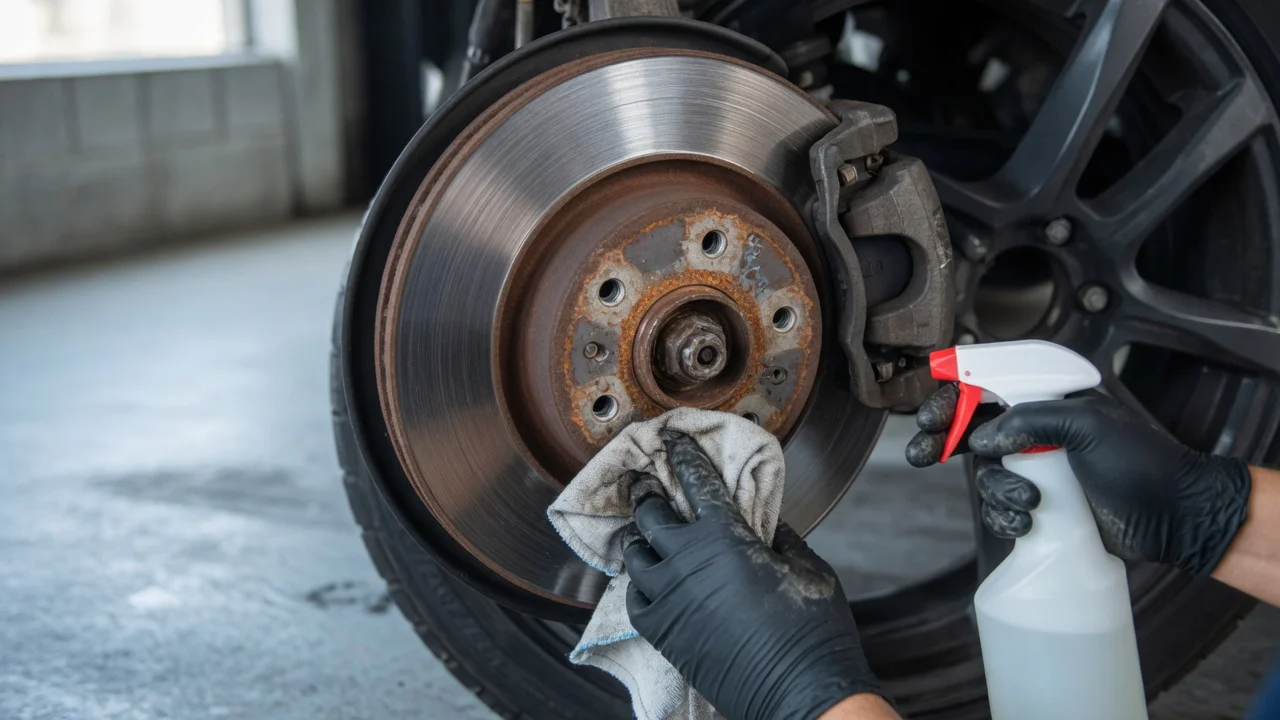
When rotor rust needs a cleaner
A dedicated brake rust cleaner is usually unnecessary for the thin orange film that appears on iron rotors after rain, a car wash, or a few days of sitting. That film is surface oxidation on the friction face. In normal driving it is typically scraped off by the pads within a short series of moderate stops. Cleaning is appropriate when the rust is heavy, flaking, or still present after ordinary braking; when it sits on mounting or mating surfaces rather than the pad track; or when you are already servicing the brakes and need a clean, dry friction surface before inspection or pad replacement.
Why iron rotors rust so quickly
Most production rotors are cast iron. Uncoated iron forms rust as soon as moisture and air reach the metal. Overnight dew, standing water in the wheel well, and road salt all speed that reaction. A vehicle that sits unused, especially outdoors, can show more than a light film because the pads are not wiping the surface. Coated, composite, or stainless hardware rusts less on exposed faces, but coating wear, hat and hub iron, and cooling vanes can still oxidize. Those construction differences matter: a claim that is true for a plain iron rotor on a high-mileage daily driver does not automatically apply to a coated two-piece rotor or to a vehicle stored for months.
When driving is enough
If the rust is a uniform haze on the pad contact ring, the brakes otherwise feel normal, and the vehicle is driven regularly, the practical next step is a few controlled stops from moderate speed once the rotors are dry. The pad material is designed to work against that iron surface. Once the film is gone, remaining discoloration at the outer edge, inner hat, or cooling vanes is often cosmetic rather than a friction problem. There is no widely published, model-independent stop count that guarantees the film is gone; if grabbing, grinding, or a persistent scrape remains after ordinary use, cleaning or inspection is the better path than repeating the same drive cycle.
When cleaning is the right next action
Heavy rust after storage, flooding, or long idle time, especially if it is raised, pitted, or flaking off onto the pad. Rust or scale on the hub face, wheel mounting surface, or the rotor hat where the wheel or hub clamps. Debris there can prevent the rotor or wheel from seating flat. Service work: pad replacement, rotor measurement, or a noise diagnosis where you need the friction face free of loose oxide and residue. A rust-related noise or uneven bite that does not fade after dry, moderate braking. Show or storage prep, where appearance of the visible rotor face is the goal and the vehicle will not immediately wear the film off.
Those cases call for a product meant for brakes, typically a solvent-style brake cleaner used to lift dust, light oxide, and oil, plus mechanical removal of scale if the rust is thick. A general-purpose rust converter, naval jelly, or household acid is a poor match for the friction face: converters leave a coating, and leftover chemical on the pad or rotor can change bite and smell. This article does not have product test data or OEM procedure citations, so it cannot rank specific cleaners, dwell times, or grit grades. Follow the vehicle maker’s brake service steps for that model year and the cleaner maker’s use limits.
What to clean, and what not to grind away
Treat the pad track, the hat and hub mating faces, and loose dust as separate jobs. The pad track should end up clean and dry, without oil, converter film, or deep scratches from coarse abrasives. Light scuffing to break glaze or lift powdery rust is a common shop practice; cutting into the iron to chase every pit is a machining decision, not a cleaner decision. If rust has eaten into the friction surface, a cleaner will not restore thickness or flatness. At that point the supported check is a measured inspection against the discard or machine-to specification in the service information for that rotor, not a stronger chemical.
Hat, hub, and wheel-seat rust can affect how the rotor and wheel clamp. Cleaning those surfaces is often more important than polishing the visible ring. Cooling vanes and the unused outer band can stay rusty without changing pad contact. Spraying cleaner into the caliper boots, on painted hats, or onto the pads themselves is a contamination risk. Pads that have soaked up oil, converter, or heavy rust scale are usually replaced rather than washed back into service.
How to choose a cleaner without overdoing it
Match the product to the soil. Aerosol brake cleaner is intended to dissolve brake dust, light grease, and loose oxide so it can be wiped or flashed off. It is not a rust converter and will not rebuild pitted iron. A rust-removing gel or acid belongs, if at all, on hardware that is off the vehicle and will be rinsed and dried before reassembly, and even then it is a poor first choice on the friction face. Wire wheels, rotary abrasives, and sandpaper change surface finish; used carelessly they leave grooves that the pad must then bed against. After any wet or chemical cleaning, the rotor must be fully dry before the pads go back on. Wet rust that is sealed under a pad will keep forming.
Variant details change the call. Some rotors ship with an anti-corrosion coating on the hat or even on the friction face that is meant to wear off in use; stripping that coating for cosmetics is unnecessary on a new part. Two-piece rotors with aluminum hats, coated iron rings, and carbon-ceramic discs do not take the same chemicals or abrasives as a plain cast rotor. If the parts catalog or service manual for that generation specifies a coated or composite rotor, stay with methods approved for that surface. This guide cannot substitute a torque, runout, or minimum-thickness figure for a given vehicle; those numbers are model- and rotor-specific.
When rust is a symptom, not a mess to wipe
Repeated heavy rust in a short time, rust that returns as soon as the vehicle sits, or rust paired with a soft pedal, pull, or grinding can point past cosmetics. A seized caliper that holds a pad off the rotor lets moisture sit on an unwiped face. A parking brake that stays applied, a leaking hub seal, or a cracked dust shield that traps water will do the same. Cleaning the ring without fixing the cause only resets the clock. Deep pitting, a lip at the outer edge, cracks, or thickness below the marked limit are replacement or machining issues. Editorial judgment, not a lab result: if rust is the only complaint and the brakes otherwise work, start with dry driving or a light brake-cleaner wipe; if performance or seating is in doubt, inspect and measure before buying a stronger rust remover.
Practical next step
For everyday surface rust on an iron rotor, drive the film off with a few moderate, dry stops and leave the cleaner on the shelf. Use a brake cleaner, and mechanical removal if needed, when rust is heavy, on a clamping surface, or in the way of service. Skip rust converters and aggressive grinding on the pad track. Confirm the rotor type for that vehicle, dry the parts completely, and treat ongoing rust as a reason to inspect caliper slide, parking-brake, and shield function rather than as a stain that only needs a stronger bottle.