Rust Converter on a Car: How It Works and How to Use It
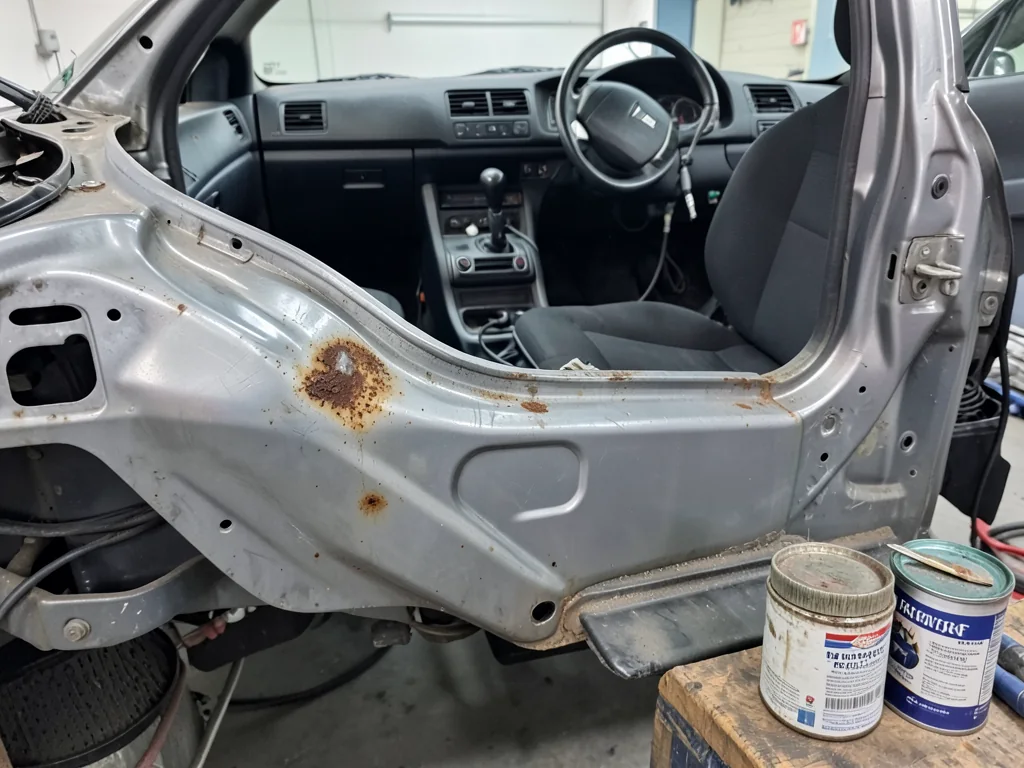
A car rust converter can slow the spread of surface corrosion when you use it on the right kind of damage and finish it properly. It doesn't repair rotted metal. It works best as one step in a larger treatment. Knowing what the chemistry does, where it falls short and how to prepare the surface will help you decide whether treatment makes sense for your vehicle.
What Rust Converter Does to a Rusted Car Surface
Rust converters react chemically with iron oxide. They turn reddish, unstable rust into a darker treated layer that is less likely to keep flaking. The exact chemistry varies by formulation, and so do the rules for what can go over it afterward. Most converters need some remaining rust to react with, so blasting a panel down to bright steel can leave nothing for the product to work on. The label tells you how much rust should remain and what condition it needs to be in.
Conversion does not replace metal that corrosion has already eaten away. It can't fill pinholes, rebuild thinned sections or restore the strength of a weakened part. A complete corrosion treatment has three stages. First, surface preparation removes dirt, grease and loose scale. Second, the converter treats the rust that is still firmly attached. Third, a protective finish seals the area against moisture. Skip preparation and the product can't make good contact. Skip the finish and the treated layer often stays exposed to the conditions that caused the rust.
Assess Body-Panel Rust Before Starting Treatment
Start by looking closely at the affected area in good light. Light orange discoloration on a chip or scratch usually means localized surface rust. Paint that lifts, cracks or bubbles suggests corrosion is spreading under the finish. Pitting means metal has already been lost, and flaking layers or holes point to more advanced damage. Look carefully at seams, wheel arches and lower door edges. Rust you see on the outside there may have started behind the panel, where water collects out of sight.
Treatment makes the most sense when the rust is easy to reach, stays on the surface and sits on steel that still feels solid when you press it lightly. If the paint is bubbling well beyond the visible rust, the damage is probably bigger than it looks. Get a professional assessment if you find perforation, soft or thin metal, or rust near suspension mounts or other structural attachment points. In those cases, coating the surface may hide a problem that needs cutting out and repair rather than conversion.
Recognize the Limits of Rust Converter on a Car Frame
On a frame, a converter can treat surface corrosion you can reach, but applying it tells you nothing about whether the frame is still strong enough. A frame rail can look evenly dark and sealed after treatment while still being thinned by years of corrosion. Heavy layered scale, holes, bending or other visible deformation, and rust around suspension, steering or body mounting points all need inspection by a qualified shop before any coating goes on. Covering those areas can hide damage a technician needs to see.
Many frames have boxed sections and enclosed cavities where moisture and debris collect out of sight. An outside inspection can't show what is happening inside those spaces, and a brush-on product can't reach them effectively. Limit your own checks to areas you can see safely, such as frame edges visible from beside the vehicle. Never crawl under a car that is held up only by a jack or is otherwise unsupported. Any assessment that requires lifting the vehicle belongs to a shop with proper lifts and inspection equipment.
Choose a Treatment Suitable for the Surface and Finish
No single product is right for every car, so judge suitability instead of chasing rankings. Read the label to confirm the converter is meant for automotive steel, the type and depth of rust it can treat, and where you can apply it. Some products are designed for underbody surfaces, and others for areas that will be painted. Look for any restrictions on galvanized coatings, aluminum, existing paint or surfaces that get very hot.
Coating compatibility matters as much as the converter itself. Check whether the treated layer will accept the primer, paint or undercoating you plan to use, and whether the label calls for a specific type of primer. Think about your working conditions too. A product that needs good ventilation, gloves and eye protection may not suit an enclosed garage, and temperature or humidity limits can rule out outdoor work in some seasons. Also check the curing time. If the car has to be driven or will sit in rain before the product fully cures, choose accordingly.
Prepare and Apply Rust Converter According to Its Label
Start by washing the area to remove grease, dirt and road residue, because contaminants can keep the converter from reaching the rust. Let the surface dry or reach the moisture level the label specifies, since some products tolerate slight dampness and others don't. Then remove loose rust and failing paint with a wire brush or abrasive pad, and stop at rust that is firmly attached. Don't use aggressive grinding or heat, and don't work on metal that flexes or crumbles. Those signs mean the area needs repair, not treatment.
Mask off nearby paint, trim and glass. Keep the product off brake parts, electrical connectors, rubber and any surfaces the label excludes. Follow the manufacturer's coverage rate, number of coats and temperature range. Wait the stated drying time between coats and the full curing time before finishing. These numbers differ from product to product, so don't borrow timings from another brand. A darkened surface shows the product reacted, but the color change alone doesn't prove the rust is fully converted or that the metal underneath is sound.
Finish the Treated Area and Watch for Returning Rust
Once the product has cured, check the label for the next step. Some formulations leave a residue that you need to rinse or wipe off, while others are designed to take primer or topcoat directly. The finishing system the manufacturer specifies is what seals the treated layer from moisture and oxygen. Many converted surfaces aren't meant to stay exposed long term. A compatible primer and protective topcoat help keep water from reaching the metal and starting the corrosion again.
Keep an eye on the repaired area when you wash the car and after wet weather. Coating that lifts, blisters or cracks, fresh orange staining, or rust creeping out from the edges suggests the treatment is failing or corrosion is continuing underneath. Rust that keeps coming back often has a source the surface treatment never reached. That could be hidden corrosion behind a panel, moisture trapped in seams or blocked drain holes, or a coating that never bonded properly. A body or repair shop can track down those causes.