Royal Enfield Continental GT 650 engine oil
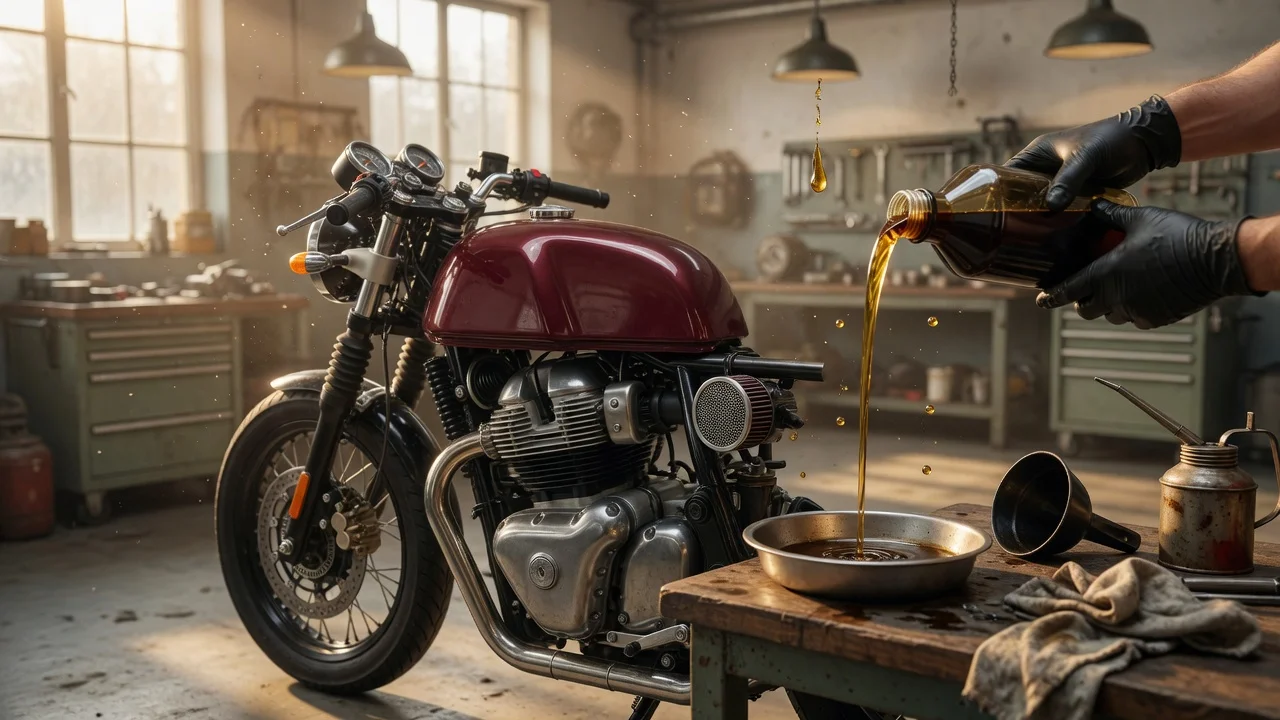
What oil the Continental GT 650 needs
The Royal Enfield Continental GT 650 is specified for a motorcycle-grade 15W-50 engine oil that meets API SN (or the successor listed in the handbook) and JASO MA2. That combination covers the 648 cc air-and-oil-cooled parallel twin, its wet clutch and the shared 650-twin family that also includes the Interceptor 650. The exact grade, performance standard and fill quantity are those printed in the owner’s handbook for the motorcycle’s model year and market; later running changes and cold-climate alternatives can differ.
Viscosity and performance standards
Royal Enfield’s typical factory recommendation for the Continental GT 650 is SAE 15W-50. The 15W winter rating is the cold-start behaviour of the oil; the 50 hot rating is the film thickness once the engine is at operating temperature. Because this twin is air-and-oil-cooled rather than water-cooled, a relatively stout hot viscosity is the documented default in most markets.
Two chemistry labels matter as much as the viscosity numbers:
API SN (or a later gasoline engine category named in the handbook) describes detergent, wear and oxidation performance for four-stroke petrol engines. JASO MA2 is the Japanese motorcycle standard for oils that must work with a wet clutch. MA2 is the higher-friction of the MA grades and is the usual match for this gearbox-and-clutch layout. Do not use a JASO MB scooter oil or a passenger-car oil labelled energy-conserving or for wet dual-clutch use if it is not also MA or MA2. Those formulas can make the clutch slip.
Royal Enfield-branded 15W-50 that is marked API SN and JASO MA2 is the oil the factory points owners toward. Equivalent oils from other makers are acceptable when they carry the same SAE grade and the same API and JASO marks. A 10W-40 MA2 oil is sometimes listed as a cold-climate alternative; that substitution is only supported if the handbook for that year and region names it. Do not drop to a lighter hot grade on a hot-climate or fully loaded bike unless the manufacturer lists it.
How much oil the engine takes
Published fill figures for the 650 twin cluster around two and a half to just under three litres, depending on whether the oil filter is replaced and how completely the sump drains. A commonly cited handbook quantity for an oil-and-filter change is about 2.7 litres; a drain-and-refill without a new filter is often listed around 2.4 litres. Those numbers are starting volumes, not a guarantee of the correct level on every motorcycle.
Service Typical published quantity How to treat the figure; Oil and filter change About 2.7 L Use as the first pour; finish to the sight glass; Drain and refill, filter left in place About 2.4 L Same method; expect a smaller first pour; Dry fill of an empty engine Higher than a service fill Only relevant after a rebuild; follow workshop data
The Continental GT 650 uses a sight glass on the right-hand crankcase to set the running level. After a change, fill short of the published total, start the engine briefly so oil reaches the filter and galleries, shut it down, wait for the oil to settle, then add until the level sits between the marks with the motorcycle upright on level ground. Overfilling can raise crankcase pressure and wet the airbox; underfilling starves the journals and the oil-cooling circuit. Because residual oil left in the galleries and cooler varies, the sight glass is the specification that matters more than the bottle count.
Why this motorcycle needs motorcycle oil
The GT 650 shares its engine oil with the gearbox and the wet clutch. The same lubricant must protect journals and cams, shear stably in the transmission and still give the clutch plates enough friction to lock. Car oils formulated for fuel economy often use friction modifiers that are incompatible with that clutch. JASO MA2 is the documented way to keep those three jobs in one sump.
The engine is air-and-oil-cooled: oil carries a larger share of heat than it does in a water-jacketed twin of similar size. That is why the factory default is a 50-weight hot grade rather than a light automotive 20 or 30. High-mileage or very hot-climate use does not by itself authorise a thicker grade than the handbook lists; if oil consumption or noise changes, the documented next step is a leak, level and service-interval check, then dealer or workshop diagnosis.
Change interval and first service
Royal Enfield’s usual 650-twin schedule calls for an early first oil and filter change, commonly at 500 km or the first service, then repeat oil-and-filter changes at the interval printed in the service schedule for that market. A figure of 5,000 km or six months, whichever comes first, appears in many handbooks after the running-in service; some markets and later schedules differ. Severe use (short trips, high ambient temperature, dusty roads, track days) shortens the calendar and mileage limit. The oil filter is a replaceable cartridge; it is changed with the oil at those services unless the handbook says otherwise.
Used oil that is black after a few thousand kilometres is normal for a wet-clutch motorcycle. Grey metallic paste on the drain plug magnet is also common in small amounts. Large flakes, a milky emulsion or a rising oil level are not; those need workshop inspection. This article does not report independent oil-analysis or durability testing of particular brands.
What to confirm before you buy or pour
Model year, market and VIN: confirm 15W-50, API grade and JASO MA2 against the handbook that matches the motorcycle, including any cold-weather alternative. Filter: use the correct Royal Enfield or equivalent cartridge and a new sealing washer on the drain plug. Level method: motorcycle upright, engine warm then settled, sight glass between the marks. Capacity: treat 2.4 L and 2.7 L as typical published starting volumes for refill without and with a filter, then set the level on the glass. Clutch feel after a brand change: a new MA2 oil can feel different for a few hundred kilometres; persistent slip is a reason to re-check grade and contamination, not to keep riding it.
If the handbook, the filler-cap note and a current dealer parts list disagree, the handbook for that VIN is the specification to follow. No oil capacity, viscosity or interval in this guide replaces the figures printed for a specific Continental GT 650.