Rough Country Control Arm Bushings: Replacement Part Selection
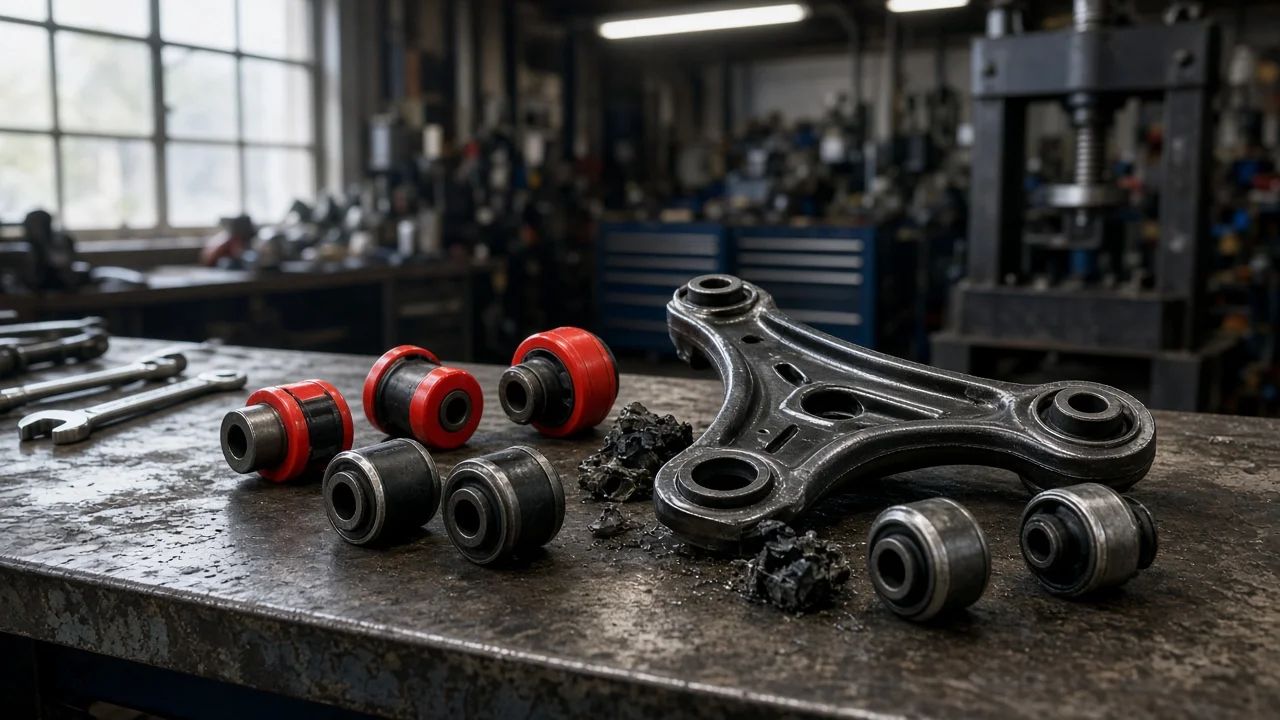
Control arm bushings usually wear gradually. Common signs are a clunk over driveway lips, vague steering or tires wearing on one edge. If your truck or SUV runs Rough Country control arms and you are comparing replacement bushings for them, the choice depends on fit, material and how the parts will be installed. This guide shows how to match Rough Country control arm bushings to the job, verify compatibility and budget for the work around them.
Define the job the product must do
Start by confirming what is actually worn. Bushings get blamed for noises that come from ball joints, sway bar links, tie rod ends or loose hardware. With the vehicle safely supported, check for joint play at each pivot by prying gently at the arm while watching the bushing. Look for cracked, split or displaced material and for shiny wear marks where parts are rubbing. A bushing that has torn or walked out of its housing clearly needs replacement. A squeak by itself may only need cleaning or lubrication, depending on the bushing material.
Then define how the vehicle is used. A daily-driven truck on a mild leveling kit needs quiet, compliant bushings that keep steering predictable on pavement. A lifted rig that sees trails, towing or heavy accessory weight may benefit from a firmer material that resists deflection, though more vibration will reach the cab. Also note your practical constraints. Can you press bushings yourself? Must the arms come off the vehicle? How long can the truck be out of service?
Check compatibility
Bushings are not universal, even within one brand. Rough Country builds control arms for many vehicle platforms and lift heights, and a bushing that fits one arm design may not fit another. Match the replacement to the exact arm, not just the vehicle. Record the arm's part number if it is stamped or labeled, its position (upper or lower, front or rear) and whether it came as part of a lift kit. If you are replacing bushings in factory arms instead, match them to the year, model, drivetrain and original arm design, because arm designs sometimes change within a vehicle generation.
Measure what you can before ordering: the outer diameter of the bushing housing, the bushing width and the inner sleeve diameter that must match the mounting bolt. Compare these against the listing or the manufacturer's documentation. Confirm whether the kit includes inner sleeves, washers, grease and new hardware, or whether you must reuse existing parts. Inspect the mounting points on the frame and axle as well. Elongated bolt holes, damaged cam bolts or worn brackets will undo the benefit of new bushings.
Features that affect the choice
Material is the main trade-off. Rubber bushings isolate road noise and vibration well. They are typically pressed in and bonded to the sleeve, so they flex rather than rotate. Polyurethane bushings resist deflection and hold suspension position more consistently under load. However, they transmit more vibration, depend on lubrication to rotate on the sleeve, and can squeak if that grease washes out. Neither material is better in every case; choose based on the use you defined earlier.
Treat marketing labels carefully. Terms such as heavy duty, performance or lifetime describe positioning, not measured results. Useful evidence includes the stated material, whether the bushing is greasable, the list of included hardware, installation instructions written for your arm and the written warranty terms. If a listing does not say which arm part numbers a bushing fits, ask the seller or manufacturer before buying. A general vehicle fitment line is not enough.
Consider the installation design too. Some bushings are two-piece and slip into the arm by hand. Others require a press or bushing tool, and the arm must be supported carefully to avoid distorting it. A design you can install with your own tools may be more practical than a stiffer one that sends the arms to a shop.
Limitations and ownership costs
Replacing bushings is suspension work, and safe vehicle support comes first. Raise the vehicle with a suitable jack and support it on rated jack stands at the manufacturer's lift points, never on the jack alone. A lower arm may carry coil spring or torsion bar load, so follow the model-specific procedure for unloading it. Use the fastener specification in the installation instructions or factory service information rather than guessing torque values. Many rubber-bushed designs need their final tightening done with the suspension at normal ride height, so the bushing is not clamped in a twisted position. Check your instructions for this step.
Removing the arms disturbs camber and caster, so budget for a professional wheel alignment afterward. Other costs can include grease for polyurethane designs, new bolts or cam hardware, and paying for press work if you lack the tools. Bushings also cannot fix problems elsewhere. They will not cure a worn ball joint, a bent arm or incorrect lift geometry, and they will not restore tires already cupped by earlier wear. If you choose greasable bushings, inspect and relubricate them as the instructions direct.
Build a practical shortlist
Run each candidate through a short checklist before buying. First, confirm the bushing is listed for your exact arm part number or factory arm design and position. Next, verify the housing diameter, width and sleeve size against your measurements. Choose the material that suits your driving and your tolerance for noise. Note what the kit includes, from sleeves and hardware to grease and instructions. Check whether installation requires a press and whether you have access to one. Read the warranty terms as written. Finally, add the alignment and any replacement hardware to the total cost.
If two options pass every check, choose the one with clearer documentation and instructions specific to your arm. Installation errors cause more trouble than small differences in bushing design, and good instructions help prevent them. If fitment is still uncertain after your research, contact the manufacturer with the arm part number and vehicle details before ordering.