Rough Country Adjustable Control Arms: Fitment and Selection
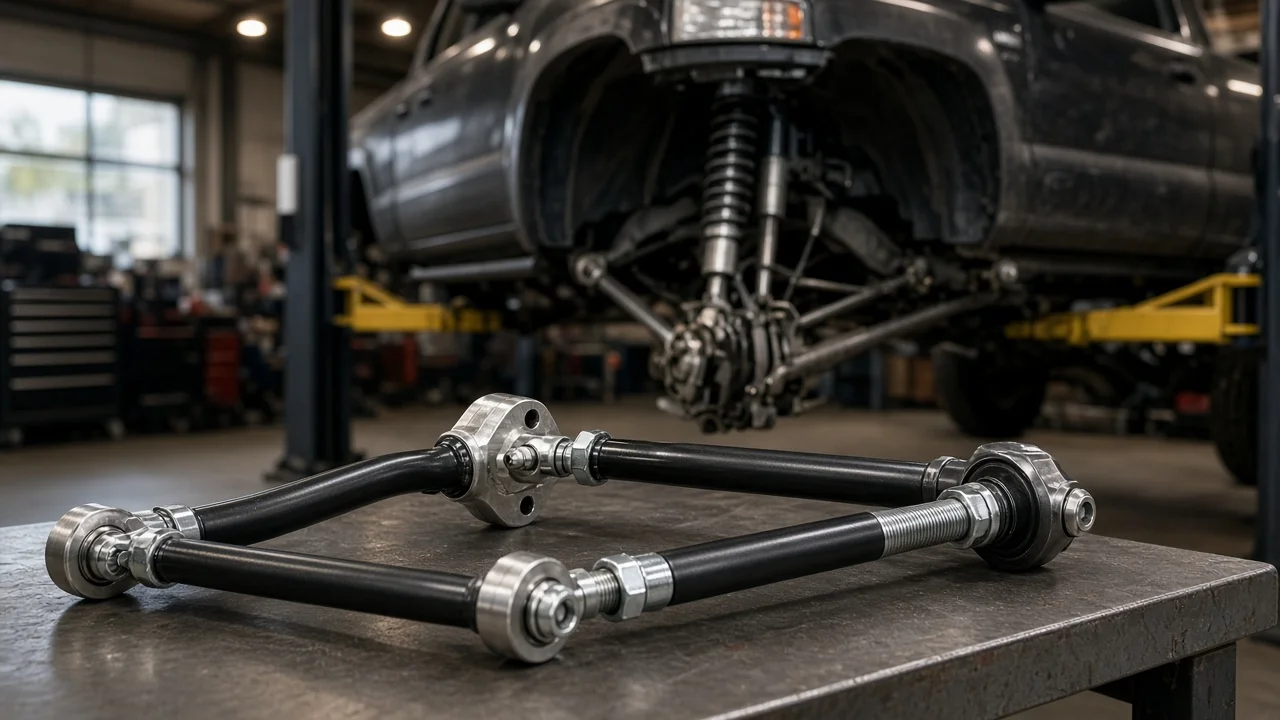
Rough Country adjustable control arms are a common upgrade for lifted Jeeps, especially the Wrangler TJ and Cherokee XJ. A taller ride height changes the geometry that the factory fixed-length arms were built for. This guide covers how to decide whether you need adjustable arms, how to confirm they fit your vehicle and lift, which features actually matter, and what owning a set involves after installation.
Define the job the product must do
Factory control arms locate the axle front to back and set caster and pinion angle at stock height. When a lift raises the body, the arms sit at a steeper angle. That rotates the axle and shifts it slightly, which usually reduces front caster and changes the pinion angle relative to the driveshaft. Adjustable arms let you change arm length to bring those angles back. A mild lift on a daily driver may work acceptably with the original arms. A larger lift, regular trail use, or symptoms such as wandering steering or driveline vibration after a lift are stronger reasons to consider adjustability.
Be realistic about your constraints too. Adjustable arms take measuring, patience and sometimes several rounds of fine-tuning. Plan for a wheel alignment after any front arm change, and possibly a second visit if you adjust again. If you have no interest in setting lengths yourself and your lift height is modest, a fixed-length arm designed for that height may suit you better. Set a budget that covers the arms plus alignment, not just the parts.
Check compatibility
Start with the model and year, then decide which positions you are replacing: front upper, front lower, rear upper or rear lower. Each is usually sold separately or as a set. Confirm the lift height range the arms are designed for, the bolt sizes and bushing widths at the mounting points, and whether your frame or axle brackets have been modified or damaged. Also check clearance to the exhaust, fuel tank, driveshaft and brake lines through full suspension travel. The product listing and installation instructions define the compatible lift range and any extra parts required, so read them before buying, not after the box arrives.
The Wrangler TJ uses coil springs front and rear with four control arms at each axle. In front, the lower arms mainly set caster and where the axle sits in the wheel opening. The upper arms rotate the axle to fine-tune caster and pinion angle. In the rear, the arms set wheelbase and the rear pinion angle relative to the driveshaft. Lifted TJs are prone to rear driveline vibration. Adjustable rear arms can help by correcting pinion angle, but some lifted setups also need driveline changes that control arms alone cannot replace.
The Cherokee XJ uses coil springs and four control arms at the front axle, but leaf springs at the rear. That means there are no rear control arms to replace, so for an XJ, adjustable control arms means the front arms. The rear pinion angle on an XJ is set by shims or the spring mounting arrangement instead. At the front, the lower arms set caster and axle position, and the upper arms rotate the axle to tune pinion angle. Verify that the arms you choose match your XJ's model year and front axle before ordering.
Features that affect the choice
Adjustment style matters in daily use. Single-adjustable arms have one threaded end and usually must be removed to change length. Double-adjustable designs can often be tuned while installed, which makes dialing in caster and pinion angle easier. Joint type is the bigger trade-off. Rubber bushings are quiet and low-maintenance but deflect more. Polyurethane is firmer and can squeak without periodic lubrication. Articulating flex joints allow more axle movement for off-road use, but need regular inspection and sometimes greasing. Tube material and wall thickness matter most on lower arms, which take rock and stump strikes on the trail.
Separate useful evidence from marketing labels. Terms like heavy-duty or maximum flex say little on their own. More useful details include stated tube material and dimensions, the joint design, the adjustment range, which hardware is included, the clarity of the installation instructions, warranty terms, and whether replacement joints or bushings are sold separately. Serviceable joints can extend arm life considerably on a vehicle that sees mud, water and road salt.
Limitations and ownership costs
Safe vehicle support comes first. Park on level ground, chock the wheels, and support the frame on properly rated jack stands. Also support the axle with a jack, because removing an arm lets the axle move. Replace one arm at a time so the axle stays located. Set each new arm to the starting length given in the instructions, or to match the old arm, measuring center to center. Keep at least the minimum thread engagement the instructions specify and tighten the jam nuts. If the instructions call for final tightening at ride height with the weight on the wheels, follow that, using the fastener specification from the manufacturer or the vehicle service information.
Ongoing costs start with a professional wheel alignment after front arm work, and possibly another after further adjustments. Re-check fasteners after the initial break-in period the instructions describe. After that, periodically inspect for joint play, torn boots, damaged threads and loose jam nuts. Grease any fittings on the schedule given, and budget for replacement joints over time, especially if the vehicle regularly sees mud and water crossings.
Control arms do not add lift. They also do not fix a worn track bar, tie rod ends, ball joints, steering box or out-of-balance tires, and they will not cure front-end shimmy on their own if those parts are worn. On larger lifts, the caster and pinion angles you need may not both be achievable through arm length alone. That points to a more involved geometry solution rather than a reason to keep stretching the arms.
Build a practical shortlist
Before comparing options, write down your vehicle, model year, front axle and actual lift height. Note which positions you need and why: front arms for caster and steering feel, rear arms for pinion angle and vibration on a TJ. Then check each candidate against the same points: listed fitment and lift range, adjustment style, joint type versus your mix of road and trail use, included hardware, availability of instructions and replacement joints, and total cost including alignment.
Tie each purchase to a specific symptom or goal rather than buying a full set by default. A TJ owner chasing rear vibration and an XJ owner restoring front caster need different arms, and neither needs parts that solve a problem they do not have. Choose the option whose stated specifications match your use, and plan the installation and alignment together so the arms deliver the geometry you bought them for.