Replacing a lost John Deere Gator key
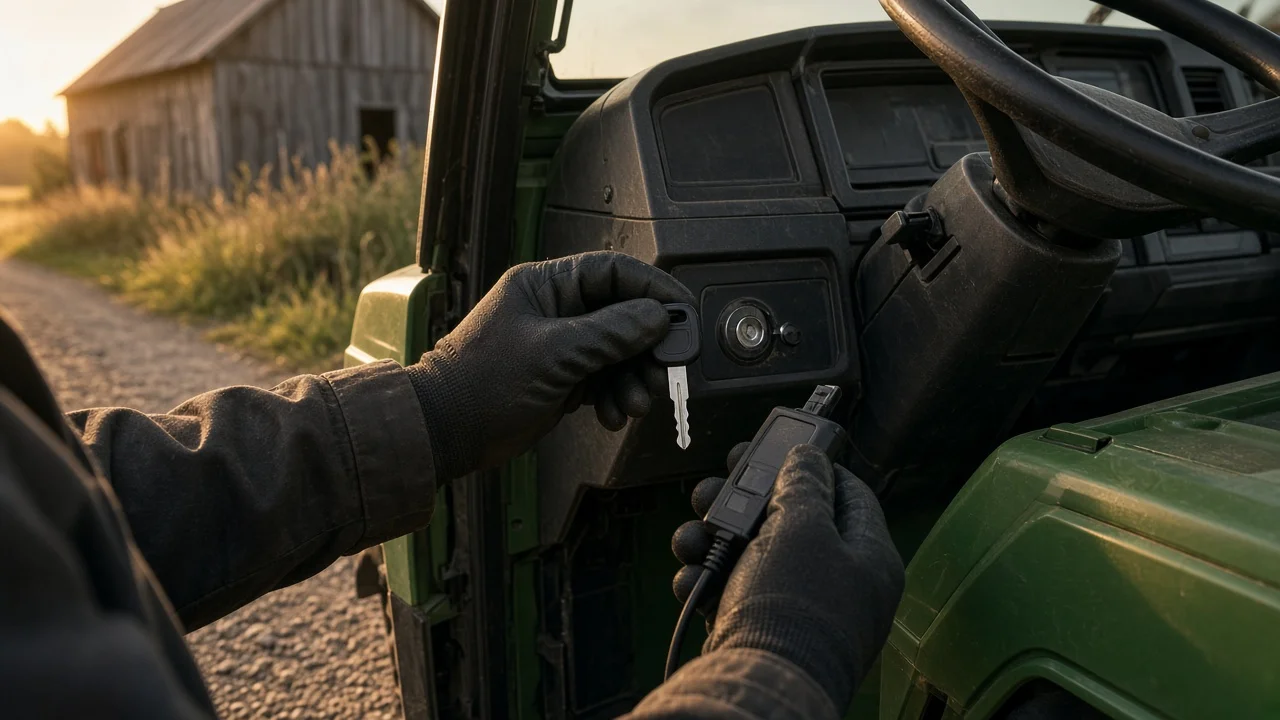
Losing the key to a John Deere Gator can leave a utility vehicle stranded at the worst possible time, whether it is parked by a feed lot, trailhead, or jobsite. Replacement is not as simple as cutting any blank from a hardware store because access involves a mechanical key, and many newer machines also link starting to an immobilizer or remote transmitter. Understanding how the Gator key and starting system actually work helps an owner choose between a dealer, locksmith, or equipment specialist without paying for unnecessary key programming or buying the wrong blank. Ownership documents and machine identification are usually the practical starting points.
Essential answer
A lost John Deere Gator key can generally be replaced through a John Deere dealer, a qualified agricultural or outdoor power equipment locksmith, or by obtaining an appropriate pre-cut or blank key for the machine. The path that fits depends on the age and configuration of the Gator because some models use a common mechanical key profile, while other machines incorporate a chipped key or coded starting function that requires key programming. The missing key itself is evidence of a need for replacement, not proof that the ignition switch, immobilizer, or steering lock has failed.
The most reliable first step is to record the machine serial number or product identification number and have proof of ownership available. A dealer can use that information to identify the correct key blank or coded replacement procedure. For a straightforward mechanical key, an equipment locksmith may be able to duplicate a known key code or impression a replacement. If the vehicle will not crank after a new mechanical key is cut, the issue may involve a separate remote transmitter, immobilizer function, or the ignition cylinder rather than the key blank alone. Manufacturer-dependent systems require confirmation for the specific Gator series before assuming programming is needed.