Replacing a lost Dodge Journey key fob
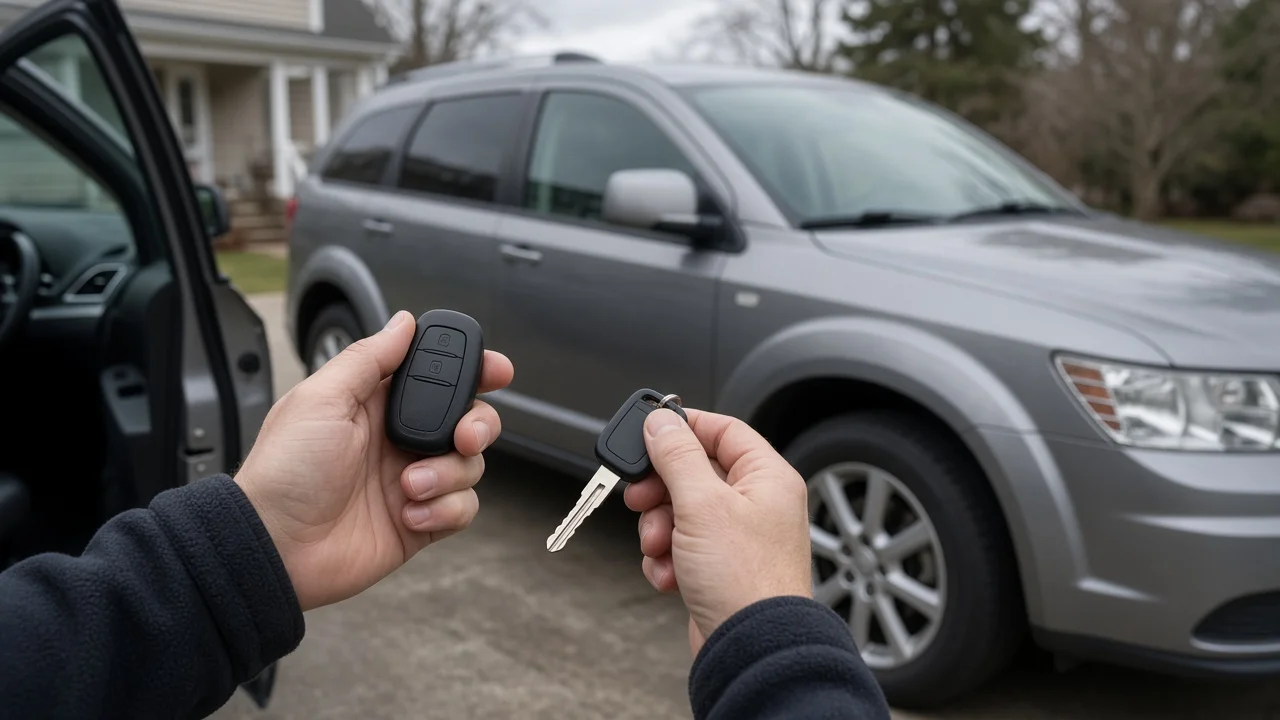
Losing the transmitter for a Dodge Journey can leave the vehicle stuck in a driveway or parking space even when the mechanical key is still available. A replacement is not simply a new shell with a cut blade; the remote transmitter must communicate with the vehicle security system, and the immobilizer requires a programmed signal before the engine will start. The correct approach depends on which fob style the Journey uses, what proof of ownership can be supplied, and whether a working key is still present. Understanding those variables helps avoid buying an inexpensive remote that will never operate the doors or ignition.
Essential answer
The essential answer is that replacing a lost Dodge Journey key fob requires obtaining the correct remote transmitter for the model year and having it programmed to the vehicle. A remote that has not been programmed may lock or unlock nothing, and the immobilizer will not recognize an unprogrammed key even if its blade turns the ignition cylinder. The fob combines a remote transmitter for door functions and a transponder or proximity signal that the theft-deterrent system expects to see. Replacement therefore has two stages: getting the matching hardware and completing the programming sequence.
A key distinction affects the scope of the job. Journeys with turn-key ignition and a separate fob generally need a cut emergency key plus a programmed transponder, while push-button start versions rely on a proximity key recognized by the passive entry system. If one working fob remains, some vehicles permit owner-performed programming for an additional transmitter. If all fobs are lost, roadside assistance or a mobile locksmith with the appropriate diagnostic tool may be necessary because the vehicle cannot be put into a programming mode without an accepted key or secure access.