Replace tractor cab glass
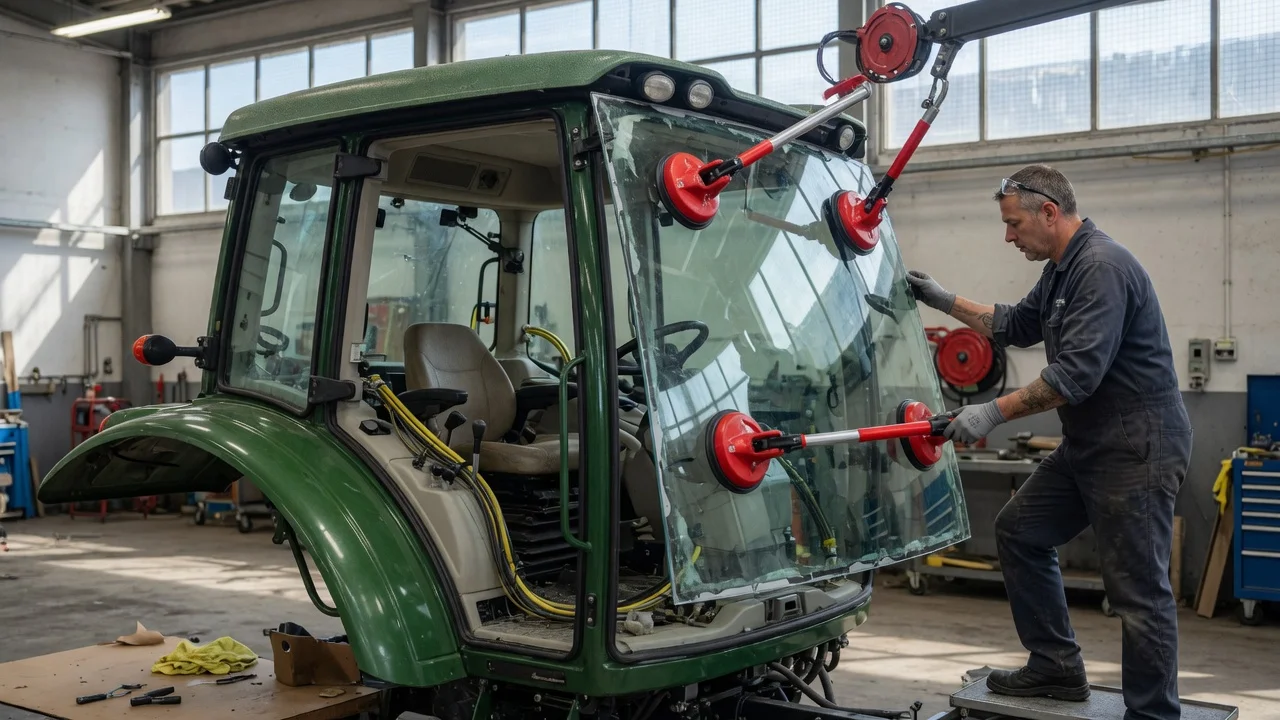
What tractor cab glass replacement involves
Tractor cab glass replacement means removing a cracked, shattered or clouded glass panel from the operator enclosure and installing a correctly sized replacement. The job can cover flat laminated windscreens, curved rear panels, side windows and roof glazing. The essential answer is that replacement is possible as a do-it-yourself task on many tractors, but it is only safe and durable when the glass is the correct specification, the old sealant is fully cleaned away, and the new panel is bonded or gasketed without stress points. Tractors with bonded glass, integrated heating elements or curved acoustic panels often require professional fitting.
Identify the glass and mounting method
Before ordering a panel, confirm the tractor model, cab series and, where possible, the part number printed on the original glass. Tractor cab glazing is generally either laminated safety glass or toughened glass. Laminated glass cracks but tends to stay in place, while toughened glass breaks into small fragments. The mounting method changes the replacement procedure: rubber gasket-mounted panels are pressed into a channel, while bonded panels use a polyurethane adhesive and may require the frame to be primed.
Safety precautions
Wear cut-resistant gloves and eye protection; Disconnect the battery if the panel has a heated element or wiper wiring; Support the glass so it cannot fall into the cab; Work on level ground with the cab door secured open; Keep an assistant for any panel larger than a side window
Removing the damaged panel
For gasket-mounted glass, release the locking strip if one is fitted, then push the glass outward from inside the cab, starting at a top corner while an assistant supports the panel. For bonded glass, cut through the polyurethane bead with a flexible wire cutter or a purpose-made cold knife, working around the perimeter. Avoid prying against the cab frame with metal tools because that can distort the aperture and cause the new panel to crack.
Remove all old sealant from the frame. Urethane residue should be cut back to a thin, even layer rather than removed down to bare metal unless the paint is damaged. If rust or corrosion is present, treat it before fitting the new panel.
Fitting gasket-mounted glass
Fit the new rubber gasket around the glass. Insert a cord into the outer gasket channel. Hold the assembly against the cab aperture. Pull the cord from inside the cab to draw the gasket lip over the frame. Press the locking strip into place if required.
Use a soap solution only as a fitting lubricant if the gasket manufacturer permits it. Check that the gasket lip is seated evenly all the way around before moving the tractor.
Fitting bonded glass
Bonded replacement requires a clean, dry surface and the correct primer and adhesive system for the glass and cab paint. Apply primer to the glass edge and frame, then run a continuous triangular bead of polyurethane around the aperture. Set the glass into place with even pressure and support it for the full curing time stated on the adhesive product. A typical full cure may take twenty-four hours or more, depending on temperature and humidity.
When professional fitting is the better choice
A specialist is advisable for curved glass, panes with heating grids, bonded rear screens on high-specification cabs, or any panel where an incorrect fit could affect cab pressurisation or roll-over protection. Professional fitting is also the safer route if the frame is distorted, if the old glass shattered into the ventilation system, or if the tractor is under warranty and the repair must follow the manufacturer's procedure.
After installation
Leave bonded panels undisturbed for the full adhesive cure time before closing doors forcefully or driving over rough ground. Reconnect any electrical connectors for heated glass and test the wiper path with a wet screen before returning the tractor to work. If the panel shows distortion, uneven gaps or stress cracks within the first days, stop using the cab and re-check the fitting; a stressed glass panel can fail suddenly.