Replace Side Mirror Glass: A Practical Owner’s Guide
Direct Answer and Scope
Replacing side mirror glass is usually a driveway-level repair that does not require removing the entire mirror housing. On most vehicles, including the Toyota Corolla, Toyota Sienna, VW Golf, VW Jetta, VW Passat, and many trucks, the job involves releasing the old glass backing plate from the internal adjuster mechanism, disconnecting any heating wires or turn-signal connectors, and pressing a new glass assembly into place. The main qualification is fitment: glass shape, backing-plate pattern, and electrical features vary by model year, generation, trim, and market. Using a mirror glass advertised for a different submodel can leave you with an unsecured panel or a broken heating connector.
What the Replacement Covers
A replacement side mirror glass assembly typically includes the glass and a plastic backing plate that snaps or screws onto the power or manual adjuster. In heated mirrors, the glass may have two electrical spade terminals. In blind-spot-equipped vehicles, the warning indicator usually remains part of the housing, not the glass, but the replacement glass must have the correct shape and cutout so the indicator light can be seen through it. For a Toyota Corolla, the part must match the specific generation and whether the mirror is heated. For a Toyota Sienna, the glass size and backing pattern differ from the Corolla even though the general replacement procedure is similar.
Common Fitment Differences by Vehicle
Toyota Corolla: Heated and non-heated glass types exist. Later generations may have a turn-signal repeater in the housing; the glass itself is normally plain or heated. Toyota Sienna: Replacement mirrors are often larger with a different backing plate. Check the production year and whether the mirror is power-folding or includes puddle lamps; the glass backing still uses a similar snap-fit or adhesive method. VW Golf, Jetta, Passat: Volkswagen uses thin backing plates with a central motor mount. Heated glass has two terminals, while auto-dimming or side-assist glass may have additional connectors. VW wing mirror glass is often retained by clips around the motor ring. Trucks: Full-size trucks may use large flat or convex glass with plastic retainers or foam tape. Aftermarket truck mirror replacement glass is commonly sold as a stick-on piece to be fixed over a damaged but still intact backing plate.
Step-by-Step Replacement Procedure
The sequence below applies to clip-on glass assemblies. If the original glass is bonded directly to the backing plate, you may need to buy a complete glass-and-backing replacement rather than a stick-on panel.
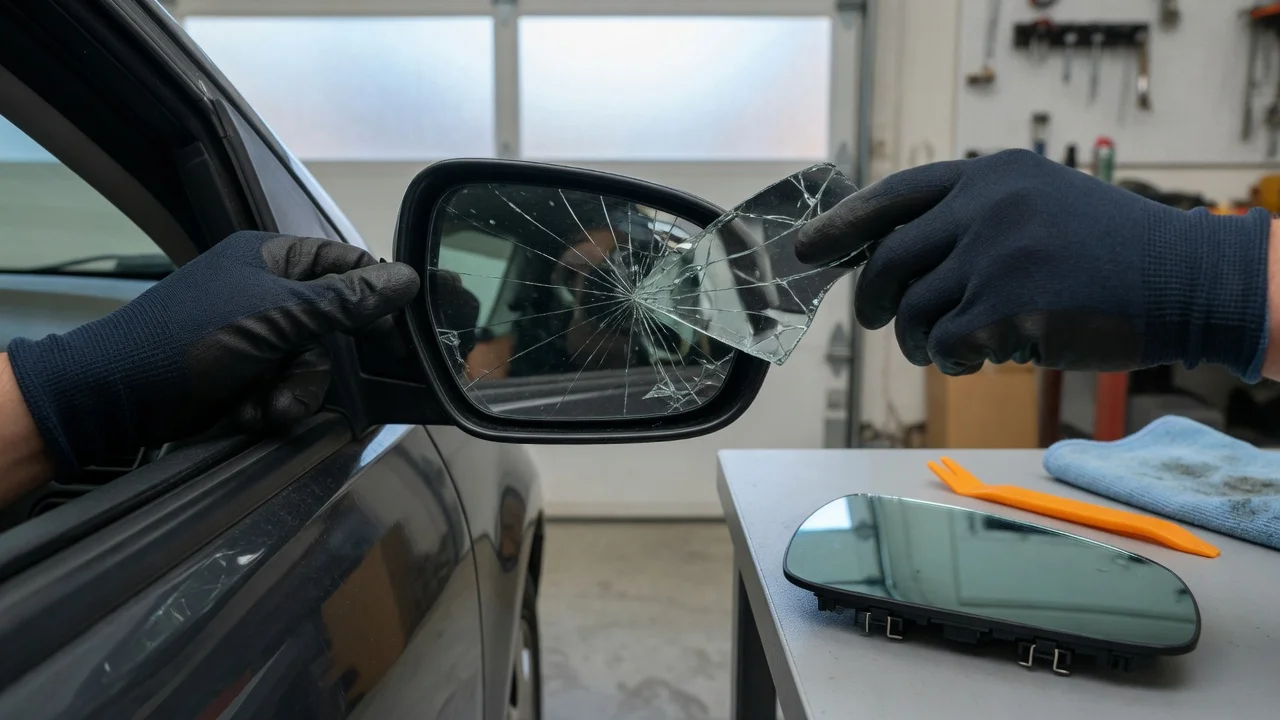
Angle the mirror glass fully inward and upward to create a finger gap at the outer edge. Look behind the glass with a flashlight. Identify whether it is held by clips, a central locking ring, screws, or adhesive. For clip-on assemblies, insert a plastic trim tool or padded flat tool near the outer edge and gently lever the glass outward. Do not pry against the housing edge itself, because the motor mount can crack. If the glass has heater wires or blind-spot wiring, disconnect the electrical connectors before fully removing the panel. On some VW models, the terminals pull straight off; on other vehicles, a small tab must be released. Clean the motor mount and check that no broken clip fragments remain inside the housing. Connect the new mirror glass to any electrical wiring before pressing it into place. Center the new backing plate on the adjuster motor. Apply even pressure with the palm of your hand or a folded towel until you feel or hear the clips seat. Operate the power adjuster in all four directions and test the heater or turn signal if equipped.
Heated and Electrically Equipped Mirrors
On Toyota Corolla, Sienna, and VW models with heated glass, the replacement must have the same two terminal lugs as the original. The terminals are often unmarked, but polarity is not critical for a resistive heating element. However, the connector shape can differ between suppliers, so compare the old and new terminal blades before installation. For vehicles with auto-dimming exterior glass, the replacement may need a separate electrochromic connector. If the new glass lacks this connector, the mirror will still function mechanically but the dimming feature will be lost.
Truck Mirror Glass Replacement
Truck mirrors often break only the glass while the backing plate remains attached to the power or manual adjuster. In that case, a stick-on replacement glass can be cut or purchased to match the surviving backing plate. For heated truck mirrors, the stick-on panel may not restore heat if the heating element is part of the original glass assembly. When the backing plate is damaged, a complete truck mirror glass replacement includes the glass, backing plate, and any mounting tabs. Manual towing mirrors and spotter mirrors may use separate convex panels with different retainers than the main flat glass.
Material Risks and Gaps in Evidence
Several details cannot be confirmed without inspecting the exact vehicle. The fastener style, clip count, connector terminal style, and glass backing material vary across model years and markets even within the same nameplate. Published specifications do not always distinguish between heated and non-heated Corolla replacement glass or between VW Golf and Jetta mirror retention. If the existing mirror is auto-dimming or blind-spot-equipped, the owner should physically inspect the back of the old glass before ordering a replacement. No supplied evidence verifies OEM part numbers, torque values, or adhesive curing times, so these are not stated as facts.
Recommended Next Step
Before buying a replacement side mirror glass, remove the broken panel or take clear photos of the back of the mirror and the housing mount. Match the new glass by shape, backing-plate pattern, and electrical connectors. If the mirror has no visible fasteners and no gap at the edge, assume the glass is bonded and plan for a complete backing-plate replacement rather than a glass-only stick-on panel. Replacing the glass is usually less expensive than replacing the whole mirror assembly, but the cost difference narrows on vehicles with integrated auto-dimming, side-assist, or power-folding components.