Replace and install brake pads
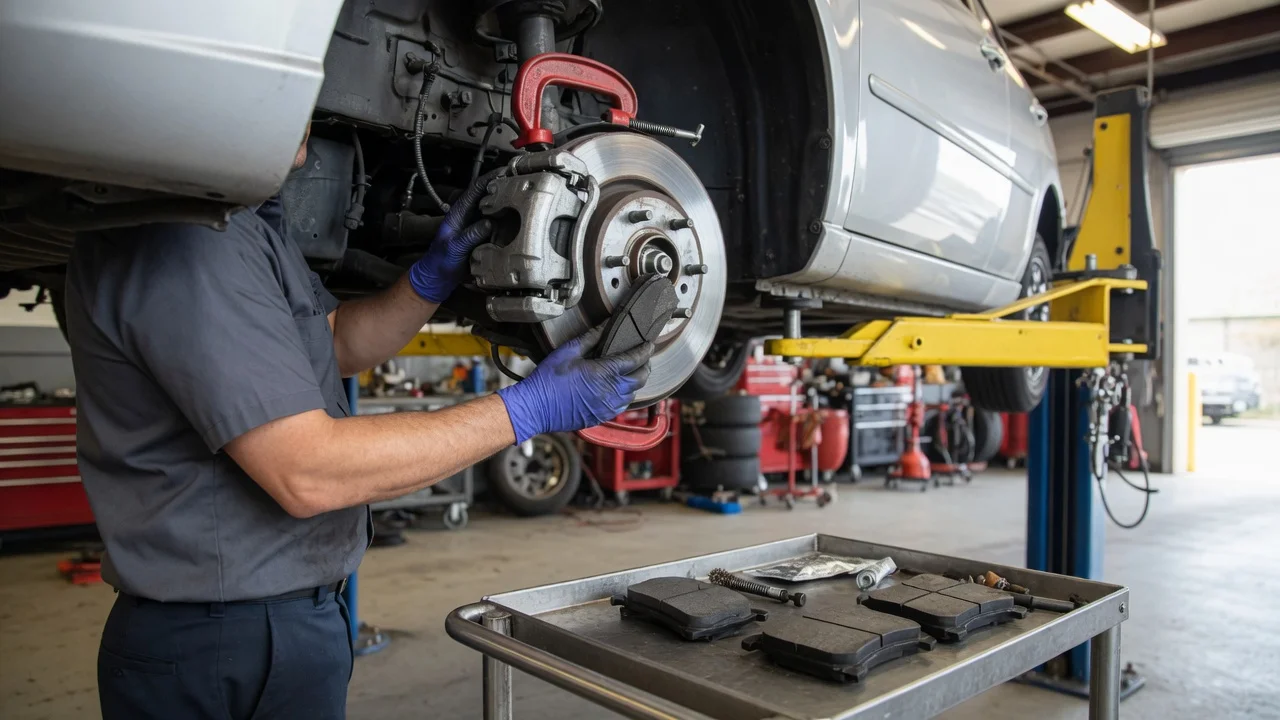
Brake pad replacement: where to start
To replace brake pads, first identify the vehicle and brake assembly, then obtain the applicable manufacturer procedure. The supplied information contains no vehicle-specific service instructions, part numbers, wear limits or tightening values. It therefore supports a preparation and service checklist, but not a complete mechanical installation procedure.
1) Confirm the vehicle and replacement parts
Record the make, model, model year, relevant vehicle specification and whether the work concerns the front or rear brakes. Confirm the fitted brake equipment before selecting parts. For BMW brake pad replacement, the brand name alone does not establish which pads or installation instructions apply; confirm the vehicle’s exact application through the manufacturer’s parts and service information.
2) Obtain the procedure and prepare the equipment
Before starting, obtain instructions covering safe lifting and support, wheel removal, brake disassembly, piston retraction, installation and final checks. Use that procedure to establish the required tools, replacement hardware, approved consumables and tightening values. Check whether it specifies a parking-brake service mode, diagnostic equipment or wear-sensor work. None of these requirements can be confirmed for an unidentified vehicle.
Do not begin disassembly without suitable vehicle support and the equipment required by the procedure. If you cannot establish the correct lifting points, support method or brake-system requirements, arrange professional service before proceeding.
3) Inspect before installing new pads
Follow the manufacturer’s inspection instructions to determine whether pad replacement is appropriate and whether other brake components need attention. Ask the technician, or consult the applicable procedure, for the relevant wear limits and inspection criteria. No measurements or condition findings were supplied, so this guide cannot establish that pads alone will resolve a noise, warning or braking complaint.
4) Replace and install the pads using the applicable instructions
Carry out removal, piston retraction, preparation, pad installation and reassembly in the manufacturer’s specified sequence. Follow its requirements for pad orientation, hardware replacement, lubrication locations and fastener tightening. Do not substitute a generic torque value or piston-retraction method. The evidence needed to give those mechanical steps is missing here; use a qualified technician if you cannot obtain or confidently follow the correct procedure.
5) Complete the required checks before driving
Complete the manufacturer’s post-installation checks, including its instructions for restoring brake operation, checking pedal response and inspecting for leaks or assembly problems. Perform any specified parking-brake initialization, sensor work or service-indicator reset. Obtain the applicable bedding-in instructions, if required; no supported driving speeds, stopping sequence or distances were supplied.
Do not drive if the pedal response is abnormal, fluid is leaking, a brake warning remains unexplained or correct assembly is uncertain. Have the vehicle inspected and arrange recovery if needed.
Booking a brake pad change service
Give the workshop the vehicle details and describe any symptoms or warnings. Request an inspection and an itemized estimate identifying the pads, associated parts, any additional work and the completion checks included. Ask for the inspection findings behind any recommendation beyond pad replacement. No supported price or labor-time information was supplied, so obtain a quote for your specific vehicle and location.