Renault Megane ABS Reluctor Ring: Fitment Guide
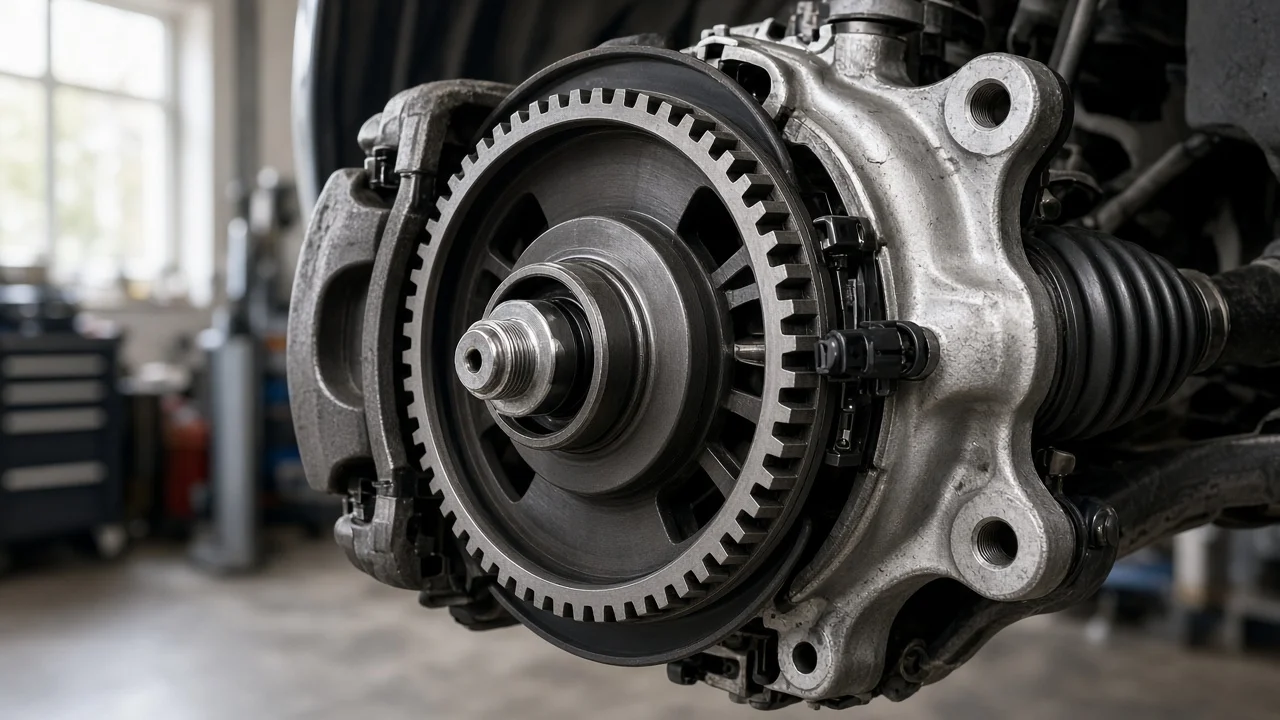
A cracked or corroded ABS reluctor ring on a Renault Megane can turn on the ABS warning light, disable anti-lock function and sometimes affect stability control. A replacement ring looks like a simple part, but fitment depends on the Megane generation, the axle, the parts already on the car and whether the system reads a toothed ring or a magnetic encoder. This guide explains how to identify the correct part, what to check before ordering and when the job belongs with a brake specialist.
The short answer on fitment
The correct reluctor ring for a Renault Megane is the one that matches the original part on the same corner of the same vehicle. It must be the same type, fit the same mounting surface, have the same number of teeth or magnetic poles and sit in the same position relative to the wheel speed sensor. No single ring fits every Megane. Front and rear parts usually differ, and the generation, engine, transmission and any non-original driveshafts or hubs all affect what you need. Use the VIN or registration data when ordering, then confirm the new part against the old one before fitting it.
On many versions there is no separate ring to buy. The encoder may be built into the wheel bearing or hub, or the tone ring may be part of the CV joint. In those cases the repair becomes a bearing, hub or driveshaft replacement. Check this before buying a loose ring that has nowhere to mount.
How the ABS reluctor ring works
Each wheel has a speed sensor facing a rotating target. On a toothed reluctor ring, the passing teeth and gaps change the magnetic field at the sensor tip. On a magnetic encoder, alternating north and south poles in a rubber or plastic track do the same job. The ABS control unit turns this signal into wheel speed and compares all four wheels. When one wheel slows too sharply under braking, the unit modulates hydraulic pressure to that wheel's caliper so the tire keeps grip instead of locking.
The system needs a clean, consistent signal. A cracked ring, a damaged tooth, rust that swells and lifts the ring, or a ring with the wrong count all make the computed speed wrong. Typical results are an ABS or stability warning, a stored wheel-speed fault, unwanted ABS intervention with a pulsing pedal at low speed, or ABS that stays disabled. The reluctor ring is separate from the friction material on the brake pads and the wear limits of the brake rotors. Base hydraulic braking usually remains when ABS is disabled, but anti-lock assistance may not work in an emergency stop.
What changes the right part
Generation and axle matter most. Older Megane models commonly use a toothed ring pressed onto the outer CV joint at the front, and aftermarket press-on rings are sold for that purpose. Later designs increasingly use magnetic encoders built into the wheel bearing seal. This is especially common at the rear, where on some versions the bearing is integrated with the hub, brake drum or brake disc. A press-on steel ring cannot replace a magnetic encoder, and an encoder cannot replace a toothed ring.
Rings for different engines and driveshafts can look alike but differ in tooth count, inside diameter or width. A wrong count produces a speed signal that does not match the other wheels, which the ABS unit flags as a fault. Aftermarket driveshafts may come with a ring already fitted or without one, so match what came off the car. Body styles, performance versions and different brake setups can also use different hubs and driveshafts, so confirm vehicle fitment for your exact variant rather than the model name alone.
Orientation also matters on encoder bearings. The magnetic track must face the sensor. A new bearing installed the wrong way around is a common cause of an ABS fault that appears right after a bearing repair.
What the owner can do
Start with diagnosis before ordering parts. A scan tool that can read the ABS module will usually show which wheel speed sensor circuit or signal is at fault. With the car safely supported on stands, remove that wheel and inspect the ring for cracks, missing or chipped teeth, corrosion, lifting from its seat and trapped metal debris. Check the sensor tip and wiring at the same time, since a damaged connector or chafed cable can give the same warning. On magnetic encoders, a magnetic viewing card can show whether the poles are intact.
When ordering, give the supplier your VIN, then compare the replacement with the old part: type, tooth count, inside diameter and width. Choose a listing that states the Megane generation and the axle it fits. If you are already replacing brake pads, rotors or a caliper on that corner, inspect the ring while everything is apart. Keep magnetic encoders and new bearings away from magnets and loose metal particles before installation.
Press-on rings need a clean seat and even pressure; hammering on the ring can distort it or crack it. Protect the CV boot during the job. If you unbolt a caliper for access, support it instead of letting it hang on the hose, and avoid opening the hydraulic circuit; if brake fluid lines are opened, the system must be bled to the manufacturer's procedure. After fitting, clear the codes, then compare live wheel speeds on a scan tool during a road test to confirm the repair.
Limitations and next step
This guide cannot give part numbers, tooth counts or dimensions for a specific Megane, because they vary by version and supplier listings are not always accurate. The most reliable confirmation is the manufacturer's parts catalog checked against your VIN, together with a direct comparison to the removed part. If the warning stays on after a correct ring is fitted, the cause may be the sensor, wiring, a bearing with excess play or the ABS module itself, which calls for proper diagnosis rather than more parts.
Stop using the car and have it professionally inspected if the main brake warning lights up, the pedal feels soft or sinks, fluid is leaking, or the car pulls under braking. Those symptoms point beyond the reluctor ring. For the ring itself, the next step is simple: confirm the fault location, identify the exact part from vehicle data, and fit it to the vehicle-specific service information for your Megane.