Remote Start Not Working With the Check Engine Light On: Causes and Next Steps
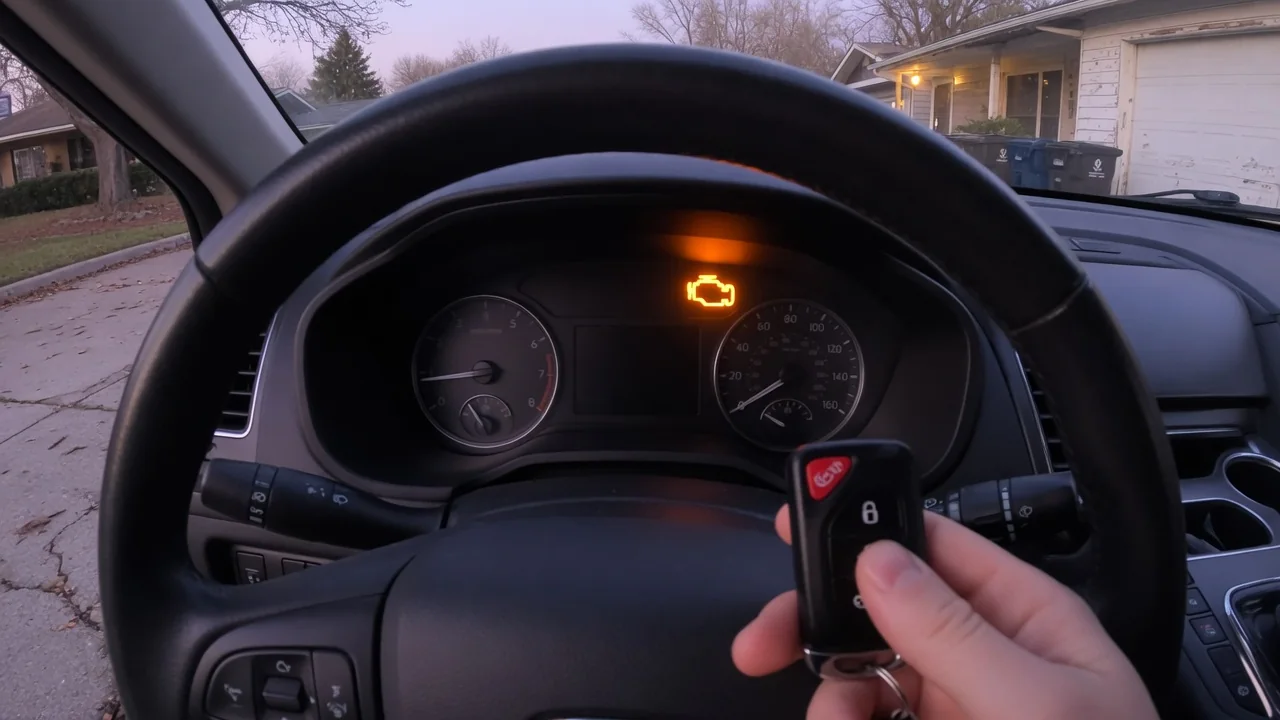
Discovering that your remote start is not working while the check engine light is on can feel like two separate failures, but they are often connected. Many vehicles treat an illuminated malfunction indicator lamp as a reason to block unattended starting. Understanding why that happens, how to confirm it, and what stored codes actually suggest helps you decide whether you face a simple fix or a repair that needs professional attention.
Why an Active Check Engine Light Can Disable Remote Start
Many factory remote start systems, and some aftermarket units, check vehicle status before they crank the engine. If the engine control module reports an active emissions or engine fault, the system may refuse the start request entirely or shut the engine down shortly after it fires. This remote start lockout exists because nobody is in the driver's seat to notice warning signs. Letting an engine idle unattended for an extended period while the computer has flagged a problem could worsen a misfire, overheat a catalytic converter, or hide a developing fault.
Whether a check engine light actually blocks remote start depends on the manufacturer, the model year, and whether the system is factory or aftermarket. Some vehicles ignore certain stored codes, while others lock out remote start for almost any active fault. The remote start conditions described in the owner's manual usually list what the system checks before starting. In most cases, the lockout is a deliberate safety feature doing its job, not a sign that the remote start module, antenna, or fob has failed, so the real repair target is usually the engine fault.
Confirming the Warning Light Is What's Blocking Remote Start
Start with simple observations. Start the vehicle normally with the key or push button, and see whether the malfunction indicator lamp stays lit after the bulb check. Then think back: did remote start stop working around the same day the light appeared? A close match in timing suggests the lockout. Next, watch how the vehicle responds to a remote attempt. Many systems flash the parking lamps, sound a specific horn chirp pattern, or post a message in the app or driver display when a start is refused, and your manual explains what each signal means.
Pay close attention to how the light behaves. A steady check engine light indicates a stored fault that deserves diagnosis, while a flashing check engine light typically signals a condition such as a severe misfire that can damage the catalytic converter, so the vehicle should be checked promptly rather than treated as a remote start inconvenience. Write down when the light came on, whether you recently refueled, what the weather was like, and any change in idle, acceleration, or fuel economy. Those details give a technician useful context when interpreting codes.
Reading Trouble Codes Without Guessing What They Mean
An OBD-II scan tool, or a code read at many parts stores, retrieves the diagnostic trouble code stored in the engine computer. That code is the starting point for diagnosis, not the answer. Before interpreting it, look up its meaning for your specific make, model, and year. Generic codes follow a shared format, but manufacturer-specific codes can mean different things between brands. Relying on a definition written for a different vehicle can send you in the wrong direction and lead to unnecessary repairs.
A code points to a circuit or a monitored condition, not automatically to a failed part. An oxygen sensor code, for example, might stem from wiring, an exhaust leak, or a fuel delivery issue rather than the sensor itself, so replacing parts based on the code alone often wastes money. One easy check applies to some evaporative emissions codes: a loose gas cap or a cap with a worn seal. After tightening or replacing it, the light may take several drive cycles to go out, and remote start may return once it does.
Chevy Remote Start and the Check Engine Light
For anyone dealing with a Chevy remote start not working and the check engine light on, the same lockout logic often applies. Chevrolet factory remote start may not run while certain engine faults are active, but the exact conditions vary by model and year, so confirm them in the owner's manual or with a dealer. It is also worth verifying that remote start is set up and enabled. Look through the vehicle settings menu and the manufacturer's app, using your manual to find the correct location rather than guessing.
Code reading on a Chevy has a limitation worth knowing. A basic generic reader shows standard powertrain codes, but GM vehicles may store additional codes in other modules that only a GM-capable scan tool can fully read. If a generic tool shows nothing yet remote start remains locked out, deeper scanning is justified. When you visit a dealer, ask whether any software updates or service bulletins apply to your vehicle, since module programming can sometimes affect how faults and remote functions behave.
Other Conditions That Can Also Stop Remote Start
The check engine light is not the only thing that can stop remote start. Most systems refuse to run if a door, the hood, or the trunk is detected as open, so a misadjusted or corroded hood ajar switch is worth checking. Hazard lights left on, a key detected inside the cabin, or a low vehicle battery can also block the start. Some systems limit how many consecutive remote starts are allowed before a normal start is required, and your manual will describe that limit if it applies.
Communication problems can mimic a system failure. A weak key fob battery, standing out of range, or radio interference can stop the signal from reaching the vehicle even when it would otherwise start. Try again closer to the vehicle or with a fresh fob battery. Aftermarket remote start units add their own fault and lockout logic, often with unique flash patterns, so the installer or the unit's documentation is the best guide. Ruling out these simpler causes first keeps you from blaming the check engine light for a problem it did not create.
When to Get Professional Testing and What Not to Do
Resist the urge to clear codes or disconnect the battery just to get remote start working again. If the underlying fault is real, the light will return, and clearing it can erase freeze-frame and readiness data a technician could use. Seek prompt professional inspection if the light flashes, the engine runs rough or stalls, the temperature gauge climbs, you notice unusual smells, or power drops. Intermittent electrical issues, communication faults between modules, and problems in an aftermarket installation usually require proper testing equipment and wiring diagnosis.
When you drop the vehicle off, describe both symptoms and ask the shop or dealer to confirm the engine fault repair and then verify that remote start works normally afterward. That second check matters, because a separate issue such as a faulty hood switch can remain hidden behind the original lockout. Once everything works, use remote start responsibly. Only run the engine remotely in a well-ventilated area, never in an enclosed garage, since exhaust can build up quickly and create a serious carbon monoxide hazard.