Remote Start Not Working in Cold Weather: Causes and Safe Checks
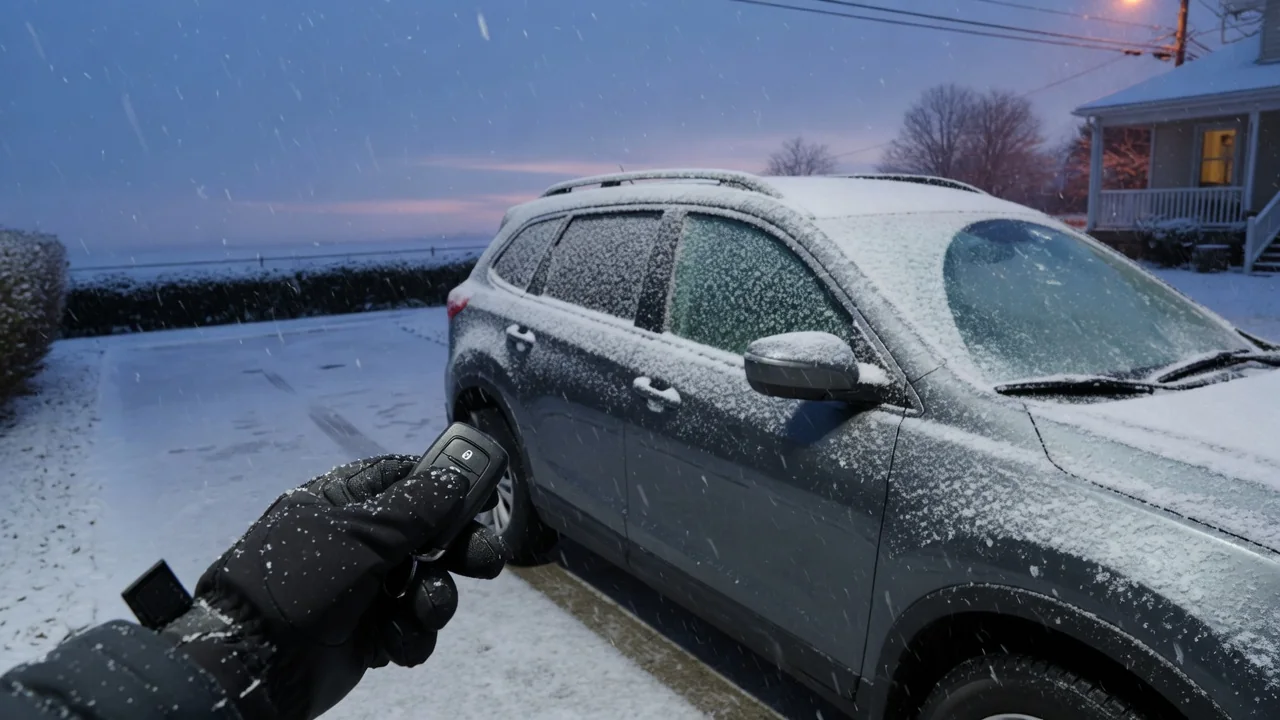
When remote start stops working in cold weather, the cause is usually one of a few things. It could be a tired 12-volt battery, a weak key fob battery, or a safety interlock giving a false reading. It could also be a problem with the connected service or the installation. This guide covers safe checks, including notes for Jeep and Jeep Grand Cherokee owners, before you book professional testing.
Why Cold Weather Can Stop Remote Start From Working
Cold slows the chemical reactions inside a 12-volt battery, so it delivers less current exactly when thick oil makes the engine harder to turn. That reduces cold cranking performance and the reserve left after sitting overnight. Many remote start systems monitor battery voltage and simply decline to attempt a start, or abort partway, when voltage looks too low. Specific thresholds and run-time logic differ by manufacturer and system, so no single number applies across vehicles.
The symptom pattern helps narrow things down. No response at all points first toward the fob signal or a command that never arrived. Parking lights flashing without cranking suggests the vehicle heard the request but a condition or low voltage triggered a remote start abort. An engine that starts and then shuts off soon after can indicate a monitored condition changing or voltage sagging under load. Cold also weakens the coin cell inside the fob, shortening range or blocking the signal entirely.
Key Fob and Signal Checks You Can Do Safely
Start with range. Stand close to the vehicle with a clear line of sight, away from walls or other cars, and try the remote start sequence again. If it works up close but not from your kitchen window, signal strength is the likely limit. Next, press lock and unlock. If those buttons also respond only at short distances, a weak key fob battery is a strong suspect. If they work normally from the usual range, look more closely at the vehicle side.
A spare fob, if you have one, is one of the most useful tests available. If the spare starts the vehicle reliably while the primary does not, the fault likely lives in the original fob or its battery. If both fail the same way, focus on the vehicle. Heavy ice or frost buildup and a parking spot surrounded by metal structures or electrical interference may reduce signal reach somewhat. They rarely explain a complete failure at close range on their own, though.
Safety Interlocks and Conditions That Can Block a Remote Start
Most remote start systems run a series of checks before starting the engine. Common examples include closed doors and hood, the transmission in park, and no active warning lights that the system treats as disqualifying. The exact list depends on the vehicle and the system. The remote start conditions section of your owner's manual is the place to confirm what yours requires. Don't assume one universal set of rules applies to every vehicle.
Cold can plausibly interfere with those checks. A hood switch or door latch switch that is stiff, frozen, or affected by moisture might read as open even when everything is shut. A door ajar warning on the dash after a failed attempt is a clue worth noting. Treat this as a possibility to verify, not a confirmed diagnosis. Never bypass, jumper, or disable an interlock, because those safeguards exist to prevent unintended vehicle movement.
Jeep Remote Start Not Working in Cold Weather
If your Jeep's remote start isn't working in cold weather, first confirm which system you actually have. Factory key fob remote start, a connected vehicle app service, and an aftermarket remote starter each follow different logic and need different troubleshooting. The owner's manual describes the Jeep-specific button sequence and how the parking lights or horn should respond. It also covers how long the engine runs and any listed conditions that stop or cancel a remote start.
App-based remote start adds another layer. It typically depends on cellular coverage where the vehicle is parked and on an active service or subscription, both separate from cold-weather battery problems. A parking garage with poor reception or an expired plan can look like a winter failure. Also, don't assume behavior reported for one Jeep model or year applies to yours, since equipment, software, and remote start rules can vary across the lineup.
Jeep Grand Cherokee: Narrowing Down a Cold-Weather Remote Start Problem
If your Jeep Grand Cherokee's remote start isn't working in cold weather, begin by identifying the exact model year and trim. Equipment and system behavior can differ between generations and packages, so guidance written for another version may not match your vehicle. After a failed attempt, get in and write down any dashboard messages or warning lights that appear. Also note the outside temperature and how long the vehicle sat. These details help a technician reproduce the problem.
A dealer or qualified shop can scan for stored fault codes and check whether software updates are available for the relevant modules. Whether any specific bulletin or recall applies depends on the individual vehicle, so ask rather than assume. If a code does appear, treat it as evidence to interpret, not proof that a part has failed. Many codes are manufacturer-dependent, so their meaning must be confirmed for that specific Grand Cherokee before anyone replaces components.
Aftermarket Remote Starters and Cold-Weather Behavior
An aftermarket remote starter often includes installer-configured settings that affect winter behavior. These can include run time, how the system detects that the engine has started, and how it reads battery voltage. Because these settings vary by product and installation, check them with the original installer or the system's documentation. Loose, poorly crimped, or corroded connections from the install can also show up first in cold, damp conditions, when contraction and moisture make marginal contacts fail.
Aftermarket units usually connect to the vehicle's factory electronics, including security, immobilizer, and body control functions. The two systems may interact in ways that need professional review. Whether a particular unit suits a particular vehicle is a question for the installer, not guesswork. If a system that worked last fall starts failing in winter, going back to the original installer is usually the fastest route, since they know how it was wired and configured.
When to Get Professional Testing and Key Safety Reminders
If remote start problems come with slow cranking, dim lights, or other electrical issues, ask for a battery load test and a charging system check. A battery can show acceptable resting voltage yet fail under load. A weak alternator can also leave it undercharged, especially with short winter trips. Guessing from symptoms alone often leads to replacing the wrong part. Scanning for stored codes gives a more reliable starting point for diagnosis.
Safety matters as much as convenience. Never remote start or idle a vehicle in an enclosed or attached garage, because carbon monoxide can build up quickly and enter living spaces. Avoid electrical repairs, wiring splices, or interlock modifications at home, since they can create fire, theft, or unintended-movement risks. If your checks point toward wiring, a module, or the remote start unit itself, a qualified technician with proper diagnostic tools is the safest next step.