Remanufactured Transmission Cost: Unit Price and Installation
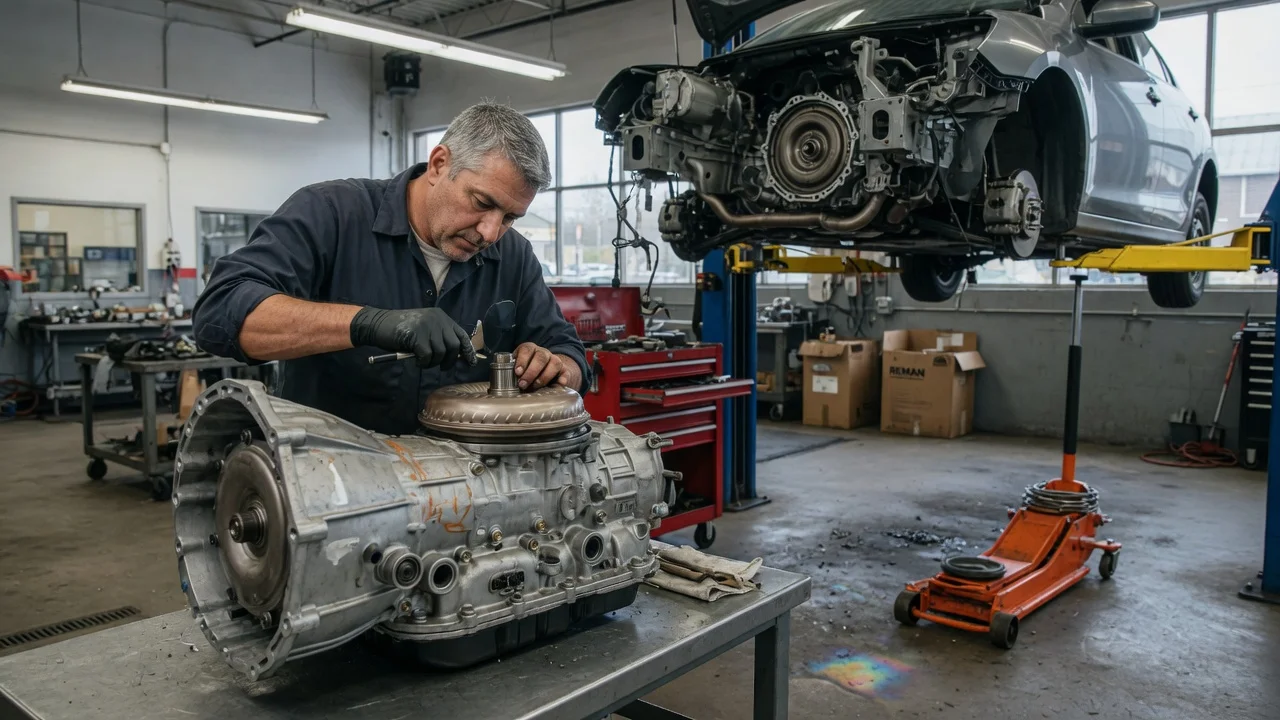
What a remanufactured transmission costs
A remanufactured transmission is billed in two parts: the rebuilt unit itself, and the labor and related work to remove the old gearbox, install the new one, and get the vehicle running. The combined total is the figure that matters for a buying decision. Specific dollar amounts are not included here because they were not supplied in the source material; published prices also change with vehicle, market, and shop. Treat any quote as valid only for the stated model year, market, trim, and powertrain.
The unit price is usually the larger line item on passenger cars and light trucks, but installation can close the gap on vehicles where the transmission is hard to reach, needs a subframe drop, or requires programming after install. A quote that lists only the core unit understates the out-the-door cost.
What “remanufactured” means on the invoice
A remanufactured transmission is a used gearbox taken apart, inspected, and rebuilt to a defined specification. Worn or out-of-spec parts are replaced, then the unit is assembled and typically tested on a dynamometer or similar bench. That is different from a used take-out (pulled from another vehicle and sold as-is) and from a brand-new original-equipment unit. Shops and parts sellers sometimes use “rebuilt” and “remanufactured” interchangeably; ask what was replaced, how the unit was tested, and what the warranty covers before you compare two prices.
Unit price: what you are paying for
The unit price covers the remanufactured gearbox, often with a core charge. A core charge is a deposit you pay until you return the old transmission in rebuildable condition; if the old unit is cracked, missing parts, or otherwise unusable, you may forfeit some or all of that deposit. Confirm whether the advertised unit price already includes the core, or whether the core is extra until return.
What moves the unit price, even for the same nameplate:
Transmission type: automatic, dual-clutch, continuously variable (CVT), or manual. Automatic and dual-clutch units are usually more expensive to remanufacture than a comparable manual. Application: engine size, drive layout (front-wheel, rear-wheel, or all-wheel), and whether the vehicle uses a transfer case. An all-wheel-drive layout can add related hardware beyond the gearbox. Model year, market, and trim: gear ratios, control modules, and internal parts often change across years and trims. A unit for one year may not interchange with another even if the badge is the same. Included content: torque converter, valve body, mechatronics, speed sensors, and fluid. Some units ship dry; others include a converter. Missing items show up later as extra parts. Warranty length and who honors it: a longer parts-and-labor warranty usually costs more up front and can change which shop is allowed to install the unit.
Compatibility is not guaranteed by make and model alone. The correct unit is tied to the vehicle identification number (VIN), build date, engine code, and transmission code. If those details are unresolved, do not order from a generic listing.
Installation: labor and the work around the unit
Installation is the shop’s time and the supporting parts needed to swap the transmission and return the vehicle to service. Labor hours vary widely by vehicle. Front-wheel-drive cars with a transaxle packed against the firewall, trucks with a transfer case, and models that need the subframe or exhaust dropped take longer than a straightforward rear-wheel-drive layout with good underbody access.
A complete installation quote should account for more than unbolting one box and bolting in another:
Removal and installation labor, including any subframe, exhaust, or driveline work required to gain access. New fluid of the type specified for that transmission, plus a filter or pan gasket if the design uses them. Using the wrong fluid can damage a remanufactured unit quickly. Torque converter (if not included with the unit), mounts, axles or driveshaft hardware, and seals that are opened during the job. Programming or adaptation: many later automatics need scan-tool software so the control module matches the new unit. That step is a line item, not a free courtesy. Cooler flush or cooler replacement. Debris from a failed transmission can remain in the cooler and lines and ruin the remanufactured unit if it is not cleaned or replaced. Road test, leak check, and any related repairs found once the old unit is out (worn mounts, leaking cooler lines, damaged wiring).
Some remanufacturers require installation by a professional shop for the warranty to apply. If you plan a home install, confirm that the warranty still stands and that you have the correct fluid, torque specs, and any required programming tool.
How to read a quote so unit and labor add up
Ask for a written breakdown that separates the remanufactured unit, core charge, installation labor, fluids and parts, programming, cooler service, and tax. Then confirm these conditions, each of which can change the total:
The unit is specified to your VIN or to the exact transmission code, not only to make and model. The quote states whether the torque converter, valve body, and fluid are included. The shop will flush or replace the cooler and lines as required by the remanufacturer. Programming or clutch adaptation is included if the vehicle needs it. Warranty terms cover both parts and the installing labor, and name who pays if the unit fails. Turnaround time and whether a rental or courtesy vehicle is extra.
Compare like with like. A lower unit price that omits the converter, cooler service, or programming can cost more once those items are added. A higher unit price with a longer parts-and-labor warranty can be the cheaper path if a second failure would put you back in the shop.
When the total changes in a material way
The answer above assumes a like-for-like remanufactured replacement of a failed automatic or manual gearbox in a typical passenger vehicle, with professional installation. The following conditions change the picture:
The failure also damaged the engine, transfer case, or differential. Those repairs sit outside the transmission quote. The vehicle uses a dual-clutch or CVT whose remanufactured supply is limited for that year and market. Availability and price then depend on a smaller set of suppliers. You are choosing a used take-out or a new original-equipment unit instead of remanufactured. Used is usually cheaper and riskier; new is usually the most expensive. You need only a valve body, mechatronics unit, or clutch pack rather than a full remanufactured gearbox. A partial repair can cost less if diagnosis is solid. Local labor rates, taxes, and shop policies differ by region. Two identical units can produce different installed totals.
A practical next step
Get a diagnosis in writing that names the failed transmission and any related damage. Then request two or three installed quotes for a remanufactured unit matched to the VIN, each with unit, core, labor, fluids, cooler service, programming, and warranty spelled out. Use that comparison, not a unit-only price, to decide whether to remanufacture, repair a subassembly, or consider a used or new replacement.
Gap: this article does not list current unit or labor prices, typical hour counts, or shop rates. Those figures were not supplied and vary by vehicle and market. Ask the quoting shop for numbers tied to your specific year, trim, and powertrain.