Red, Yellow, Orange and Green Dashboard Lights: What the Colors Mean
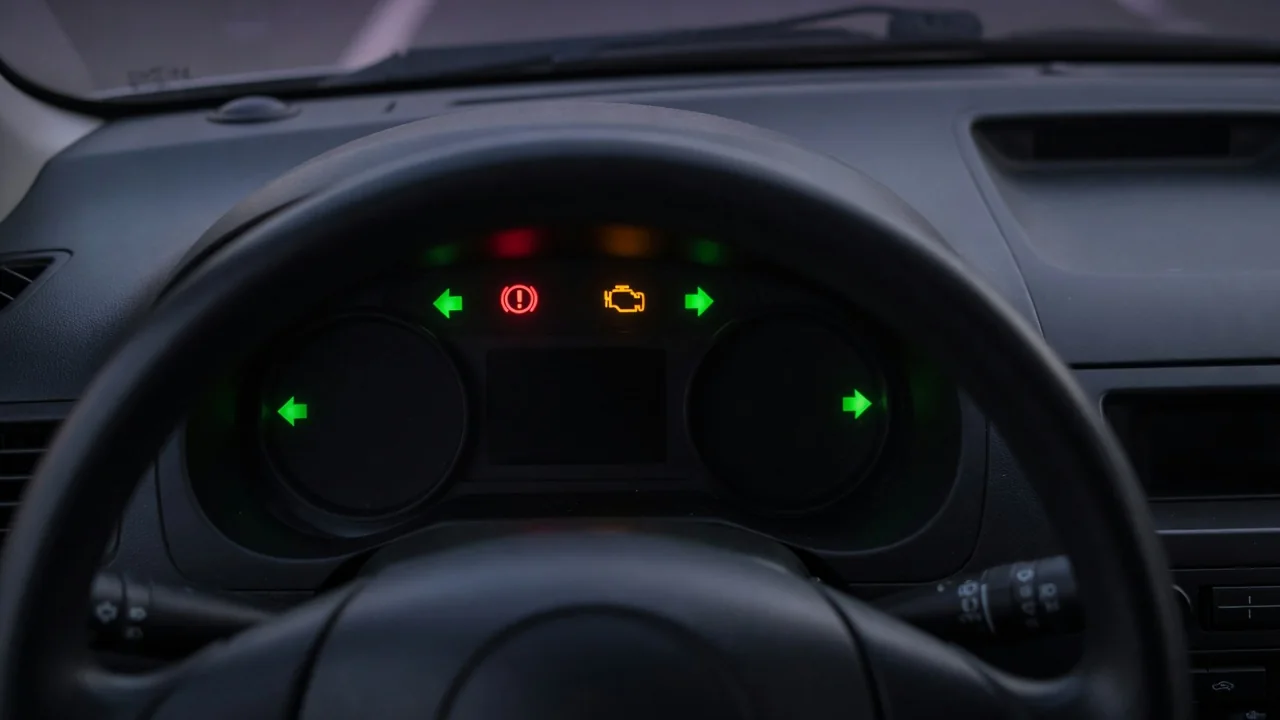
Yellow lights on a car dashboard, along with red, orange, and green car dashboard lights, use color to hint at urgency while symbols and messages name the system. The instrument cluster is a vehicle status indicator, not a diagnosis. Warning light colors follow common conventions, but the owner's manual still defines each lamp. Treat a flashing warning light and any dashboard messages as information to interpret, then confirm the recommended action for that vehicle.
Read the Color Together With the Symbol and Message
Dashboard colors communicate general urgency or operating status, while the symbol names the system. Yellow lights on a car dashboard typically mean caution rather than a confirmed failed part. Red lights on a car dashboard raise the urgency of that same reading. Green car dashboard lights more often report an active feature. Orange lights on a car dashboard usually share the amber caution family. Color is only a first filter. Pair the hue with the pictogram and any instrument-cluster text before you decide what the vehicle is asking.
Those conventions are not universal. Two vehicles can use similar warning light colors and still assign different symbols, wording, or recommended actions, so confirm the exact lamp in the owner's manual rather than assuming a generic meaning. Many dashboard indicators also light briefly during a startup bulb check and then go out. A lamp that stays on, returns after that check, or appears while driving is the one that needs interpretation. Read the displayed dashboard messages once you are parked, then match symbol, color, and text to the manual's description.
Red Dashboard Lights Can Require Immediate Attention
Red lights on a car dashboard commonly mark an urgent condition or a reminder that still needs action, such as an unfastened seat belt or an engaged parking brake. Typical examples also include oil-pressure, coolant-temperature, and brake-system warnings, but those lamps do not prove a specific part has failed. Their meaning and the correct next step depend on the vehicle. Treat red car lights on dashboard as a prompt to read the symbol and any message, then confirm the recommended response in that model's documentation instead of guessing from color alone.
If an urgent red warning appears while driving, look for a safe place to stop rather than making an abrupt roadside maneuver. Once parked, read the displayed instructions and the owner's manual entry for that vehicle status indicator. Smoke, a sudden loss of braking, or signs of severe overheating are reasons to stay stopped and seek assistance instead of continuing. Even without those symptoms, a red lamp that remains on after you address an obvious reminder, such as a parking brake still applied, still deserves confirmation before you resume travel.
Yellow Dashboard Lights Call for Attention and Follow-Up
Yellow lights on a car dashboard commonly indicate a fault, a condition that needs attention, or a system with limited availability. Yellow car dashboard warning lights such as tire-pressure, check-engine, and antilock-brake indicators are typical examples, yet the lamp alone is not a diagnosis. A stored code or a lit icon is evidence to interpret, not proof that a sensor, pump, or module has failed. Manufacturer-dependent meanings still require vehicle-specific confirmation. Use the symbol, any dashboard messages, and how the vehicle is behaving together rather than treating yellow as a single, interchangeable alert.
Yellow does not guarantee that continued driving is safe. The symbol, flashing behavior, accompanying message, and vehicle symptoms decide the response. A steady tire-pressure lamp with otherwise normal handling is a different situation from a flashing warning light paired with reduced power, unusual noises, or a change in braking. When you can park safely, read the message, consult the owner's manual, and arrange inspection if the warning persists. Follow that vehicle's guidance rather than assuming every yellow lamp allows an unlimited trip.
Orange Dashboard Lights Usually Follow the Amber Convention
Orange lights on a car dashboard are often the same caution category documented as amber or yellow, depending on the maker's wording. An amber warning light typically marks attention rather than a confirmed green operating status. Engine-management and traction-system indicators are common examples in that family. The perceived shade—orange versus yellow—cannot establish severity or identify a failed part. Treat orange as a color description of a dashboard indicator, then read the actual symbol and any text the cluster displays.
The owner's manual is what distinguishes an orange or amber lamp that reports active intervention, a feature you switched off, or a fault that needs follow-up. Traction control, stability assist, and similar systems may illuminate while they are working, after you press a disable switch, or when the control unit has limited the function. Color cannot sort those cases. Park when you can, match the pictogram and dashboard messages to the manual, and use that guidance to decide whether inspection is the next step.
Green Dashboard Lights Usually Confirm Operating Status
Green car dashboard lights commonly confirm an active feature or a normal operating status rather than a fault. Turn-signal arrows, exterior lighting indicators, and cruise-control status lamps may appear green, depending on the vehicle. Those vehicle status indicators tell you the selected function is reported as on. They do not replace the need to watch the road and the rest of the instrument cluster. If a green lamp is unfamiliar, confirm it in the owner's manual so you know which system the color is describing.
A green indicator confirms only the status it represents. It does not certify that every other system is healthy, and it does not cancel a simultaneous yellow or red warning. Cruise control shown as engaged, for example, says nothing about oil pressure or brake condition. Check an unfamiliar or unexpectedly flashing green indicator in the manual, because flashing has symbol-specific meaning. Some green lamps are supposed to blink in normal use; others are not. Do not treat green as a blanket all-clear for the whole vehicle.
Use Flashing Behavior and Symptoms to Choose the Next Step
Flashing has symbol-specific meaning. Turn-signal arrows normally flash as a vehicle status indicator, while a flashing engine warning can require more urgent action than a steady lamp, according to that vehicle's documentation. Once you are parked, record what you can see without opening the vehicle in an unsafe way: the symbol, the color, any dashboard messages, the flashing pattern, and any change in how the vehicle operated. Those notes help you match the event to the owner's manual and, if needed, describe it accurately for professional testing.
Multiple illuminated lamps may be related, but warning light colors alone cannot establish the underlying cause. A yellow and a red lamp together still need their symbols, messages, and symptoms interpreted as a set. Persistent warnings, reduced power, unusual noises, and changes in braking or steering are reasons to follow the vehicle's guidance and obtain professional testing or roadside assistance rather than continuing by guesswork. Choose the next step from the displayed instructions and the manual, not from the shade of the lamp by itself.