Rear Windshield Replacement: What Changes From Front Glass
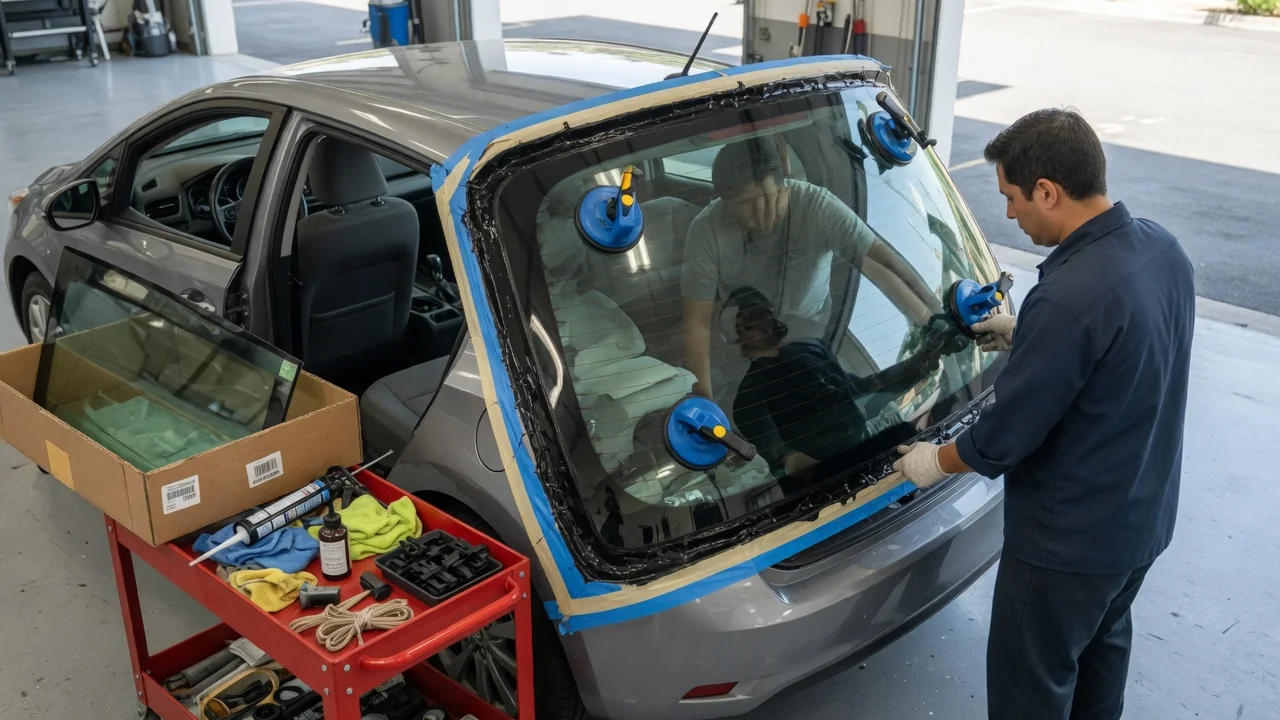
Rear windshield replacement looks similar to front glass work from the outside, yet the job differs in material, wiring, and cleanup. The back glass on most vehicles is tempered rather than laminated, and it often carries defroster circuits and other hardware. This guide explains what changes when a back windshield replacement is needed and what owners can reasonably observe before and after the work.
What This Topic Covers
The rear window, often called the back glass or backlite, seals the rear of the cabin and gives the driver a view through the interior mirror. A front windshield is laminated, meaning two glass layers bonded to a plastic interlayer, so it cracks but usually stays in one piece. Rear glass is most commonly tempered, which is heat treated to break into small blunt granules. That single difference shapes nearly every step of the replacement, from removal to cleanup.
Because tempered glass cannot be repaired the way a small windshield chip sometimes can, damage to the rear window generally means a full replacement. The work also involves more than the pane itself. Technicians deal with electrical connections, trim panels, and in many vehicles a hatch or liftgate that moves with the glass. Exact construction varies by body style and manufacturer, so the details here describe general patterns rather than any particular vehicle.
How It Works in a Vehicle
On many sedans and coupes, the back glass is bonded to the body opening with urethane adhesive, much like the front windshield. The adhesive forms a weather seal and helps the glass stay in place, and it needs time to cure before the vehicle is driven. Some older or utility designs instead hold the glass in a rubber gasket. The mounting method determines how the old glass comes out and how the new piece is positioned and centered.
Removal is where the rear differs most. A cracked windshield can be cut out as one sheet, but a shattered rear window leaves granules in the cargo area, the seat crevices, the trunk channel, and the bonding flange. Thorough vacuuming and cleaning of that flange matter, because leftover fragments can prevent the new glass from seating evenly or can rattle inside body cavities later. Old adhesive is trimmed and the surface prepared so the fresh bead bonds properly.
Common Variations
Body style creates the biggest differences. On a sedan, the glass is fixed to the body behind the rear seats. On hatchbacks, wagons, and sport utility vehicles, it sits in a liftgate, and some designs let the glass open separately on its own hinges and struts. Pickup trucks may use a fixed panel or a sliding assembly with its own frame and latch. Each layout changes what trim must come off and how the replacement is aligned.
Equipment attached to the glass varies just as much. Heating grid lines for the defroster are very widely used, and many windows also carry a printed radio antenna, a wiper motor passing through a hole in the glass, a high-mounted brake light, or a camera nearby. Factory privacy tint is part of the glass itself, while aftermarket film is not and would need reapplying. Confirming which features a specific vehicle has ensures the replacement glass matches the original.
Everyday Use and Observations
After a rear windshield replacement, a few simple checks tell owners a lot. The glass should sit evenly in its opening with consistent gaps and flush trim. Switching on the defroster on a cool, damp morning shows whether the grid clears the whole surface or leaves cold stripes that suggest a connection issue. Radio reception, the rear wiper sweep, and the upper brake light are also worth testing, since each depends on parts disturbed during the work.
Water and noise are the other everyday indicators. Dampness in the trunk, a musty smell, or fogging that lingers after rain can point to a gap in the seal, while a whistle at highway speed may indicate a trim or molding problem. On liftgates, the glass and hatch should open, close, and latch as before. A stray granule can turn up under a seat for a while after breakage, though persistent rattling deserves a follow-up look.
Limits and Next Steps
Driving with a broken rear window has practical limits. A missing or shattered backlite exposes the cabin to rain, exhaust fumes, and theft, and loose fragments can shift during braking. Temporary plastic covering may keep weather out for a short trip, but it restricts visibility and is not a lasting fix. After installation, the installer's guidance on cure time, car washes, and closing doors gently should be followed, since requirements depend on the adhesive used.
The next step is gathering vehicle details before arranging a back windshield replacement. Knowing the body style, whether the glass is heated, tinted, or fitted with an antenna or wiper, and whether any warning messages appeared afterward helps a shop source the correct part. If a dashboard alert or fault code relates to a rear camera or defroster circuit, treat it as a clue requiring vehicle-specific diagnosis rather than proof that a particular component has failed. Questions about fit are best raised promptly.