Rear Axle Shaft Assemblies: Choosing the Correct Replacement
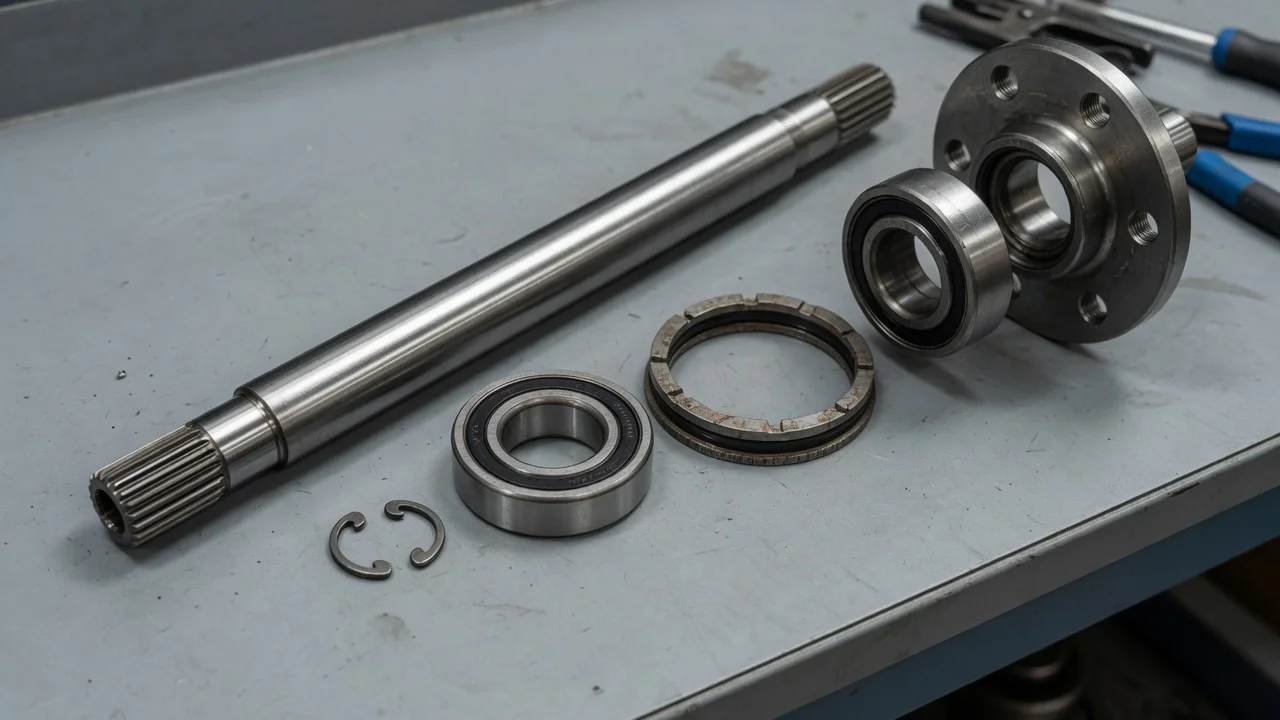
A rear axle shaft assembly carries torque from the differential to the wheel. In the common semi-floating design, it also supports the vehicle's weight at the hub. A replacement therefore has to match the axle it goes into, not just the badge on the tailgate. This guide explains how to narrow the choice for your specific vehicle configuration and how to compare options without relying on marketing claims. Jeep Wrangler TJ, JK and JL rear axles serve as recurring examples.
Define the job the product must do
Start with the reason for the replacement. Common causes include a bent shaft after an off-road impact, worn or twisted splines, a failed wheel bearing on a pressed-bearing design, a leaking axle seal, and damaged wheel studs or flanges. Each cause points to a different purchase. A leaking seal may only need a seal and bearing, while a bent or broken shaft needs the shaft itself. Also decide whether you need one side, such as a right rear axle shaft, or a matched pair. Weigh practical constraints as well: your budget, whether you have access to a press, and whether you will do the work yourself or pay a shop.
Operating conditions decide whether a stock-equivalent part is enough. A vehicle used mainly on pavement with original-size tires usually needs a part that restores factory behavior. A Jeep running larger tires, a locker or regular trail use puts more load on the shafts and may justify an upgraded design. If a shaft broke, review the service history and inspect the differential, housing tubes and bearings before ordering. A replacement installed without addressing the cause can fail the same way.
Check compatibility
Model year and trim are a starting point, not a final answer. The Wrangler TJ, JK and JL each used more than one rear axle depending on trim and options, and parts are not interchangeable between generations by default. A JK rear axle shaft should not be assumed to fit a JL, and a TJ part should not be assumed to fit a JK. The same applies to a 2015 Jeep Wrangler rear axle shaft: two vehicles from that year can carry different axles. Confirm the actual axle with a VIN-based lookup, the original build information, or the identification tag or markings on the axle housing. Previous owners sometimes swap axles, so check the hardware on the vehicle rather than trusting the listing.
Once the axle is identified, match the interfaces. Check spline count and diameter where the shaft meets the differential side gear or locker. Check overall length; on many axles the left and right shafts differ because the differential is not centered. Confirm the wheel bolt pattern and stud size, and the bearing type and how the shaft is retained, whether by C-clip or a bolted retainer. Check the ABS tone ring or sensor provision, and that the brake rotor, caliper bracket and parking brake will clear. If the old shaft carries a readable part number, use it to cross-reference against manufacturer specifications.
Modified vehicles need extra care. An aftermarket locker or replacement carrier may use a different spline count than the factory side gears. An aftermarket housing or a swapped axle changes the required length and flange details entirely. In these cases, fitment depends on what is actually installed, so the vehicle catalog listing alone is not enough.
Features that affect the choice
The first real choice is a complete assembly or a bare shaft. A complete rear axle shaft assembly typically arrives with the bearing, seal, retainer and studs already installed. Some also include the tone ring. Because the bearing is already pressed on, an assembly saves press work and reduces the chance of an installation error. A bare shaft costs less up front, but the bearing and related parts must be transferred or replaced, which usually means a hydraulic press.
For strength, look for documented details rather than labels. Useful evidence includes the stated material grade, such as chromoly versus an OEM-style carbon steel, the heat-treatment method, the spline count, and warranty terms that clearly state whether off-road use is covered. Words like heavy duty or extreme mean little without those details. A strength figure is only meaningful if the seller explains how it was measured.
Consider side effects too. A stronger shaft can move the weak point to the differential, the bearing or the housing. Moving to a higher spline count requires matching side gears or a compatible locker. Stud length matters if you run wheel spacers or aftermarket wheels, and the bearing and seal quality affect how long the assembly stays dry and quiet.
Limitations and ownership costs
Installation usually involves several steps. You remove the wheel, the brake caliper and rotor, and the ABS sensor. On C-clip axles you must also drain the differential and pull the cover. Plan for new gear oil, a new axle seal where the design calls for one, and a differential cover gasket or sealant. Limited-slip units may require a friction modifier. Torque values and fluid requirements should come from the service information for your axle. Check ABS operation and look for leaks after the first drive.
A new shaft cannot fix worn ring and pinion gears, a bent housing tube or a damaged differential. If any of these exist, the new part may wear quickly or fail. Non-original parts may also affect any remaining coverage, so check those terms before buying. During ongoing ownership, inspect the brakes for gear oil contamination and check for wheel bearing play during routine service. Follow your vehicle's maintenance schedule rather than assuming a universal interval.
Rear axle shaft price varies with several factors: OE or aftermarket origin, bare shaft or complete assembly, material, spline count, and whether bearings, seals and studs are included. Pricing per side or as a pair also matters. Compare the total installed cost, including gear oil, seals, press work and labor, rather than the part price alone.
Build a practical shortlist
Work through the choice in order. First, confirm the axle model and which side you need. Next, match spline count, length, bolt pattern, bearing type, retention method and ABS provision. Then decide between a bare shaft and a complete assembly based on your tools. After that, choose stock-equivalent or upgraded based on tire size, locker use and operating conditions. Finally, compare documented material and heat treatment, included hardware, warranty terms and total installed cost. Narrow the field to two or three parts that pass every fitment check.
Before installation, keep the old shaft and compare it with the new one side by side for length, splines and flange. This is especially useful when shopping for a Jeep rear axle shaft, because generations and trims overlap in listings. A Jeep JK rear axle shaft assembly, a Jeep JL rear axle shaft and a Jeep TJ rear axle shaft can look similar in photos while differing in the details that matter. If anything does not match, stop and recheck fitment before reassembling the brakes and differential.