Range Rover Timing Chain Replacement Cost and Engine Issues
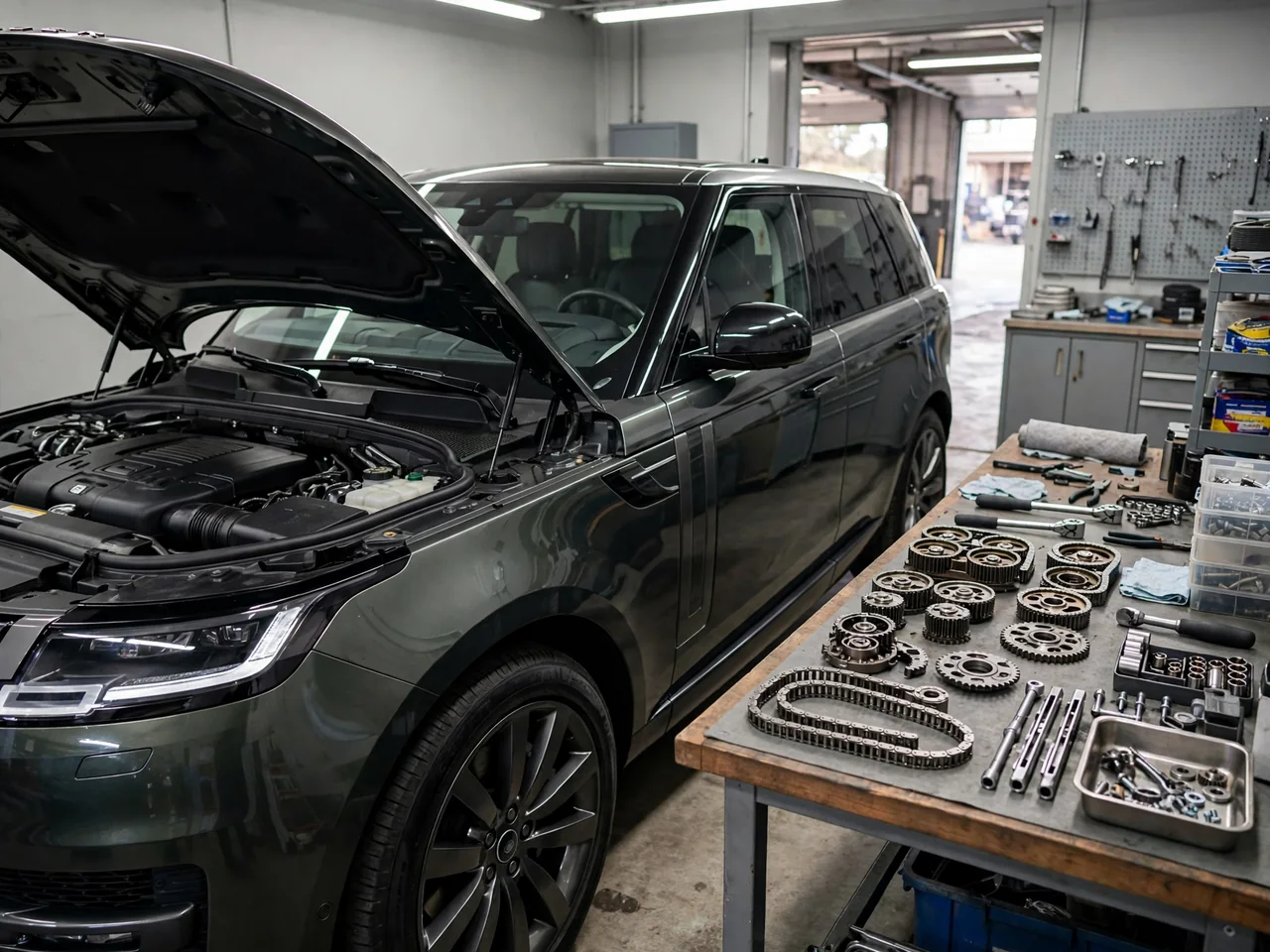
Timing chain replacement in a Range Rover can be one of the most expensive repairs an owner faces, and costs vary widely by engine and work scope. Before assuming the worst after hearing a cold-start rattle, identify the exact engine and get a professional diagnosis. This article explains what drives the range rover timing chain replacement cost, how to spot potential chain trouble, and what a detailed quote should include.
Identify the Range Rover Engine Before Assessing Chain Concerns
The Range Rover name alone does not identify the timing chain setup because the model has been sold for decades with different engines. A 4.4-liter V8 and a 3.0-liter V6 may both wear the Range Rover badge, yet they have distinct chain layouts, tensioner designs, and service procedures. Assuming all Range Rovers share the same fault is misleading and can lead to unnecessary work.
To identify the installed engine, the repair shop uses the model year, engine designation, fuel type, market, and the vehicle identification number. The VIN encodes the engine code, and a visual check of the engine cover or emissions label can confirm it. This step is essential before diagnosing chain noise or quoting parts, because some engines have multiple chains and tensioners while others use a single chain.
What to Budget for Range Rover Timing Chain Replacement
Complete timing chain replacement is major engine work, often costing several thousand dollars once parts, labor, and related components are included. On many Range Rover engines, the chain is at the front of the engine but deep behind covers and accessories, so the technician must remove a significant amount of hardware to reach it. The final price mirrors this labor intensity.
Several variables shape the estimate. Engine access and the number of chains, guides, and tensioners drive labor hours, while local shop rates multiply that figure. Parts prices differ between OEM and aftermarket sources, and the job typically requires new gaskets, seals, fluids, and possibly a water pump or oil pump drive. A realistic quote separates diagnosis, timing-system repair, and any confirmed internal engine damage into distinct line items.
Timing Chain Problems and Symptoms Worth Investigating
The timing chain, guides, and tensioners work together to keep the crankshaft and camshafts in precise alignment. Over time, the plastic guide faces can wear, and the tensioner may lose its ability to keep the chain taut. When this happens, the chain can slap against the guides or jump a tooth, altering camshaft timing. Even a small change in valve timing can affect compression and cause rough running.
Symptoms that warrant investigation include a rattling noise for a few seconds after a cold start, persistent mechanical noise from the engine front, rough idle, difficult starting, and illuminated warning lights. However, sound alone cannot prove chain wear or a failed tensioner. Low oil pressure or degraded oil can also cause chain noise, so lubrication and oil-pressure concerns must be evaluated as diagnostic factors rather than assumed causes.
Safe Observations and When to Stop Driving
When a suspected timing chain problem appears, record the exact symptom without repeatedly starting the engine just to hear the noise. Note whether the rattle happens only when cold, how long it lasts, any warning messages, and recent oil change history. Each extra start with poor oil pressure or a loose chain can add wear, so avoid turning the key solely to reproduce the sound.
Checking the engine oil level with the dipstick follows the owner’s handbook and is a safe first step, but a normal level does not guarantee adequate oil pressure or a healthy timing system. If an oil-pressure warning appears, the engine makes severe mechanical noise, stalls, or loses power noticeably, stop driving as soon as it is safe and arrange professional assistance. Do not try to drive a set number of miles to a shop.
What Professional Diagnosis Should Establish
A professional diagnosis should begin with identifying the engine, reviewing the symptoms and maintenance records, and reading any stored diagnostic trouble codes with a scan tool. However, a timing-related code only says that camshaft and crankshaft signals are out of specification; it does not identify which component failed. The technician must then use vehicle-specific service information to interpret the code.
After the initial scan, the shop may check mechanical timing by aligning the crankshaft and camshaft marks, test oil pressure with a mechanical gauge, and inspect related control components such as camshaft position sensors and variable valve timing actuators. None of this requires the customer to perform repairs, but it does require agreeing to diagnostic labor. If timing has slipped, the technician must assess for bent valves or piston contact before finalizing the repair scope.
What an Itemized Replacement Quote Should Include
An itemized quote should state exactly which timing components will be replaced, the labor allowance, and all required seals, fluids, and hardware. It should also explain why each additional part, such as an oil pump or water pump, is necessary. A shop that automatically includes every nearby component without a technical reason may be padding the estimate, so ask for the diagnosis that supports each line item.
The estimate must also describe how the shop will handle newly discovered internal damage, customer authorization, taxes, and any potential additional charges. Repair warranty terms, completion checks, and engine-specific maintenance guidance should be included. Since manufacturer timing chain replacement intervals are not universal, the shop should base any future maintenance advice on the confirmed engine rather than a generic mileage figure.