Range Rover L322 Air Suspension Valve Block Problems: Diagnostic Guide
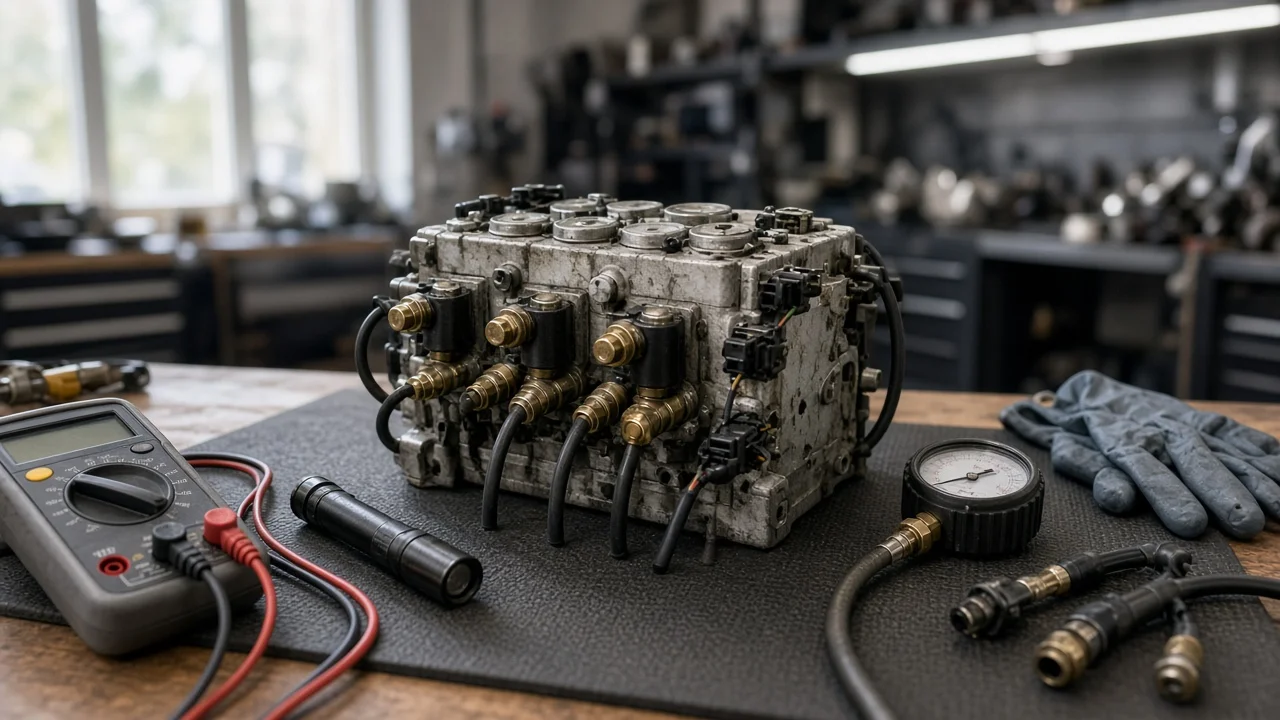
On a Range Rover L322, the air suspension valve block routes compressed air between the compressor, the reservoir and the air springs. A fault there can look like a leaking spring, a tired compressor or a sensor problem. Replacing the block on a hunch is expensive and often wrong. This guide explains how to describe the symptoms, weigh the competing causes, run checks in a sensible order and decide when the vehicle should not be driven.
Establish the symptoms
Start with a written record, because valve block faults are often intermittent. Note whether the vehicle drops overnight or while parked for shorter periods, and which corners or which axle are affected. Park on level ground and measure from the wheel center to the edge of the wheel arch at each corner. Do this when you park and again before you start the engine, using the same points every time. These numbers show how far and how evenly the vehicle settles. They are far more useful to a technician than a description such as low at the back.
Also record what happens after start-up. Note how long the compressor runs, whether the vehicle reaches normal ride height, and whether any suspension warning appears. Write down whether the problem shows up only at certain heights, such as access or off-road height, or only in cold weather. Listen for hissing under the vehicle just after you switch off, and for clicking from the valve area when the system adjusts. Finally, list any recent changes. A battery disconnection, a jump start, recent suspension or pipe work, pressure washing underneath or driving through deep water can all shape the diagnosis.
Distinguish plausible causes
Several faults produce similar symptoms, so treat the valve block as one suspect among several. An internal leak or a sticking valve inside the block can let air bleed from one or more springs with no visible external leak. It can also let one corner fail to raise or lower on command. If more than one corner settles while every spring and pipe tests dry, the block becomes more likely. Leaking pipe fittings or seals at the block are a separate, often smaller problem, and they show up as bubbles at a specific connection. Electrical faults, such as a corroded connector or a failed solenoid coil, usually leave stored fault codes. They tend to cause a corner that does not respond at all, rather than a slow overnight drop.
The competing causes leave their own evidence. A split or perished air spring usually affects one corner. It often gets worse in cold weather and shows bubbles on the bellows. Chafed or cracked air lines leak along their routing. A worn compressor or a leaking reservoir causes slow raising and long run times, but the vehicle may hold height well once it is up. A faulty height sensor can make the vehicle sit wrong or lean while the system holds pressure normally. Knocks, wandering or uneven tire wear point toward joint play in the suspension or steering, or toward worn bushings at the mounting points. Those are mechanical issues, not valve block symptoms.
Checks in a useful order
Begin with checks that need no lifting. Compare your logged height measurements and note any warning messages. Listen for leaks around the vehicle with the engine off. Look at the air lines and electrical connectors you can see without reaching under the body. A spray bottle of soapy water applied to accessible fittings, springs and pipe joints will show a steady leak as growing bubbles. Check one area at a time and give each spot a minute or more, because slow leaks are easy to miss.
Deeper checks need proper equipment and, in most cases, a qualified technician. A diagnostic tool that supports Land Rover air suspension can read stored codes and show live height and pressure data. It can also command individual valves, which is the most direct way to tell an internal block leak from a spring or line leak. Some procedures require the system to be depressurized or set to a mode that stops automatic leveling. Pipes must be refitted and fixings tightened to the fastener specification in the service information. Do not guess these values.
Correct vehicle support matters here. Never work under an L322 held up only by its air suspension or by a jack. Air springs can deflate and the body can drop without warning. Use rated stands at the manufacturer's lift points on firm, level ground. Remember that the system holds air under high pressure, so never loosen a fitting on a pressurized circuit.
Interpret the findings
Each result narrows the problem, but few results settle it alone. Bubbles at a fitting on the valve block locate a leak at that joint. The cause may be a seal or a damaged pipe end rather than the whole block, so ask whether that connection can be repaired. Bubbles on a spring or along a pipe point away from the block. If one corner still drops after that leak is fixed, the block can be checked again. When a corner settles and every external test stays dry, an internal valve leak becomes a reasonable suspicion. It should still be confirmed with valve control and pressure data before the block is replaced.
Electrical codes linked to a valve call for checks of the wiring, the connector condition and the power supply before the block itself is condemned. A slow rise with good overnight hold points to the supply side, such as the compressor or reservoir, not the valves. After any repair, confirm the result the same way the fault was recorded. The vehicle should hold height overnight, rise in a normal time and show no new codes. If suspension components were removed or the ride height was disturbed, ask whether a wheel alignment check is needed. Any alignment should follow the published procedure at the specified height.
Urgency and next action
Some signs mean the vehicle should not be driven until it is inspected. Stop using it if it rests on its bump stops or a tire touches the bodywork. The same applies if one corner sits clearly lower than the others, if height changes unexpectedly while driving, or if the compressor runs constantly or the system reports overheating. Take any suspension warning that restricts speed or height seriously. A low or uneven stance changes handling, braking and tire clearance. No one can predict how far the vehicle can safely travel in that state, so arrange transport if it cannot reach and hold normal height.
If the vehicle holds height and drives normally, book a diagnosis rather than waiting for the fault to get worse. Bring the model year and VIN, your height log, any warning messages, notes or photos from leak tests, and details of recent work or battery events. Ask the technician to show what confirmed the valve block as the cause. That evidence could be a leak at a block fitting, a code tied to a specific valve, or a pressure test that isolates an internal leak. With that confirmation, you avoid paying for a block when the real fault is a spring, a pipe or a connector.