Range Rover L322 Air Suspension Valve Block Location
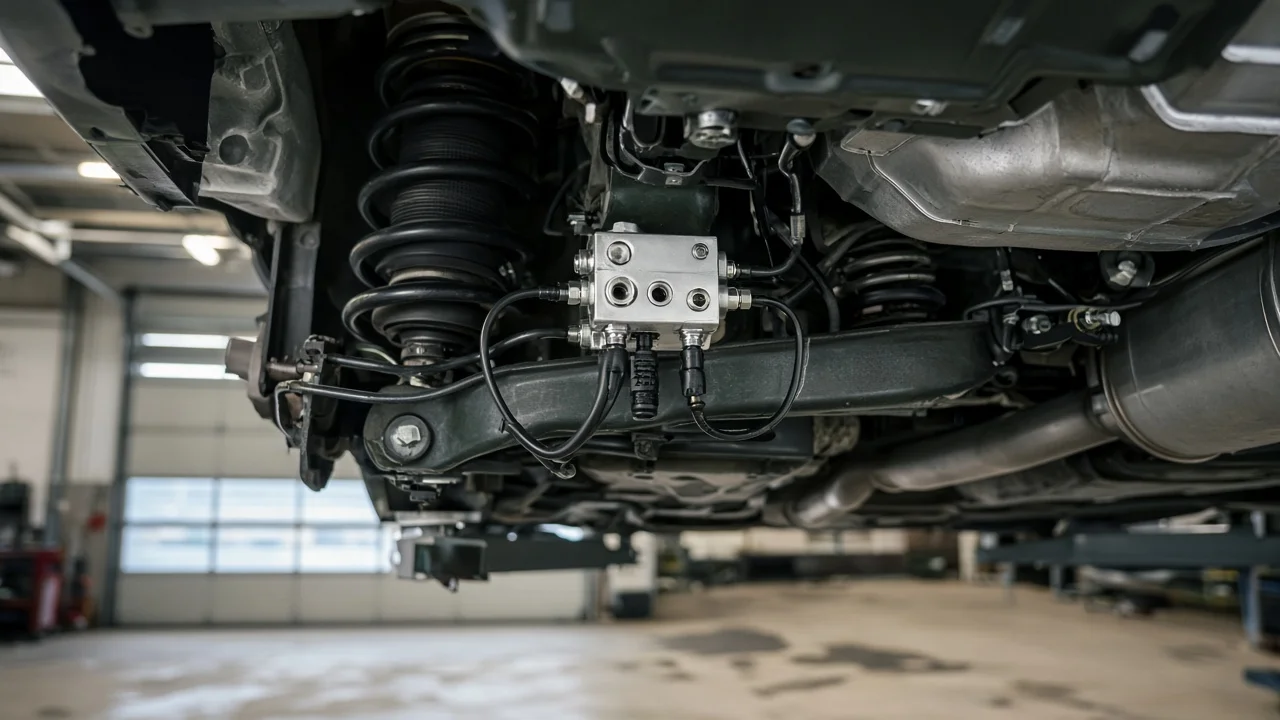
If your Range Rover L322 sags overnight, sits unevenly or keeps logging height faults, the valve block is one of the first parts worth finding. The L322 does not route all of its air through a single block in one place. Air distribution is split between the front and rear of the vehicle. This guide explains where to look and why the position can vary. It also covers how to reach the hardware without working under a vehicle held up only by its air springs.
Where the valve blocks sit on an L322
The third-generation Range Rover was sold in the US from the 2003 through 2012 model years. It feeds its four air springs through separate valve blocks for the front and rear axles. On many examples, the front block is reported to sit low in the front wheel arch area on the left-hand side of the vehicle. It is hidden behind the plastic wheel arch liner and bolted to the body or subframe mounting points. You normally reach it by removing the wheel and the arch liner fasteners rather than from the engine bay. The rear block is under the rear of the vehicle, close to the rear axle and the air supply components. You reach it from underneath, which means proper vehicle support is not optional.
Owners searching for the valve block location on a 2004 or 2005 Range Rover have an early L322. The same front and rear split applies, but production changes over the model's life mean that bracket positions, pipe routing, connector styles and part numbers can differ between early and later trucks. Treat any general description, including this one, as a starting point. Confirm the exact position against documentation for your model year or VIN before ordering parts or removing trim.
How the valve blocks control ride height
The compressor builds air pressure, which is held in the system and released to the springs as needed. Each valve block contains electrically operated solenoid valves that open to let air into a spring or let it out. Height sensors at the corners report suspension position to the suspension control module. The module then commands the valves to raise, lower or hold each side so the vehicle reaches its target ride height.
Because the block sits between the air supply and the springs, a fault inside it can look a lot like a leaking spring. A worn internal seal, a sticking solenoid, or a leaking O-ring where an air pipe enters the block can let a corner drop or stop it from rising. Knowing where the block is lets you check its connections directly instead of guessing between the spring, the pipe and the valve.
What changes the answer
Side descriptions need careful translation. Much of the L322 repair discussion comes from right-hand-drive markets, where the left side is the passenger side. On a US left-hand-drive truck, the left side is the driver side. Using left and right as seen from the driver's seat avoids confusion. Model year and production updates can also move components, change connector types or alter how lines are routed, so a photo from another vehicle may not match yours exactly.
The vehicle's history matters too. Aftermarket replacement blocks, re-routed or repaired air lines and added underbody protection can change what you see or how you get to it. A truck converted from air springs to coil springs may have had the valve blocks removed entirely. If what you find does not match the expected layout, find out what has been changed before you disconnect anything.
Vehicle support and pressure safety before you start
Never work under or beside an L322 that is held up only by its air suspension. Disturbing a valve, line or sensor can make the vehicle drop suddenly. Follow the model-specific jacking or workshop procedure, which may involve a diagnostic tool or a vehicle setting that stops the system from adjusting height. Lift only at the designated jacking points, support the vehicle on rated stands at proper mounting points, and chock the wheels that stay on the ground.
The air lines and valve block can hold pressure even with the engine off. Release system pressure as the workshop procedure describes before you disconnect any pipe, and wear eye protection when working near fittings. When refitting the block, its brackets or the arch liner, use the fastener specification from the service information for your vehicle rather than guessing. Handle the electrical connectors gently, because brittle locking tabs on older vehicles break easily.
What the owner can do
Start by gathering evidence. Read stored suspension faults with a scan tool that can communicate with the air suspension module, and note which corner or axle drops and how quickly. One corner sinking overnight points toward that corner's spring, pipe or valve circuit. A whole axle settling may point toward the shared block or the supply side. Listen for hissing near the wheel arches and under the rear after the vehicle has been raised. You can also spray leak detection solution on reachable pipe joints while the system is pressurized and the vehicle is resting on its wheels.
Once the vehicle is correctly supported, remove the relevant wheel and arch liner. Then follow the air line from the spring back to the valve block to confirm you have found the right component. Look for cracked pipes, corroded fittings, damaged connectors and loose brackets. With the liner off, it is also a convenient time to check nearby suspension components for joint play or damage, though that is a separate inspection from the air system diagnosis.
Checks after a valve block repair
After a block or fitting is replaced, clear the faults and use a capable diagnostic tool to confirm that every corner raises, lowers and holds pressure. Check that the ride height matches the specification for your vehicle. If height sensors were disturbed, or the system needs recalibration, use the procedure and tooling intended for the L322 instead of adjusting heights by eye. Wheel alignment is measured at the correct ride height. If the heights were wrong or the suspension was disturbed beyond the valve block, have the alignment checked once the heights are confirmed.
Limitations and next step
This guide describes the general layout of L322 air suspension valve blocks, not an exact position for every build. Component placement, part numbers and procedures can vary with model year, market and previous repairs. Use VIN-specific service information to confirm the location and fastener specification. Hand the job to a suspension specialist if you cannot support the vehicle safely, lack a scan tool that can talk to the suspension module, find seized or crumbling fittings, or see faults that point to the control module or sensors rather than the block itself.