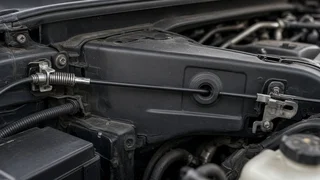
Range Rover Hood Release Cable Replacement

A hood release cable that goes slack, binds, or snaps on a Range Rover turns a routine fluid check into a locked-out situation. Replacement is straightforward in principle, but access routing and latch alignment vary with model generation, trim level, and market specification. The job is less about the visible handle and more about the hidden run from the interior lever through the fender area to the primary and secondary latches. Understanding that path helps you diagnose whether the cable, the handle, or the latch itself is the real fault before parts are ordered.
Essential answer
Replacing the hood release cable on a Range Rover involves removing the interior release handle, freeing the old cable from its retaining clips, detaching it from the hood latch, and routing a new cable along the same protected path. On many models, the cable runs from the driver-side footwell, passes through the bulkhead, and travels inside the front fender area to the latch. Since body style and model year can change the exact routing, treat the old cable as the template and avoid pulling it out until the new part is ready to follow. A stiff or corroded latch can mimic cable failure, so confirm the latch moves freely before assuming the inner wire is broken.
The first practical distinction is whether the cable has stretched, separated from its end fitting, or snapped internally. A stretched cable may still release the hood when an assistant presses down on the panel, which strongly suggests the inner wire is intact but the sheath or anchor point has worn. A handle that moves with no resistance, or one that suddenly goes limp, points to a broken inner strand or a disconnected end. Because the primary hood latch is a safety mechanism, replacement should restore both the primary release from the cabin and the secondary safety catch at the grille, not just make the interior lever feel normal. After fitting, cycle the release several times with the hood closed gently to verify engagement before closing it fully.