Range Rover 2003 steering angle sensor
A 2003 Range Rover steering angle sensor question usually starts with a stability, traction, or suspension warning that appears without an obvious mechanical failure. On this platform, the sensor’s job is to report how far and how quickly the steering wheel is turned so that other control modules can compare driver intent with vehicle movement. Wear, calibration loss, aftermarket suspension changes, or wiring stress can make that signal look wrong. Understanding what the component measures, where it fits, and how its data is used helps separate a genuine sensor fault from a supporting system issue.
Essential answer
The steering angle sensor on a 2003 Range Rover is a rotational position input that converts steering wheel movement into an electronic signal. It does not physically steer the truck, but it supplies a reference for systems that monitor yaw, wheel speed, and lateral acceleration. When the value is missing, implausible, or offset from the straight-ahead position, the vehicle may disable or limit stability-related functions because it can no longer trust the driver’s commanded direction. The essential answer is therefore about signal plausibility, not just the presence of a stored code.
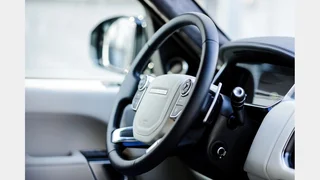
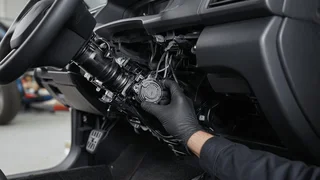
On this generation of Range Rover, the part is typically associated with the steering column area, where it can read rotation directly rather than inferring angle from suspension movement. That location matters because upper-column joint play, a disturbed clock spring, or a loose mounting point can change the reading even if the sensor itself is electrically healthy. A useful diagnosis starts with comparing the reported angle against the physical wheel position and checking whether the reading changes smoothly through the full range. A jumpy or flat signal points toward the sensor circuit, while a steady but incorrect value often indicates a calibration or installation problem.
The sensor’s relevance also extends to ride height and wheel alignment because the control strategy expects a relationship between steering angle, road speed, and body movement. If the vehicle has been aligned recently or suspension components have been replaced, a zero-point calibration may be required so the module knows where straight ahead is. Without that reference, a mechanically straight steering wheel can still produce an angle that the computer interprets as a constant steering input. This can trigger warnings during normal driving, especially on crowned roads or after a turn when the steering wheel returns to center.
Because the 2003 Range Rover uses manufacturer-dependent communication and diagnostic conventions, a fault code should be treated as evidence of a circuit or plausibility concern rather than proof that the sensor assembly has failed. Wiring, connectors, and power supply issues can produce similar codes. The most practical next action is to view live steering angle data while turning the wheel slowly and compare it with the physical position. If the value is absent or frozen, inspect the circuit path. If the value is present but offset, look for calibration, alignment, or installation cause before condemning the part.
Vehicle support procedures also matter when any steering column or suspension work is performed. The sensor is sensitive to being rotated with the steering unlocked or with the front wheels off the ground, because that can create a mismatch between internal position and the rest of the steering system. After such work, the system may need to relearn the straight-ahead reference through a scan tool routine. Without a supported procedure, the truck may continue to log a steering angle plausibility code after the mechanical issue has already been fixed.
In summary, the 2003 Range Rover steering angle sensor is a signal provider, not a standalone safety system. Its reading must agree with wheel speed, yaw, and lateral acceleration for traction and stability functions to operate normally. When a code appears, the most useful diagnostic path is to verify the live value, inspect mounting and wiring, and confirm that the zero point matches the true straight-ahead position. This approach avoids replacing parts on a code alone while still addressing the real causes of an inaccurate or missing steering angle signal.