Ram 2500 Transfer Case Linkage Identification
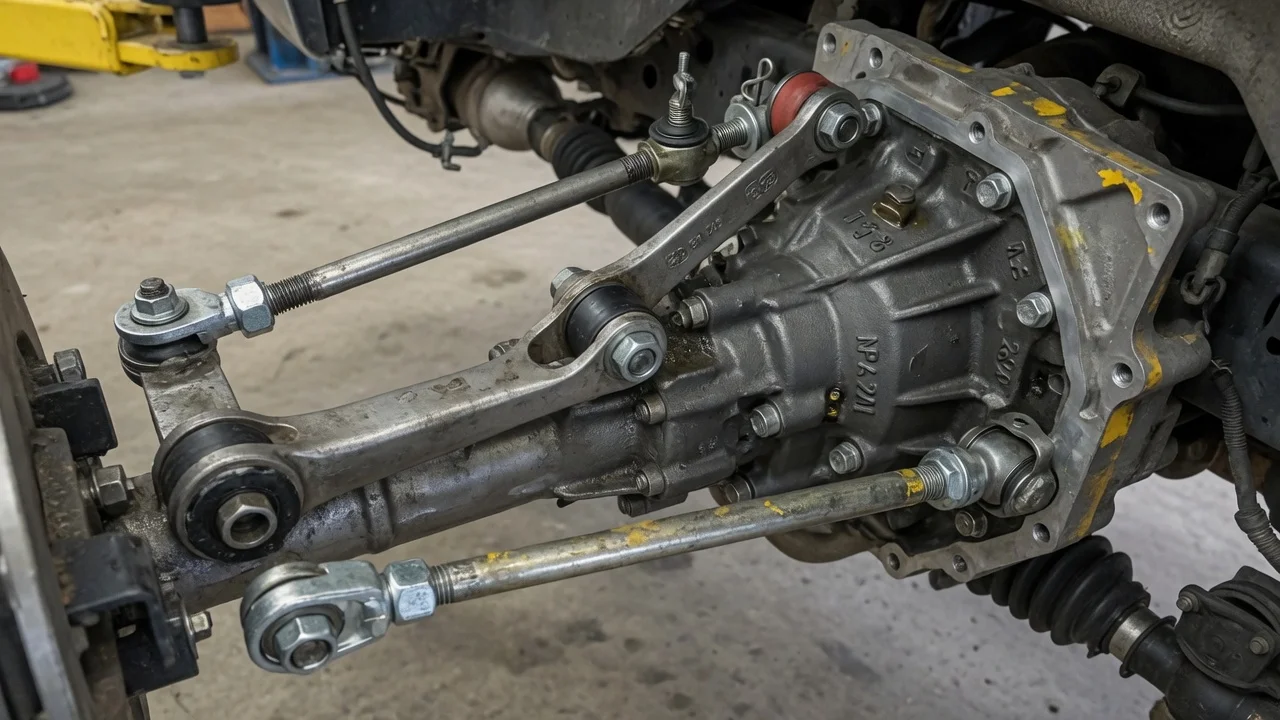
A search for a 2016 Ram 2500 transfer case linkage usually starts with a four-wheel-drive lever that feels stiff, sloppy or misaligned. Before you order anything, confirm which transfer case and shift system your truck has. Vehicle configuration decides that, not model year alone. This guide covers how to identify the linkage, what its parts do, how older Dodge Ram 2500 trucks differ from later Ram models, and what you can safely check yourself.
Short answer: does your 2016 Ram 2500 have a linkage?
Only four-wheel-drive Ram 2500 trucks have a transfer case. Only those with a floor-mounted manual shift lever use a mechanical transfer case linkage. If your 2016 truck has a lever on the floor beside the transmission tunnel, a linkage runs from that lever down to the shift arm on the transfer case. That assembly, together with its bushings, clips and adjustment hardware, is what most people mean by the linkage. If you select four-wheel drive with a knob or switch on the dash, your truck has an electronic shift transfer case driven by an actuator. In that case there is no shift linkage to replace.
To find the correct parts, match the truck rather than the year. The most reliable references are the identification tag on the transfer case itself, the original build information tied to the VIN, which a dealer parts counter can look up, and the part numbers on components already installed. A part listed only as fitting a Ram 2500 may not fit every cab, engine and transmission combination built that year.
How the transfer case shift linkage works
On a manual shift truck, the lever in the cab pivots on a bracket. The linkage turns the lever's movement into rotation of the shift arm on the side of the transfer case. That arm moves internal components that select the drive ranges, typically two-wheel drive high, four-wheel drive high, neutral and four-wheel drive low. The lever lines up with its marked positions only when the linkage is adjusted so that each internal detent matches the marking on the shifter.
Most linkage complaints come from wear at the connection points, not from the rod itself. The bushings where the linkage meets the lever and the shift arm can dry out, crack or fall out. Once that happens, the lever can move without moving the arm. You may notice a lever that feels loose, one that will not fully reach a position, or one that moves while the transfer case stays in its previous range. Vibration can also loosen retaining clips and the adjustment fastener, which lets the adjustment drift.
What changes the answer between trucks
Shift type is the biggest variable. Depending on trim and options, Ram heavy-duty trucks could be equipped with either manual floor shifting or electronic shift, so two trucks from the same year can need completely different parts. On electronic systems, diagnosis covers the switch, wiring, control module and actuator. Manual systems are mechanical and can usually be inspected by eye.
Model generation matters too. A 2005 or 2006 Dodge Ram 2500 belongs to an earlier truck generation than a 2014 or 2016 Ram 2500. The transfer case, shifter mounting and linkage hardware do not automatically interchange between generations. Within one generation, engine choice, transmission type, cab style and drivetrain options can change the lever bracket and the linkage routing, and parts can also change partway through a production run. Treat any claim that a part fits across years as unconfirmed until the part number matches your truck.
Service history and operating conditions also matter. After a transfer case swap, a transmission replacement, a lift or an aftermarket shifter, a truck may no longer match its original build data. Trucks driven on salted roads, through mud or off-road often show more corrosion and bushing wear at the exposed linkage joints.
What you can check before buying parts
Start in the cab. With the engine off and the parking brake set, move the lever through each position. Note whether it feels loose, binds, or stops short of a marked position. Next, park on level ground, chock the wheels and support the truck safely. Then look underneath at the points where the linkage attaches to the lever and to the transfer case shift arm. Check for missing or split bushings, a clip that has backed out, a bent rod, heavy rust or a loose adjustment fastener. Have a helper move the lever while you watch whether the shift arm moves with it.
Write down what you find, along with the transfer case tag information and your VIN. With that information, a parts counter or repair shop can confirm the correct bushing kit, rod or shifter assembly instead of guessing from the year. Replacing worn bushings is often a small job. However, if you remove the rod or disturb the adjustment, you must readjust the linkage to the manufacturer specifications in the service procedure so the lever positions match the transfer case detents. After any repair, test on a safe surface that each range engages, that the four-wheel-drive indicator responds if equipped, and that the lever stays in position.
Limitations and when to get professional help
This guide cannot confirm the exact part for an individual truck, because fit depends on how the truck was built and on any changes made since. It also does not give torque values, adjustment dimensions or a maintenance schedule. Use the factory service information for your specific truck for those. If the lever moves correctly but the truck will not engage or stay in four-wheel drive, the problem may be inside the transfer case, elsewhere in the four-wheel-drive system or, on electronic shift trucks, in the electrical controls. A linkage part will not fix any of those.
Get a professional inspection if the truck jumps out of range, grinds or clunks when you shift ranges, or will not come out of four-wheel drive. Do the same if you cannot safely support the vehicle to inspect it. A shop with the correct service information can verify the configuration, check the transfer case fluid condition and confirm whether the fault is in the linkage or in the drivetrain.