Ram 1500 Transfer Case Shift Motor: Identification by Model Year
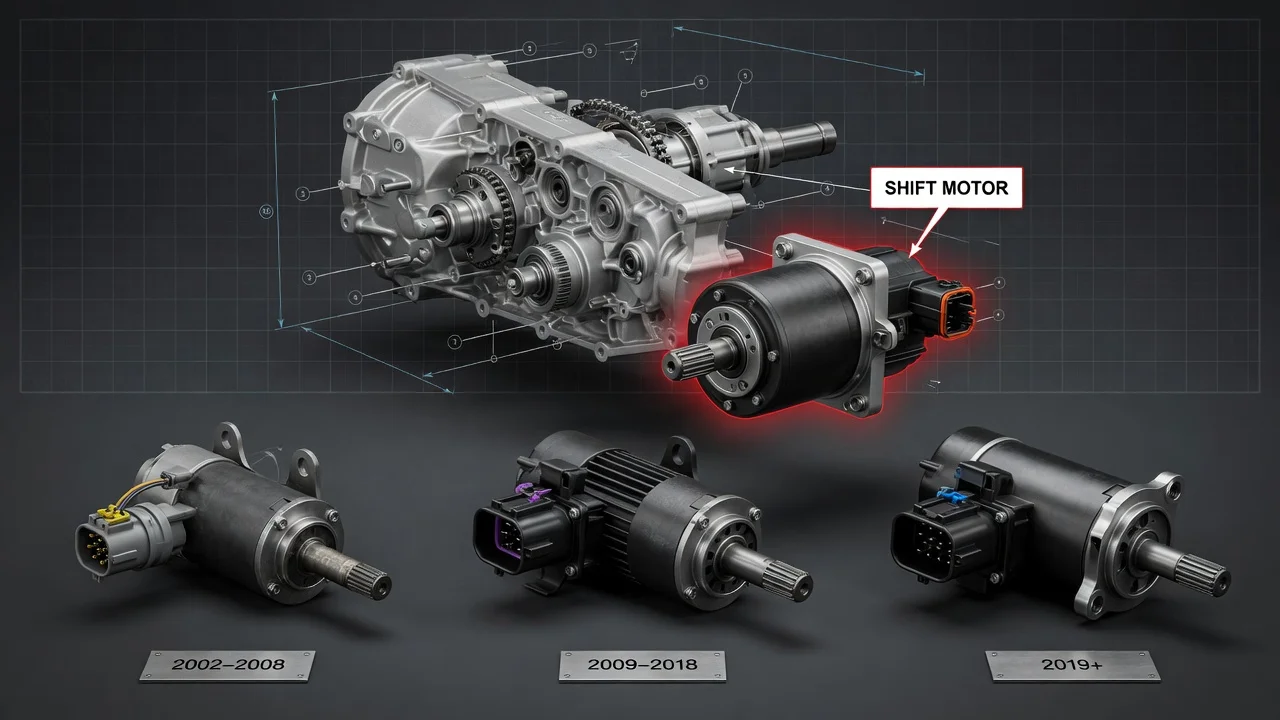
The transfer case shift motor is the electric actuator that moves a Ram 1500 between two-wheel drive, four-wheel high and four-wheel low when the driver turns the 4WD selector. Owners shopping for a replacement for a 2012 truck often see listings for 2011, 2006 and older Dodge Ram models side by side, and these parts are not interchangeable across the board. This guide explains how to match the motor to your truck's model year and vehicle configuration before buying one.
Which shift motor fits a 2012 Ram 1500
On a 2012 Ram 1500 with an electronically shifted transfer case, the shift motor belongs to the truck generation introduced for the 2009 model year. A 2011 and a 2012 truck with the same four-wheel-drive system therefore generally share the same design. A 2006 Dodge Ram 1500 comes from the previous generation, with a different transfer case and control arrangement, so its motor should not be assumed to fit a 2012 truck. Model year alone still does not settle the part: the transfer case model, the type of 4WD system and the part number on the existing motor decide the match.
The most reliable identifier is the part number printed on the motor you are replacing, confirmed against the truck's VIN through a parts catalog or a dealer parts counter. Year-based listings are a starting point, not proof of fitment.
How the shift motor works
When you move the selector, the switch sends a request to a control module. The module checks conditions such as vehicle speed, transmission position and the current transfer case range, then powers the shift motor. The motor turns a shaft on the transfer case that moves the internal shift mechanism, engaging the front output for four-wheel drive or the reduction gearing for low range.
A position sensor, typically built into the motor assembly, reports where the shaft has stopped so the module can confirm the shift was completed and update the dash indicator. That is why a failing motor usually shows up as a flashing 4WD light, a shift that never finishes or a stored diagnostic trouble code rather than a mechanical noise. The motor does not carry drive torque; it only moves the shift mechanism.
What changes the correct part
Two-wheel-drive Ram 1500 trucks have no transfer case and therefore no shift motor. Among four-wheel-drive trucks, the system type matters. Part-time systems offer 2WD, 4WD high and 4WD low, while trucks with an on-demand system add an automatic mode and use a different transfer case. Check the selector: a 4WD Auto position indicates a different system than a switch offering only 2WD, 4 High and 4 Low, and the shift motor may differ accordingly.
Some older Dodge Ram 1500 trucks were built with a floor-mounted lever that shifts the transfer case mechanically. If your truck has a lever instead of a dash switch, there is no shift motor to replace, and a shifting problem points to the linkage or the case itself. Trucks with a dash selector use an electric motor, but which one depends on the transfer case fitted at the factory.
Previous repairs also affect the answer. A truck may have had its transfer case replaced with a used or remanufactured unit, so its current configuration can differ from the original build. The service history and the identification tag on the case itself show what is actually installed.
How to identify and check your motor
Start by identifying what is installed. The transfer case usually carries an identification tag listing its model and assembly number; clean the area carefully and record it. Then read the part number on the shift motor housing. With those numbers and the VIN, a parts catalog can confirm the correct replacement and flag any difference between 2011 and 2012 listings for your configuration.
Before replacing the motor, confirm it is the actual fault. Scan for transfer case and four-wheel-drive codes with a tool that can read the relevant modules, check the related fuses, and inspect the motor connector and harness for corrosion, damage or loose pins. The motor sits low on the case, where water, salt and road debris reach it, so connector problems are worth ruling out. With the truck safely parked as the service procedure specifies, having a helper operate the selector while you listen near the case shows whether the motor is receiving power and trying to move.
If replacement is needed, follow the service information for your exact truck. The motor and the transfer case shaft must be in matching positions when the new unit is installed, and some procedures specify a range for the case before removal. Inspect the mounting surface and seal so water does not enter the new motor, then verify that each range engages and that no codes return.
Limitations and when to get help
This guide cannot confirm fitment for a specific truck. Parts listings sometimes group model years broadly, and a truck's equipment can differ from what its year suggests. Manufacturer specifications, a VIN-based parts lookup and the factory service procedure take priority over general year-based advice, including for fastener torque, required shift positions and any calibration step after replacement.
Get professional help if the motor checks out but the truck still will not shift, if codes point to the control module or wiring, if the transfer case grinds or binds, or if the truck will not come out of 4WD low. These symptoms can involve internal transfer case wear, the selector switch or a module fault that a new motor will not fix, and a technician with a capable scan tool can test the circuit before parts are bought.