Ram 1500 Sway Bar Links: Fitment Guide
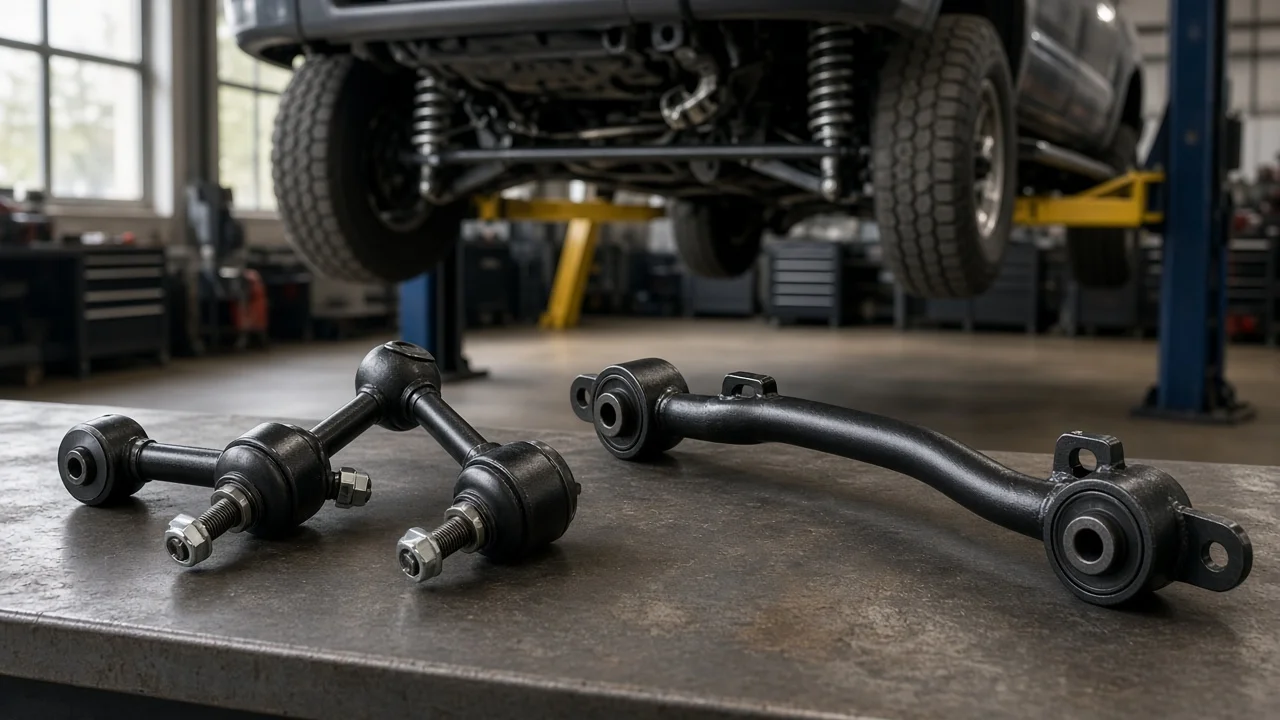
Sway bar links look like simple parts, but on a Ram 1500 the correct link depends on more than the model name. Generation, drivetrain, suspension type, ride height and any lift or leveling all affect which link fits and how it should be installed. This guide explains how to narrow down the right part for your truck, what to inspect before buying, and where vehicle-specific service information has to take over.
Short answer: fitment depends on your exact truck
No single sway bar link fits every Ram 1500. The correct part depends on the exact vehicle configuration. That includes model year and generation, two-wheel or four-wheel drive, front or rear position, the factory suspension type, and any changes to ride height since the truck was built. The most reliable way to confirm fitment is a parts lookup by vehicle identification number, either at a dealer parts counter or through a catalog that decodes the VIN. Searching by year and model alone is less reliable.
Front and rear links are different parts and cannot be swapped. Left and right links on the same axle are often identical, but some designs are side-specific, so check the listing for each position. A catalog may show several options for your year. That usually means a detail such as drivetrain or suspension package splits the application, and you need to settle that detail before ordering.
How sway bar links work
The sway bar, also called a stabilizer or anti-roll bar, is a torsion bar that ties the left and right suspension together. When the truck leans in a turn, one side compresses while the other extends, and the bar twists to resist that difference. The links are the short connectors between the ends of the bar and the suspension arms or axle. They carry that force while letting the suspension move through its travel. Most links have a ball stud or a bushing at each end, sealed by a rubber boot or cushioned by rubber. When those joints wear, the bar moves a little before it starts working. You notice this as noise and a looser feel, not as a sudden loss of control. Link length matters because it sets the bar's angle relative to the suspension. A link that is too short or too long can preload the bar, bind at full travel or contact nearby components.
What changes which link fits
Generation is the first split. The fourth-generation Ram 1500 started with the 2009 model year, and the fifth generation arrived for 2019. The older design stayed in production for several more years as the Ram 1500 Classic. That means a 2019 or later truck can belong to either platform. Parts for the two are not interchangeable, so confirm which one you own before searching by year.
Drivetrain and suspension type come next. Two-wheel-drive and four-wheel-drive trucks can use different front suspension components. Trucks with the factory air suspension may need different parts than coil-spring trucks of the same year. Take extra care with performance and off-road versions. The TRX uses a substantially different suspension design, so do not assume parts for standard trucks will fit it. Not every configuration necessarily has a rear sway bar, so check that your truck has one before ordering rear links.
Ride height changes are the most common reason a catalog-correct link still fits poorly. A leveling kit or suspension lift changes the geometry between the bar and the suspension. Many lift kits include longer links or specify which ones to use. On a modified truck, the lift kit manufacturer's instructions take priority over the factory part listing. Service history helps here too, because a previous owner may have installed aftermarket links or changed ride height in ways that are not obvious at a glance.
Checking and choosing links
Worn links usually make a clunk or knock from the front or rear over small bumps, driveway entrances or uneven pavement at low speed. Some also rattle on rough roads. More body lean in corners can point to a disconnected or badly worn link, though other components cause similar symptoms. Start with a visual inspection. Look for torn or missing boots, grease leaking from a joint, heavy rust around a ball stud, bent link bodies or broken mounting hardware.
To check for play, park on level ground with the parking brake set. Grab each link and try to move it by hand. A healthy link should not knock or show free movement at either end. With the truck on the ground the bar can be preloaded, so some technicians support the suspension at ride height before checking. Sway bar bushings, control arm bushings, ball joints, tie rod ends and shock mounts can all make similar noises. Confirm where the noise comes from before buying parts.
When choosing replacements, match position, drivetrain and suspension type first, then look at construction. Some aftermarket links are greaseable or have heavier bodies, which can suit trucks that tow, haul or go off-road often. For normal operating conditions, the factory design is adequate. Many owners replace both links on an axle at the same time so the sides wear evenly. That makes sense when both links have similar mileage and condition.
Installation details that matter
Many owners can replace sway bar links with basic tools, but a few details matter. Ball-stud links often spin when you turn the nut. Many designs have a hex or Torx socket in the stud end so you can hold it while loosening and tightening. Seized hardware is common on trucks driven where roads are salted. Penetrating oil and patience help, and on a badly rusted link, cutting the stud may be the practical option. Always support the truck securely on stands rather than relying on a jack.
Tighten fasteners to the torque values in the manufacturer specifications for your exact truck, not to a generic number. Some fasteners are single-use, so follow the service information on whether new nuts are required. If the links use rubber bushings instead of ball joints, final tightening is usually done with the suspension at normal ride height so the bushings are not twisted. Replacing links alone does not normally affect wheel alignment. If you replace other suspension parts at the same time, you may need an alignment check.
Limitations and next step
This guide helps you narrow down fitment, but it cannot replace a VIN-based parts lookup or the factory service procedure for your truck. Sway bar links have no universal replacement interval. Their life depends on operating conditions, load, road quality and climate, so an inspection at routine service visits is more useful than a mileage target. Your maintenance schedule and service history can show whether the links or related parts were replaced before.
Get professional help if any of these apply: • The noise continues after replacement. • The suspension has been heavily modified. • Hardware is seized into the control arm or axle bracket. • The truck wanders or pulls, or the tires wear unevenly. These signs point beyond the links. A technician with the right service information for your truck can inspect the full front and rear suspension.