Ram 1500 Air Suspension Compressor: Choosing the Correct Part
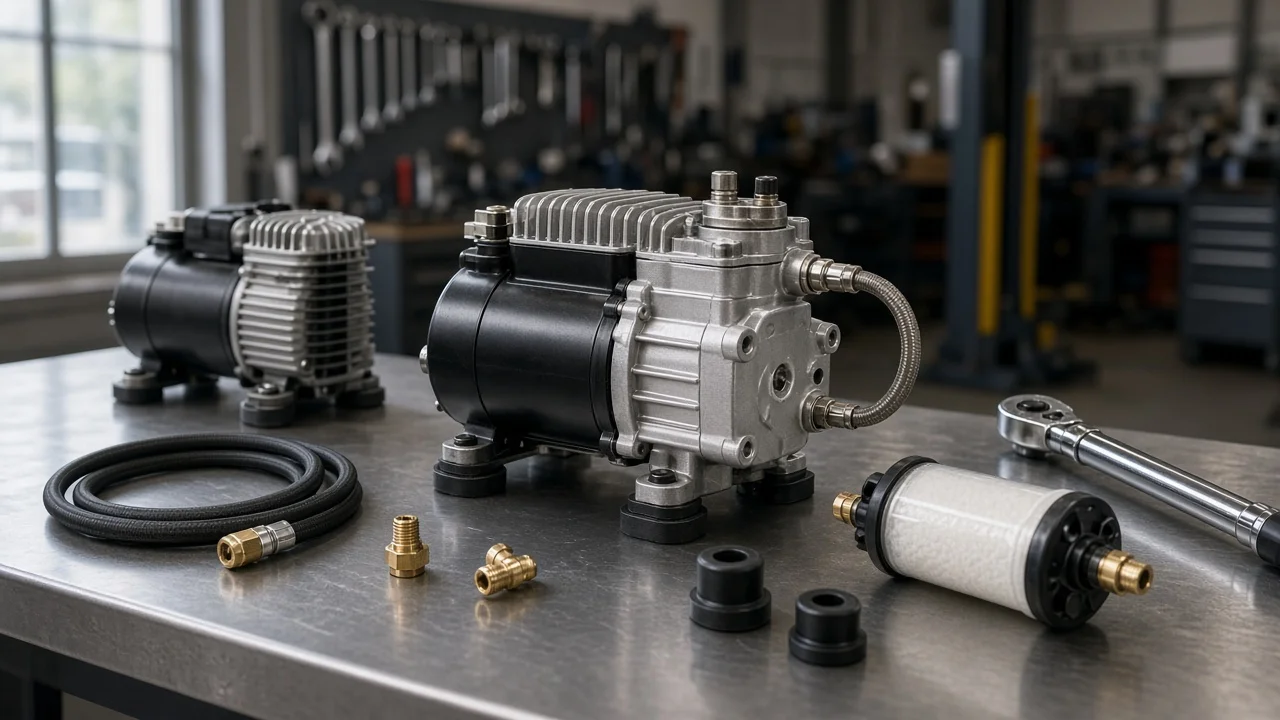
A failing air suspension compressor can leave a Ram 1500 sagging, stuck at one ride height or showing suspension warnings. Choosing a replacement is less about finding the cheapest unit and more about matching your truck's generation, connectors and mounting hardware, and confirming that the compressor is actually the faulty part. This guide explains how to narrow the choice for a 2019 Ram 1500 and for earlier trucks, such as 2014 through 2017 models and Rebel trims, without guessing at fitment.
Define the job the product must do
On a Ram with factory air suspension, the compressor supplies pressurized air through a dryer and valve block to the air springs. The suspension control module then uses that air to hold ride height and to move between settings such as entry and exit, aero and off-road heights. The replacement has one job: restore that supply reliably on your specific truck. Before you buy, confirm the diagnosis. Common compressor symptoms include a pump that never runs, one that runs constantly, one that runs but builds no pressure, a repeatedly blown fuse, or unusual noise. Several of these can also come from a leaking air spring or line, a stuck relay or a saturated dryer. Scanning the suspension module for stored codes and checking for leaks first can save the cost of a part you did not need.
Next, consider how the truck is used. Regular towing or hauling makes the compressor work harder to restore level under load, and wet or cold climates put more strain on the dryer. Your budget, whether you plan to do the work yourself and how much warranty coverage you want all shape the shortlist. Converting the truck to coil springs is a separate job with its own trade-offs. This guide assumes you are keeping the factory air system.
Check compatibility
The 2019 model year is where fitment mistakes are most likely. Ram sold the redesigned Ram 1500 alongside the Ram 1500 Classic, which carried over the previous design, so the year alone does not identify the correct compressor. Do not assume that air suspension hardware interchanges between the two generations. Decode the VIN through a parts catalog or a dealer parts counter, and compare the result with the part number printed on the label of your existing compressor. Trucks from 2014 through 2017, including 2016 and 2017 Rebel models, belong to the earlier generation. Even so, build date and equipment can affect the exact part, so treat the part number as the deciding reference.
Beyond the part number, check the physical interfaces: the shape and pin count of the electrical connector, the size and type of the air line fitting, whether the dryer is built into the assembly or mounted separately, the bracket and isolator pattern at the mounting points, and the routing of the intake or exhaust hose. Be cautious with listings that claim to fit a very wide span of years without naming a generation. Compare the seller's photos of the connector and bracket against the unit on your truck before ordering.
Features that affect the choice
Most buyers choose between a genuine Mopar compressor, a new aftermarket unit and a remanufactured one. A genuine part is built to the original specification and is the simplest choice for fitment. New aftermarket units often cost less and sometimes include a dryer or relay in the box. Remanufactured compressors vary the most, because what gets replaced during rebuilding differs from one supplier to the next. Ask whether the motor, piston seal and dryer desiccant were renewed, and whether the core was tested before it shipped.
Labels such as heavy duty, upgraded or high performance tell you little on their own. More useful evidence includes a published cross-reference to the original part number, a stated duty cycle or thermal protection, a list of included components such as a dryer, relay and new isolators, and clear photos of the actual product. Claims of quieter operation are rarely measured the same way across brands, so give them little weight. A written warranty that names your year and generation, and a return policy that covers wrong fitment, are worth more than marketing wording.
Limitations and ownership costs
A new compressor cannot fix a leak. If an air spring, line or fitting is losing pressure, the replacement will run longer than it was designed to and can fail early. With the system pressurized, check the springs, lines and valve block with soapy water. Replacing the compressor relay is inexpensive insurance, because a relay stuck closed can keep the pump running until it overheats. If the dryer is not included and is a separate component, assess its condition too, and make sure the intake path is intact so water and debris stay out.
Plan for safe vehicle support during installation. Park on level ground, use rated jack stands at the approved lift points, and never work under a truck held up only by its air springs. Air suspension stores pressure, so follow the service procedure for depressurizing or disabling the system before you disconnect lines. Tighten brackets and fittings to the fastener specification in the service information rather than guessing. Afterward, the system may need a ride height check or calibration with a scan tool that supports the suspension module. If ride height was off for a long time or other components were replaced, a wheel alignment check is sensible. While the truck is supported, it is also a good moment to check joint play in the ball joints and tie rod ends. Budget for the compressor, the relay, a dryer if needed, possible labor, scan tool access and an alignment.
Build a practical shortlist
Before comparing prices, run each candidate through the same checks. The VIN confirms the generation, which matters most for 2019 trucks. The listed part number matches or cross-references your original. The connector, air fittings and bracket match your existing unit, and the listing makes clear whether the dryer is included. Check whether a relay and isolators come with the compressor. The seller should name your model year and generation, not just a broad range, and the warranty and return terms should be in writing.
Keep only the two or three options that pass every check. Drop any part that would need adapters or modified brackets, rather than trying to make it fit. Then compare total cost, including the relay, dryer, installation time and any calibration you will need, and not just the price of the compressor. If a detail is still unclear, a dealer parts counter can usually confirm the correct part from your VIN before you commit.