Ram 1500 Adjustable Control Arms: Fitment and Selection
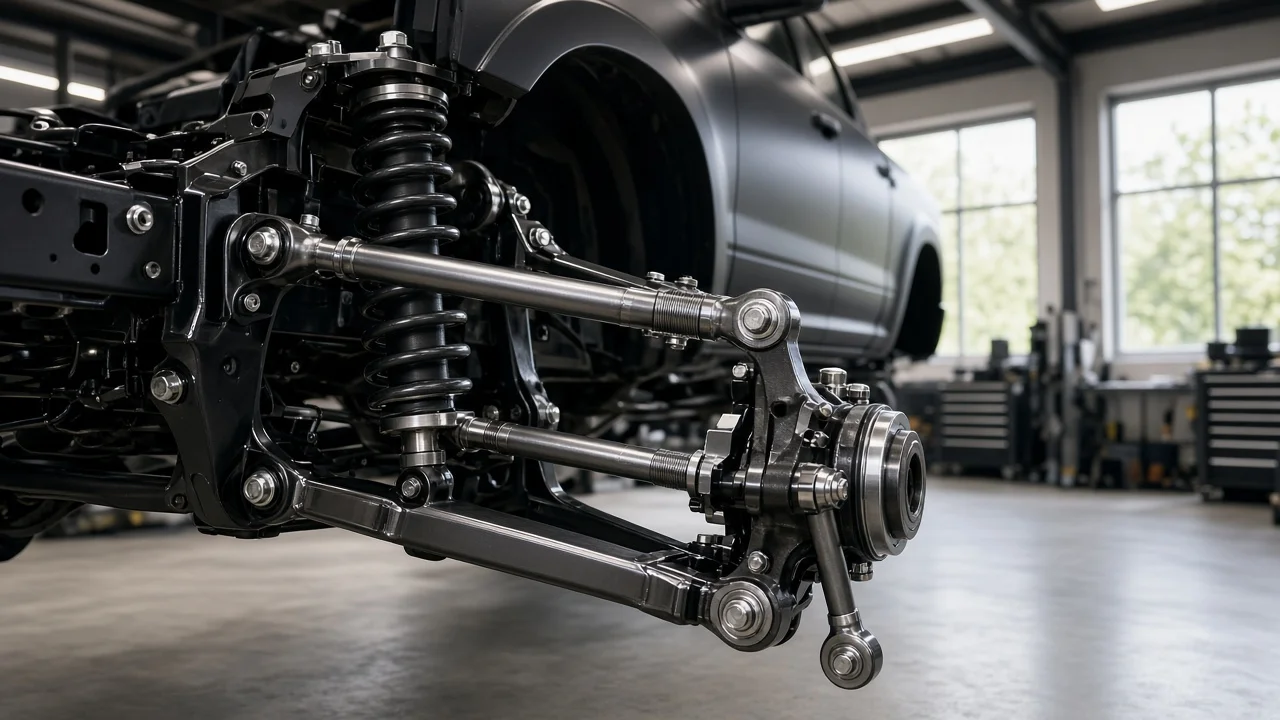
Adjustable control arms let a Ram 1500 owner correct suspension geometry that a leveling kit or lift pushes out of range. They only help when the arm matches the truck, the height change and the way the truck is used. This guide explains how to judge fitment, which design features matter, what ownership involves and how to narrow a list of candidates without relying on marketing claims.
Define the job the arms must do
Most owners look at adjustable upper control arms after raising the front of the truck. A leveling kit or lift changes the angle of the upper arm. That usually reduces available caster and can shift camber beyond what the factory adjustment points can correct. The upper ball joint may also run close to the limit of its angular travel, and at larger lifts the arm can contact the coil spring or coilover. If the truck sits at stock height and aligns within specification, aftermarket arms solve no problem and only add cost.
Be specific about the goal before shopping. A daily driver with a modest leveling kit usually needs restored alignment range and quiet, low-maintenance bushings. A truck with a larger lift, bigger tires or regular off-road use may need extra clearance and a ball joint with more articulation. For towing and heavy hauling, durability and stable geometry under load come first. Rear adjustable links are a separate job. They are typically used to set pinion angle or axle position after a rear lift and should not be confused with front upper arms.
Check compatibility with your truck
Fitment starts with the generation. The 2019-and-later Ram 1500 and the earlier body style, which continued in production as the Ram 1500 Classic, use different suspension parts. A listing for one does not imply fit on the other. Two-wheel-drive and four-wheel-drive versions can also differ. The TRX has its own suspension design, and general Ram 1500 arms are not built for it. On trucks with factory air suspension, ride height is managed by sensors rather than by springs alone. Confirm with the arm maker that both the arm and your lift method are approved for that system.
Next, match the arm to the lift range. Manufacturers usually state the height increase an arm is designed for. An arm installed outside that range can leave too little adjustment or contact the spring. Check how the arm attaches at the frame mounting points and at the knuckle. That means bushing sleeve dimensions, cam or fixed bolts, the ball joint taper and whether the factory nut and retaining hardware carry over. Confirm how the ABS sensor wire and brake hose are routed and secured, and whether longer lines are required. Wheel and tire size matter too, because larger tires can rub on arms with a different profile.
Features that affect the choice
The adjustment method is the first real difference between designs. Some arms build extra caster into a fixed shape and rely on the factory cam bolts for fine tuning. Others add threaded or adjustable ball joint housings for more range. Extra adjustment is useful only if an alignment shop can set it and lock it reliably. Ball joint type also matters. A conventional sealed or greasable ball joint tends to be quiet and familiar to service. A spherical uniball usually allows more articulation, but it can be more exposed to dirt and may get noisier as it wears. Ask whether replacement joints are sold separately.
Bushing material changes ride quality. Rubber isolates vibration best. Polyurethane resists deflection but may need periodic lubrication to stay quiet. Spherical or delrin-type pivots give precise movement and pass more road feel into the cab. Arm construction, such as tubular or boxed steel, forged aluminum or billet aluminum, affects weight and clearance more than everyday drivability. Treat labels such as heavy duty or race proven as marketing unless the maker gives measurable details: material, wall thickness, joint rating, warranty terms and published lift range. Coating and finish quality matter if the truck is driven on salted winter roads.
Installation, alignment and ownership costs
Installing upper control arms requires proper vehicle support. The truck should be on level ground and rest on jack stands at the frame points the manufacturer recommends. Remove the wheel and support the lower control arm before separating the upper ball joint. The coil spring or strut assembly stays under load in many procedures, so follow the service manual and the kit instructions rather than shortcuts. Every fastener specification, including torque values, comes from those documents, so do not guess. Many bushings must be tightened with the suspension at normal ride height so they are not preloaded. This step is easy to miss when the truck is up on a lift.
A professional wheel alignment is part of the cost, not an option. Caster, camber and toe all change when the arms are replaced. Tell the shop which arm is installed so they can use its adjustment correctly. If the maker recommends a recheck after the bushings settle, budget for that as well. Ongoing costs include greasing serviceable joints, inspecting boots and checking for joint play during tire rotations or oil changes. Uniball and polyurethane designs typically need more attention than sealed rubber parts.
Adjustable arms also have firm limits. They do not correct a worn lower ball joint, a worn tie rod end or a bent component. They cannot fix a lift kit that is mismatched to the truck. They will not restore factory steering feel if tire size or wheel offset is the real cause. Changing suspension geometry may affect warranty coverage on related parts, so check with the dealer or your warranty provider before installation.
Build a practical shortlist
Narrow the candidates with a checklist instead of rankings. Confirm the model year range, generation, drivetrain, trim exclusions and suspension type listed by the manufacturer. Check that the stated lift range matches your measured ride height change. Compare ball joint style, whether the joints are greasable and whether replacement joints and bushings are available. Note the adjustment method and whether the kit includes cam bolts, hardware and brackets for the sensor wire and brake hose.
Then compare ownership factors. Look at the published warranty length and terms, corrosion protection and the quality of the installation instructions. Find out whether a local alignment shop has experience with the design. Read owner feedback for recurring issues such as noise, early joint wear or clearance problems, but remember that a few reports do not prove a pattern. The right choice is the arm that solves your specific geometry problem with the least added maintenance, not the one with the longest feature list.