Radiator Leaking on Top: Finding the Source
Direct answer
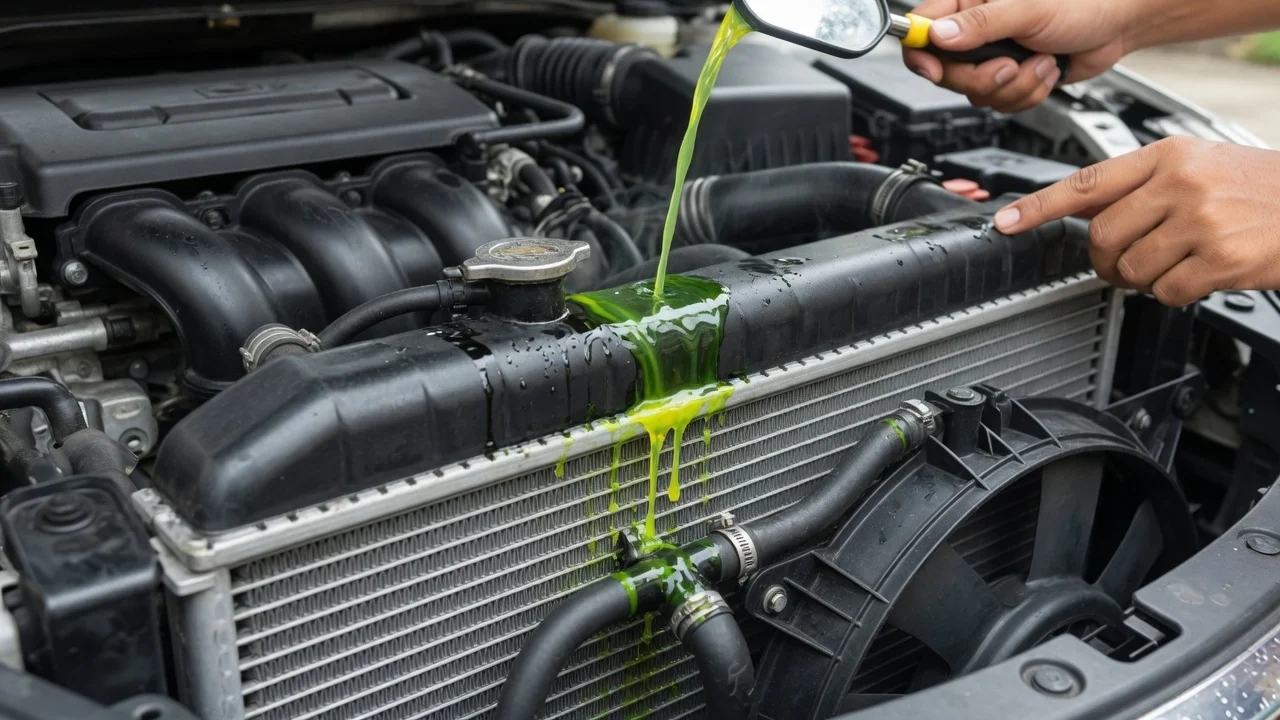
A radiator leaking on top is usually coming from one of a small group of components at the upper end of the radiator: the upper tank or its seam, the inlet neck where the upper radiator hose attaches, the radiator cap and filler neck, a transmission or engine oil cooler fitting built into the top tank, or a cracked hose connection. The leak generally becomes visible as coolant or dried coolant residue on the upper surface of the radiator, on the top tank, or running down from the cap or hose area, but the exact location can vary by radiator design and vehicle model.
Why coolant appears on top
The top of the radiator is usually the hottest and highest-pressure part of the cooling system under normal operation. The upper hose carries heated coolant from the engine into the radiator. The cap and filler neck sit at or near the top because this is where coolant expansion and pressure are managed. A small leak in this area may only appear after the engine reaches operating temperature and the system builds pressure, which is why a top leak can be intermittent or only visible after driving.
Common sources to inspect first
Radiator cap or cap seal: a cap that no longer seals can release coolant around the filler neck and leave a wet or crusty residue near the top.
Filler neck: a small crack or a scored sealing surface on the neck can allow coolant to escape near the cap, even with a good cap installed.
Upper radiator hose connection: a loose clamp, hardened hose, or cracked inlet neck can leak where the upper hose meets the radiator.
Upper tank seam: on radiators with a crimped plastic tank attached to an aluminum core, the gasket between the tank and core can age and begin weeping or leaking.
Transmission cooler or oil cooler connection: some vehicles have fittings built into the upper tank; a leaking fitting or internal crack can mimic a general top leak.
Cracked top tank: impact damage, overheating, or aging plastic can create a crack on the upper tank itself.
How to locate the leak
Wait until the engine is cool before inspecting a suspected leak. Start by looking for brightly colored or crusty coolant staining near the cap, upper hose, and the seam where the top tank meets the core. Wipe the area clean and run the engine until the cooling fan cycles or the system reaches operating temperature, then watch for fresh moisture while keeping hands and clothing clear of moving parts. A coolant system pressure tester can help reveal a slow leak that only opens under pressure, but only use it according to the tool and vehicle instructions.
What the location tells you
Coolant visible around the cap often points to the cap seal, the cap spring, or the filler neck. A wet upper hose end usually indicates the hose clamp, the hose, or a cracked inlet neck. Moisture along the full top edge of the radiator more often points to the tank-to-core gasket or a crack in the top tank. A leak that appears only after the transmission has been operating may instead involve a transmission cooler line or fitting at the radiator, not the engine coolant passages.
Practical cautions
Do not open the radiator cap while the engine is hot. The cooling system can be under pressure, and opening the cap can release hot coolant and cause injury. If the vehicle has lost enough coolant to affect temperature control, do not continue driving until the leak is identified and the system is refilled and bled correctly.
Gaps in general advice
The exact repair depends on the radiator construction and whether the vehicle has a separate expansion tank, an integrated degas bottle, or an additional cooler in the top tank. Some designs place the cap on a remote tank rather than directly on the radiator, so a leak near the cap may not be the radiator itself. Vehicle-specific service information is needed to confirm the location, replacement parts, and cooling system bleeding procedure.