Radiator Leaking at the Bottom: Finding the Source
Direct answer
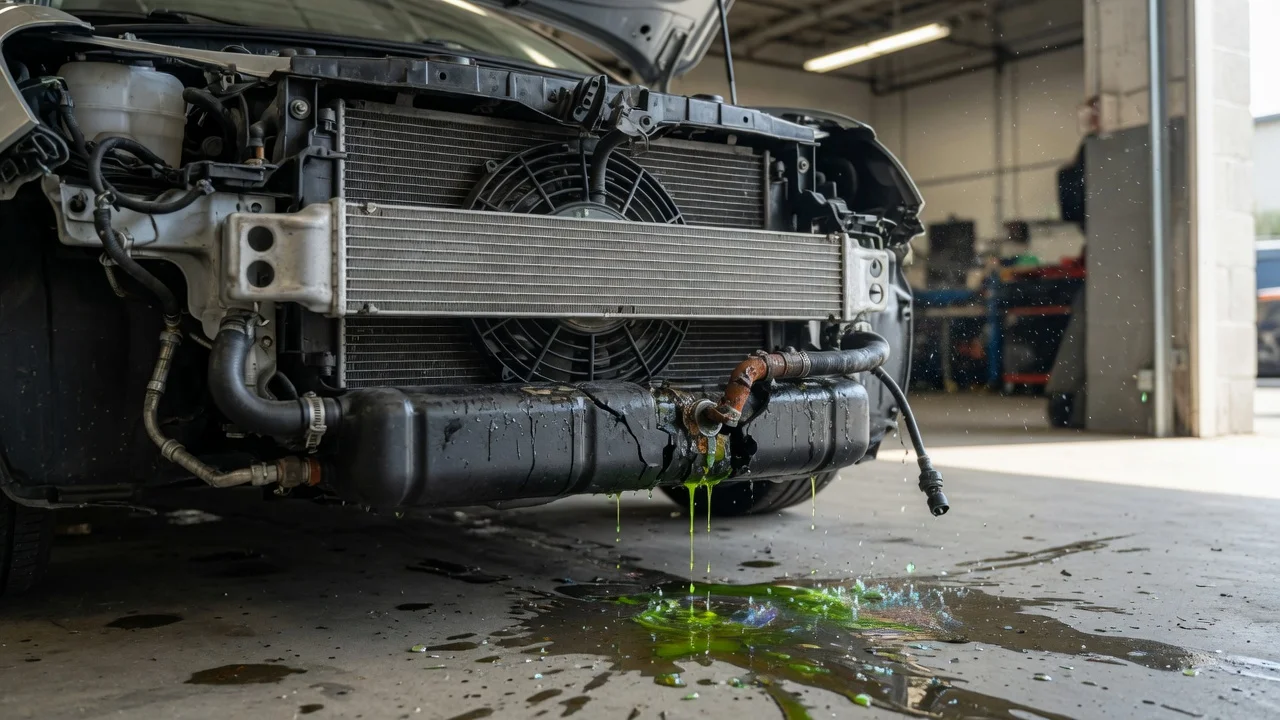
A radiator leaking at the bottom is usually not a single universal fault. The same visible symptom can come from the lower radiator tank, the radiator's bottom seam or gasket, the drain valve or petcock, a damaged lower hose connection, or a separate transmission or engine oil cooler built into the lower portion of the radiator. The repair, cost, and urgency all depend on which part is actually losing coolant, so the first practical step is to locate the exact wet area rather than assume the radiator core itself has failed.
Why the bottom of the radiator deserves a closer look
Coolant follows gravity, so a leak from several inches above the bottom edge can collect at the lowest visible point and look like a bottom-of-radiator failure. Before replacing the radiator, inspect the upper hose, side tanks, transmission cooler connections, and engine oil cooler lines where applicable. Wipe the lower area clean, warm the engine enough to build normal cooling system pressure, and watch for the first point where liquid appears.
Common leak points that appear at the bottom
Lower radiator tank or crimped tank-to-core seam: corrosion, impact damage, or aging of the seam can allow coolant to seep at the lowest portion of the radiator. Drain valve or petcock: the drain fitting at the bottom is a common seep point if its seal is old, cracked, or not fully seated. Lower radiator hose or clamp: a loose clamp, swollen hose end, or cracked hose can drip at the lower outlet and run down the tank. Transmission cooler lines or fittings: on vehicles with automatic transmissions, the cooler connections near the lower tank can weep transmission fluid or engine coolant, or both, depending on the failure. Engine oil cooler or related connections: on models that use a lower-tank oil cooler, a fitting or internal leak can appear near the bottom of the radiator.
Check the fluid first
Confirm what is leaking. Engine coolant is typically green, orange, pink, blue, yellow, or another dyed color depending on the vehicle and fill specification, and it usually has a sweet smell. Transmission fluid is often red or brown and feels oilier. If the wet spot is not clearly coolant, inspect the transmission cooler lines and their fittings. Some vehicles can have both systems nearby, and the correct diagnosis changes the repair.
Location-specific inspection
Vehicle layout varies, so use the following checks only where the design applies.
Look at the bottom seam in a clean, dry condition before the engine warms up. Check the drain petcock or plug for residue, staining, and whether it is firmly seated. Squeeze or inspect the lower radiator hose for soft spots, cracks, or a wet clamp area. Trace automatic transmission cooler lines from the transmission to the radiator; identify whether the wetness is at a fitting or farther back. Examine the lower side tanks for impact marks, cracked plastic, or swollen areas around the hose neck.
Pressure testing without guessing
A cooling system pressure tester can help find a slow bottom leak that is not visible when the engine is cold. With the engine off and the system filled to the correct level, pressurize to the vehicle's specified cooling system test pressure and watch the lower area. Use the cap specification for the vehicle when available; applying excessive pressure can damage the system. If a pressure tester is not available, a warm-engine visual check after wiping everything dry is the next option, but keep hands and clothing away from moving belts and hot surfaces.
What the source usually means for repair
Loose clamp or minor fitting seep: may respond to cleaning, reseating, or replacing the affected seal or clamp. Cracked side tank or damaged seam: usually requires radiator repair or replacement. Faulty drain valve seal: may be repairable with the correct replacement seal or valve, if the radiator design allows it. Transmission cooler fitting leak: repair depends on the fitting, line, and radiator condition; do not drive with uncertain transmission fluid loss. Internal cooler leak: coolant and transmission fluid or oil can mix, which requires immediate attention because it can damage the transmission or engine.
Safety limits during diagnosis
Do not remove the radiator cap or a coolant fitting while the system is hot and pressurized. Coolant under pressure can spray and burn skin. Let the system cool, use gloves and eye protection, and support the vehicle properly if access is needed from underneath. If coolant loss is rapid, the coolant warning light is on, or the temperature gauge is rising, stop driving and have the vehicle inspected before further use.
Gaps that may remain
The exact test pressure, part number, replacement procedure, and whether the lower tank is plastic or metal depend on the specific vehicle, model year, engine, and market configuration. No universal torque or seal specification can be correctly applied without the vehicle service information. If the leak source is not visible after a clean inspection, professional pressure testing can identify the failure without unnecessary parts replacement.