Radiator Leak Repair Cost
What is the direct answer to my question?
Radiator leak repair cost varies widely by vehicle and by the repair method used. A small external leak sealed with an additive, a stop-leak product, or a patch may cost roughly $15 to $60 or more, depending on materials and application. A professional repair to replace the radiator itself is usually more expensive, commonly ranging from about $300 to $1,000 or more when parts and labor are both included, with exact totals determined by the vehicle's make, model, engine, radiator type, and local labor rate. The safest way to estimate your cost is to identify where the leak actually is, decide between temporary sealing and permanent repair, then obtain quotes based on the correct replacement part for your configuration.
How to interpret radiator leak symptoms and avoid replacing the wrong part
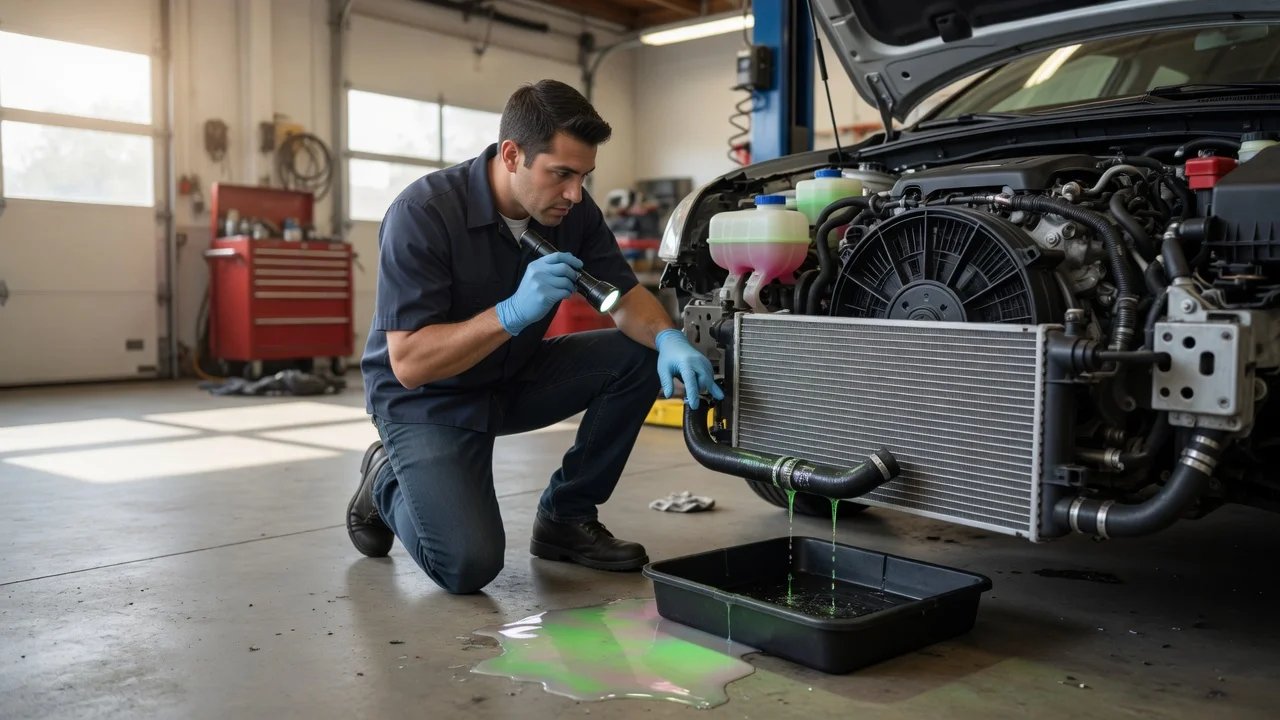
A visible puddle of coolant underneath the front of the vehicle, a consistently low coolant level, and a sweet smell from the engine area can all point toward a leak, but they do not prove that the radiator core itself is defective. A leak can also come from a radiator hose, a hose connection, the radiator cap, the coolant reservoir, a drain plug, or surrounding cooling-system components. Identifying the source before buying a radiator is essential because replacing a sound radiator will not solve a leak caused by a failed hose or loose clamp.
Ordered checks that distinguish possible causes
If the leak is suspected, inspect the cooling system in a sensible sequence. Begin with a cold visual check of the radiator, hoses, hose clamps, cap, reservoir, and drain plug. Look for wet stains, dried coolant residue, or crusty white or colored deposits that suggest where fluid has escaped. If coolant is visible near a hose end, the issue may be a clamp, hose, or fitting rather than the radiator itself.
Next, check the radiator cap and its seal, since a weak cap can allow coolant to escape under pressure and can also affect system pressure testing. If the visual inspection is inconclusive, a cooling-system pressure test can be useful. When the system is pressurized with the engine off and the correct test equipment, a drop in indicated pressure supports the presence of a leak, but it does not identify the location by itself. The mechanic or technician should then observe the area where air or coolant escapes during the test.
For leaks appearing only when the engine is hot or when the vehicle is running, observe the system during warm-up. A bad radiator cap, a split hose, a failing header tank seam, or a crack in a plastic radiator end tank may only open once the system is hot and under pressure. Because cooling-system parts are vehicle-specific, replacement decisions should be checked against the correct model year, engine, and configuration rather than assumed from a generic part number.
Repair options and their cost implications
Repair options fall into two broad groups: external or sealing products used without removing the radiator, and repair or replacement of the failing component. A stop-leak additive can sometimes seal a minor internal leak, but it is generally a temporary or uncertain fix. Sealants work differently depending on the product and the leak size, and they may not be suitable for a cracked end tank or a damaged hose. A radiator patch or leak-sealed repair may be appropriate for an accessible external hole, but its durability depends on the material and the area being repaired.
For vehicle owners, the most reliable permanent repair is usually replacement of the leaking part. If the leak is only a failed hose, clamp, or cap, the repair cost is typically much lower than a full radiator replacement. If the radiator core or an end tank is cracked, replacement is often the appropriate repair. Radiator replacement cost includes the replacement radiator, coolant, any gaskets or seals required, and the labor to remove and refill the system.
Why a fault code alone is not proof of radiator failure
If a vehicle stores a cooling-related diagnostic trouble code, the code should not be treated by itself as proof that the radiator needs replacement. A code can result from a temperature mismatch, a failed sensor, an electrical fault, a coolant circulation problem, or a condition detected under specific operating situations. The correct approach is to review the code definition and its test criteria, then check the related sensor, harness, coolant level, and cooling-system behavior before replacing any component. This is especially important for radiator cost because diagnosing the wrong part can create an expensive repair that does not solve the original problem.
What to confirm before choosing a repair
Before committing to a radiator repair or replacement, verify the leak location, the condition of the cap and hoses, and the correct replacement part for the vehicle's model year, engine, and market configuration. Ask whether the estimate includes fresh coolant and how the system will be bled after refilling, because air trapped in the cooling system can cause overheating even when the new radiator is installed correctly. A clear diagnosis is the most effective way to keep radiator leak repair cost under control and to make sure the money is spent on the actual failed component.