Radiator Hose Leak Repair Cost: What to Expect
Direct answer
A radiator hose leak repair is generally one of the less expensive cooling system repairs. The hose itself is usually a low-cost part, so most of the bill comes from labor, lost coolant, and the time required to safely handle a hot cooling system. Because repair prices vary by vehicle, engine, market, and shop rate, a universal dollar amount would be unreliable. The more useful answer is that replacing a radiator hose typically costs far less than repairing a damaged radiator or a failed cylinder head gasket, and the final price depends mainly on which hose is leaking, how accessible it is, and whether the vehicle needs additional work such as a coolant flush or replacement of the coolant that was lost.
Why the estimate varies
Several factors materially change the repair estimate. The upper radiator hose and lower radiator hose are in different positions, and one may be much harder to reach than the other on a particular vehicle. A small coolant leak at a clamp may require only a new clamp and retightening, while a swollen, cracked, or oil-softened hose should be replaced rather than patched. Heater hoses and small bypass hoses can also leak, and their routing can make the job more involved.
The engine and model year can change both the hose design and the labor required. A molded hose with several bends is usually more expensive than a straight section of bulk hose. If the thermostat housing, water outlet, or radiator neck is corroded or damaged, replacing only the hose may not stop the leak. On some vehicles, air can become trapped in the cooling system after repair, so the shop may need a vacuum fill or a specific bleeding procedure, which adds time.
Symptoms that point to a radiator hose leak
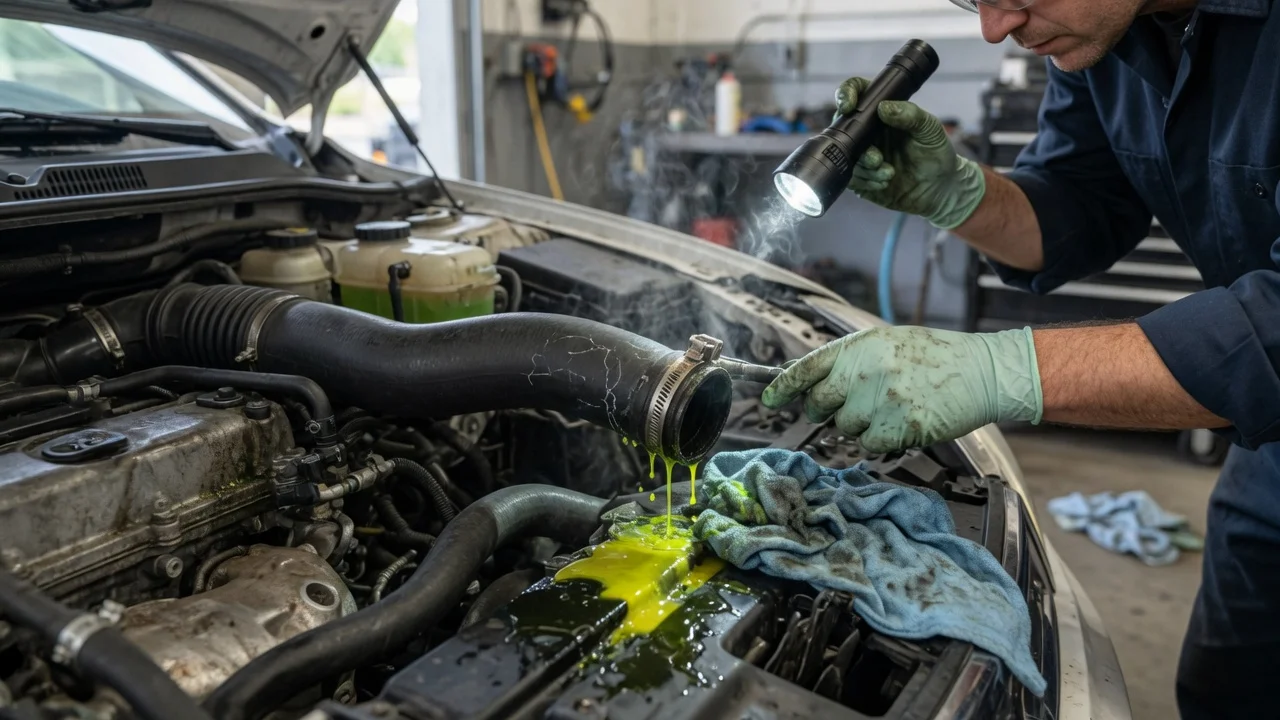
A radiator hose leak may appear as coolant dripping near the front of the vehicle, a sweet smell from the engine bay, a low coolant level, or a rising temperature gauge. The leak is sometimes easier to see after the engine is shut off, when system pressure may briefly increase from heat soak. Coolant can also spray onto nearby belts and pulleys, leaving a fine mist that is not easy to trace.
These observations suggest a cooling system pressure loss, but they are not proof that the hose is the only fault. A coolant leak near the hose may actually come from an adjacent connection, the radiator end tank, the water pump, or a failed radiator cap releasing coolant. A cool engine inspection with a pressure tester is the practical way to identify the source before replacing parts.
What a careful diagnosis should distinguish
If coolant is present but the exact source is unclear, a cooling system pressure test can help separate a leaking hose from a leaking component. The technician attaches a hand pump to the radiator or coolant reservoir, pumps the system to the specified test pressure, and watches for a pressure drop or visible coolant. A drop with no obvious external coolant can indicate an internal leak, such as a cylinder head gasket failure, rather than a hose issue.
A soft or swollen hose suggests the rubber has degraded, possibly from oil contamination or age. A hard, brittle hose can crack under pressure. A leak at the clamp may stop when the clamp is properly positioned and tightened, but if the hose is damaged under the clamp, replacement is the safer repair. The test result supports replacement only when the observed leak is traced to the hose itself, not simply because a diagnostic fault code or a generic cooling complaint exists. A trouble code alone never proves that a mechanical hose requires replacement.
When to repair instead of continuing to drive
A small seeping hose can become a sudden burst, quickly releasing enough coolant to overheat the engine. Driving with a low coolant level can damage the cylinder head gasket, cylinder head, or engine block, which is a much larger repair cost than replacing a hose. Topping off the coolant can help keep the vehicle usable for a short trip, but it does not correct the leak under normal operating pressure and heat.
The practical next action is to locate the leak on a cool, pressure-tested system and replace the failed hose, clamps, or damaged connection as needed. If the coolant is old or contaminated, draining and refilling with the coolant type specified for the vehicle may be included in the job, which adds material cost but also removes debris that could shorten the life of the new hose.
What the repair should include
A complete hose repair should include the replacement hose, new or serviceable clamps, any needed coolant, and a check that the system holds pressure and reaches normal operating temperature after the repair. The technician should inspect the adjacent fittings and verify that the cooling fan operation and temperature gauge are normal after refilling.
Because the supplied brief does not contain vehicle-specific labor times, parts prices, or market rates, this article cannot give an exact figure for your vehicle. The material uncertainty is significant: the same job can involve a straight hose on an accessible engine or a complex molded hose buried behind components. Get a vehicle-specific estimate after the leaking hose has been identified, and ask whether the quoted price includes coolant, clamps, bleeding, and disposal of the old coolant.