Radiator and Coolant Stop Leak: How It Works, When to Use It, and the Risks
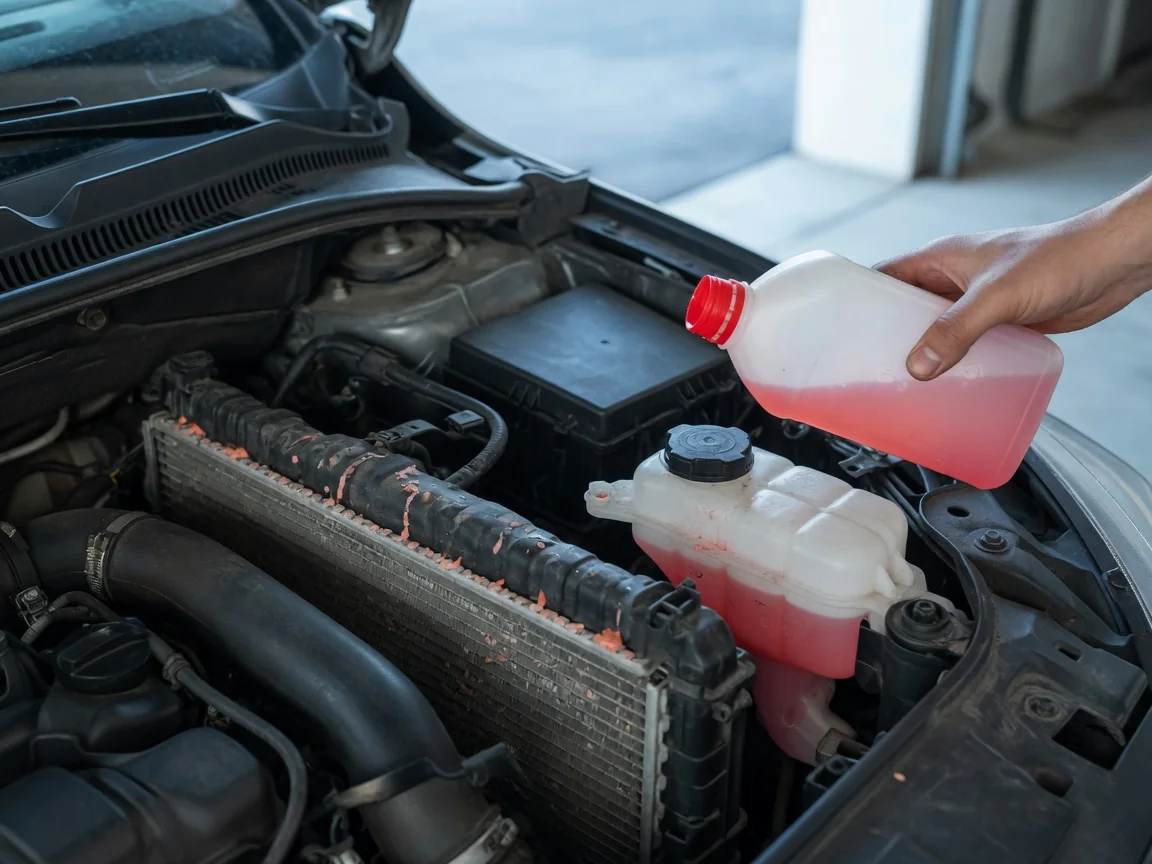
When the coolant reservoir keeps dropping, a bottle of stop leak can look like an easy answer. Used on the right problem, it can buy time to reach a shop. Used on the wrong one, it can clog passages or hide a failure that ends in overheating. This guide explains how these sealers work, where they fit, and when a proper repair is the only safe choice.
What a Pour-In Radiator Sealer Is and How It Seals a Small Leak
A pour-in radiator sealer is an additive that mixes with the coolant and travels through the whole cooling system. At a pinhole or weeping seam, coolant escapes and meets air, and pressure and temperature drop at that spot. Sealer particles or chemicals collect there and build a plug. Fibrous and particulate products lodge in the gap physically. Sodium silicate types harden into a glassy seal when exposed to heat and air. Polymer or ceramic liquid formulas are designed to bond at the escape point while staying suspended everywhere else.
These products are meant for minor seepage from radiator cores, tank seams, or a slightly weeping hose connection. They are not built for a split hose, a cracked plastic tank, or a gasket failing under combustion pressure. Sealing depends on circulation, so the engine has to run and reach normal operating temperature for the product to reach the leak. Even then, results are not guaranteed. Treat any success as a stopgap. The radiator or joint is still damaged, and the plug is only holding back a flaw that is still there.
Find Where the Coolant Is Actually Going Before You Pour Anything In
Before adding anything, confirm the source with the engine completely cold. Never open the pressure cap on a hot or warm engine, because pressurized coolant can erupt and cause serious burns. Check the level at the coolant reservoir only after the system has fully cooled. Then look for clues: the color of any puddle and where it lands under the car, crusty residue on the radiator core or seams, damp hose clamps, and stains running down the overflow tank. Wetness near the front of the car often points to the radiator or its hoses.
Some symptoms point away from the radiator entirely. A sweet smell inside the cabin, or a windshield that fogs with a greasy film, suggests the heater core. White exhaust smoke that continues after warm-up, or oil that looks milky, raises the possibility of a head gasket or other internal leak, and a sealer is the wrong tool for those. A driveway check also has limits, because some leaks appear only under full pressure or temperature. A shop pressure or dye test confirms the source. Unexplained rapid coolant loss or overheating means you should stop driving.
When Stop Leak Is a Reasonable Temporary Fix and When It Is Not
Stop leak makes sense only in a narrow situation. You need a confirmed slow seep from the radiator itself, a vehicle that is not overheating, and a short-term need to reach a shop or bridge a few days while a part arrives. It is the wrong call for a large or fast leak, coolant loss with overheating, a suspected head gasket or heater core failure, or a vehicle under warranty where an additive could complicate coverage. Vehicle age matters too. Worn older systems and modern radiators with narrow passages can respond differently, so check the owner's manual first.
Sometimes the best temporary fix is mechanical rather than chemical. If the drip is coming from a loose hose clamp, tightening it on a cold engine may stop the leak completely. A worn, inexpensive hose is often easier to replace than to seal. Either fix deals with the actual fault without putting particles into the system. If you do use a sealer, watch the coolant level and temperature gauge closely over the next several days. A plug can wash out as pressure changes, and the leak can come back with little warning.
Coolant Stop Leak Products, Pre-Mixed Coolant With Sealer, and Compatibility
Standalone stop leak comes in a small bottle that you add to the existing coolant, which suits a system that is full or nearly full. Pre-mixed coolant with sealer already blended in is practical when the level is low and you need to top up anyway, since it restores volume and adds the treatment in one step. In either format, coolant chemistry matters. Many vehicles call for a specific coolant type, and any additive or blend should be labeled compatible with it. A mismatch can cause gelling or weaken corrosion protection.
Read the label before pouring. It should give the dose for your cooling system's capacity, how long the engine needs to run for the product to work, and whether the maker says it can stay in the system or should be flushed out later. Don't add more than directed or combine different brands. Overdosing and mixing sealer chemistries both raise the risk of sludge and restricted passages. If you drained coolant to make room, top up with the correct coolant and water ratio so protection against freezing and boiling is not diluted.
What Can Go Wrong: Clogging, Heater Core Trouble, and Masked Failures
The same property that lets a sealer plug a leak also lets it settle where it isn't wanted. The narrow passages in the heater core, the radiator tubes, and the area around the thermostat are the usual trouble spots. A partial blockage there reduces both cabin heat and cooling capacity. Warning signs after treatment include weak heat from the vents and a temperature gauge that creeps higher in traffic or on hills. Another sign is uneven temperature across the radiator, which a technician can check with the right tools.
A sealer can also hide a problem that is getting worse. The leak keeps growing behind the plug until the plug gives way suddenly, and the overheating that follows can damage the head gasket or the engine itself. Some shops and manufacturers take a dim view of sealer residue, and flushing or repair work can become more involved once a product has been through the system. Nothing visible from the outside shows whether a plug is holding or a passage is partly blocked. Only a pressure test or hands-on inspection can answer that.
When a Proper Repair Is the Only Safe Answer
Certain signs mean the repair should happen now. These include coolant loss that returns within days, any overheating, visible cracks in the plastic end tanks, a water pump seal that drips or leaves residue, and sweet-smelling steam in the cabin. A professional diagnosis typically includes a cooling system pressure test, dye tracing to follow the leak, and a check of the pressure cap and hoses, since a weak cap can mimic other faults. That process replaces guesswork with a confirmed source, and that is what makes the repair last.
Repairs range from a radiator replacement to hose, gasket, thermostat, or heater core work, and costs vary widely by vehicle and region. Tell the shop plainly that a sealer was used. That way they can plan a flush and check for residue before installing new parts that could otherwise pick up the contamination. The decision rule is simple. Stop leak is reasonable for a confirmed small radiator seep when you only need a short trip to get help. Everything else, especially overheating or coolant loss you can't explain, calls for a professional repair.