Quick and express oil change providers
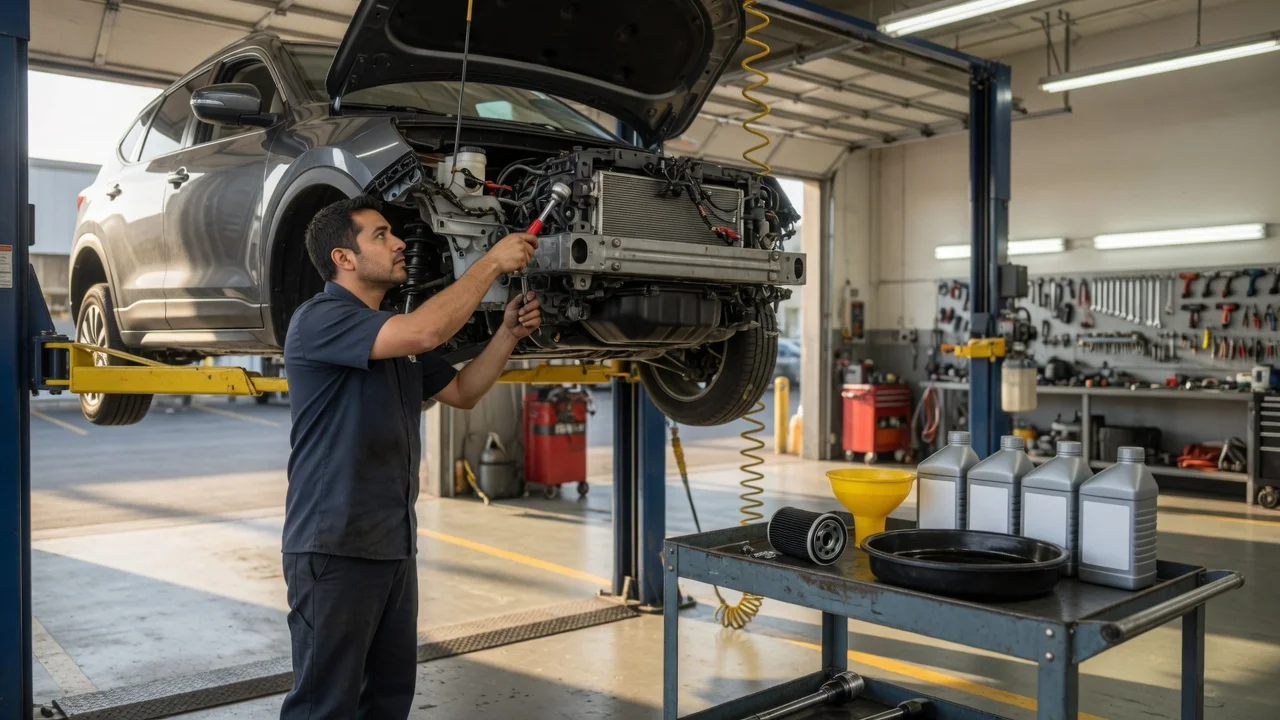
What express oil-change shops are for
Quick and express oil-change providers are drive-in or appointment-based shops whose core job is a scheduled oil and filter service, often completed while you wait. The essential answer to an oil-change question at these shops is that they can replace engine oil and the oil filter on most gasoline passenger cars and light trucks, and they typically add a multi-point visual check. They are not a substitute for full mechanical diagnosis, powertrain repair, or every manufacturer-required service interval.
Scope matters. An express visit is a maintenance stop: drain the used oil, fit a new filter, refill with a specified grade and quantity, reset a maintenance reminder when the vehicle supports it, and look for obvious leaks or low fluids. It does not automatically include transmission service, coolant flush, spark plugs, or warranty diagnostic work unless the shop also offers those as separate jobs and is equipped for them.
Who these providers typically serve
National and regional quick-lube chains, some tire and battery retailers with lube bays, and a smaller set of independent express shops all sell the same basic product: a fast oil and filter change. Many also service diesel light-duty pickups and some hybrids, but capability is vehicle-specific. Battery-electric vehicles generally have no conventional engine-oil service; a shop that only changes oil cannot fulfill that vehicle’s scheduled maintenance.
Dealer service departments and full-service independent shops also change oil. The express model trades breadth for speed and a narrower menu. Dealers more often have factory-trained technicians, OEM parts, and campaign or warranty coverage. Independents may handle mixed-make repair in the same visit. Express providers are built around high throughput of a few maintenance tasks.
What you should confirm before the visit
Oil type, viscosity, and specification are not interchangeable across engines. The correct fill is the one in the owner’s manual or under-hood label for that model year, engine, and market: examples include a stated SAE viscosity such as 0W-20 or 5W-30, plus any required performance standard such as API SP or ILSAC GF-6, or a manufacturer specification such as dexos1 for applicable General Motors gasoline engines. Using a generic “conventional” or “synthetic” label without matching those requirements can be the wrong oil even if the job is completed quickly.
Match oil grade and spec to the owner’s manual for that powertrain, not to a shop’s house blend alone. Confirm whether the quoted price includes the filter, disposal, and tax, and whether a synthetic or high-mileage oil is an upcharge. Ask if the shop stocks the filter type your engine uses, including cartridge-style filters on some late-model engines. Say whether the vehicle is under warranty or a prepaid maintenance plan; some plans require dealer or approved-network service and specific documentation. Bring the current mileage and any oil-life or service-message status so the reminder can be reset correctly when the vehicle uses an oil-life monitor rather than a fixed mileage interval.
Oil-life monitors on many late-model vehicles calculate remaining oil life from operating conditions. The interval is not a fixed 3,000-mile rule. Changing oil far earlier than the monitor or manual recommends adds cost without a documented benefit for a healthy engine on the specified oil. Waiting until the monitor is at or near zero, or until the manual’s time or mileage cap is reached, is the interval the manufacturer published for that vehicle. Severe service—short trips, extreme heat or cold, towing, dusty roads—can shorten that interval; the manual defines what counts as severe for that model.
How an express visit usually runs
A typical express oil change is a pit or lift service. The technician drains the sump, replaces the filter, inspects the drain plug and gasket or crush washer, refills to the specified capacity, and checks the level on the dipstick or electronic oil-level system after a short run or wait as the procedure requires. Many shops also top off washer fluid, check tire pressure, and note belts, hoses, air filter, cabin filter, and wiper blades as optional add-ons. Those extras are sales offers, not part of the oil change unless you approve them.
Time on site is commonly described in marketing as about 15 to 30 minutes for a straightforward gasoline car when the correct oil and filter are in stock and the bay is open. That figure is an industry claim, not a measured result from this article, and it does not apply to cartridge-filter engines that need extra labor, vehicles with underbody shields, diesel oil changes, or shops that are queued. Appointment-based express lanes are often more predictable than unannounced walk-ins.
Where express service is a good fit, and where it is not
Express oil change is a reasonable next action when the vehicle is due for oil and filter only, you can document the correct specification, and you want a same-day wait service without a full inspection appointment. It is a weaker fit when the engine is using oil, the oil is milky or fuel-smelling, a leak is already known, a warning light is on, or the vehicle needs a campaign, software update, or warranty diagnosis. Those conditions need a shop that can test, not only lube.
Keep the invoice. A complete ticket should list oil brand and viscosity, specification if stated, filter brand or part number, quantity, mileage, and date. That record supports warranty discussions and the next interval. If a shop cannot name the specification it poured, treat that as a gap and ask for the product label or a different provider.
Price, oil grades, and add-on pressure
Posted prices for a “conventional” oil change are often a starting rate for a limited set of four-cylinder cars and a conventional or blend oil that may not meet a modern engine’s required spec. Many current gasoline engines specify a full-synthetic oil and a tighter performance standard; the out-the-door price then moves to the synthetic tier. High-mileage oils are a separate product aimed at older engines with seal wear; they are not required by every manufacturer and should be chosen against the manual, not only against a shop script.
Cabin filters, air filters, wiper blades, fuel additives, and differential or transmission “flushes” are commonly offered during the wait. Approve only items that are due by the maintenance schedule or that a technician can show are restricted, damaged, or below spec. A visual “needs replacement” note without a measurement or a schedule due date is an editorial sales judgment, not a documented specification.
Warranty and documentation caveats
In the United States, using an independent or express shop for maintenance does not by itself void a federal new-vehicle warranty, provided the work uses oil and a filter that meet the manufacturer’s stated requirements and you keep records. Warranty coverage can still be denied for a failure if the maker shows that the wrong lubricant, a missed interval, or poor work caused the damage. Some prepaid maintenance contracts and certified-pre-owned programs are stricter and name where the oil change must be done. Check that contract for the specific vehicle, model year, and program.
This article does not report shop-by-shop test results, posted prices, or wait times. Those vary by chain, franchise, region, and date. The supported next action is to identify the oil specification and interval for your exact powertrain, then choose an express provider that will pour that oil, fit a correct filter, and give you a written record—or use dealer or independent service when the job is more than a lube visit.