Questions to Ask a Dealer When Buying a Used Car
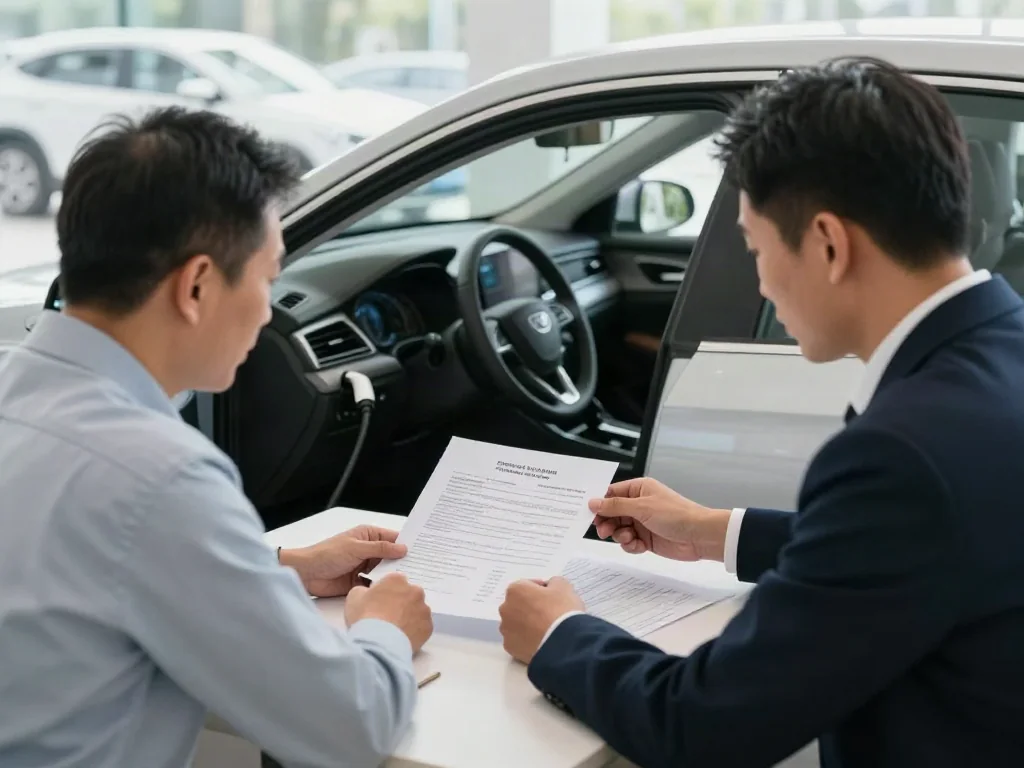
The questions to ask a dealer when buying a used car focus on paperwork the lot controls: as-is status, dealer warranty versus a service contract, reconditioning records, the vehicle history report, out-the-door price, dealer fees, optional add-ons, and any return policy. What to ask a dealership when buying a used car is less about casual conversation and more about getting those terms in writing before you commit.
Ask for the Dealer’s Written Terms Before Committing
Among the questions to ask when buying a used car from a dealer, start with the specific vehicle in front of you rather than a generic checklist. Ask which documents the dealership can produce today, who on the lot has authority to approve promises, and what still needs to be resolved before anyone signs. Request the federal Buyers Guide and the proposed purchase paperwork, then confirm that the vehicle identification number on those forms matches the plate on the car and the title documents.
Written repair promises matter because verbal statements from a salesperson often do not bind the store. Ask the car dealer to put negotiated repairs, included accessories, and other commitments on a signed we-owe or similar document before you leave a deposit. If the Buyers Guide, purchase order, and verbal answers do not line up, pause. Missing paperwork or shifting explanations usually mean the deal is not ready, and signing first makes those inconsistencies harder to unwind.
Clarify As-Is Status and Warranty Coverage
What to ask a dealer when buying a used car should include a direct question about as-is sale status versus a dealer warranty, and where that language appears on the Buyers Guide and the contract. If coverage is offered, ask which components are included, what exclusions apply, when the period ends, whether a deductible is charged, and whether repairs require prior authorization. Also ask whether advertised protection is an included dealer warranty or a separately purchased service contract, and which company actually handles claims.
As-is language does not automatically erase every buyer protection, because those rights depend on the law that applies to the sale. Still, an as-is marking on the Buyers Guide typically means the dealership is not promising to repair problems after delivery unless another written commitment says otherwise. If the salesperson claims remaining manufacturer coverage, ask for documentation tied to this VIN rather than a brochure. Factory remaining coverage, a dealer warranty, and a service contract are different products with different claim paths.
Request Reconditioning Records and Inspection Access
Questions to ask a dealership when buying a used car should cover work done after the lot acquired the vehicle. Request dated inspection sheets and repair orders that show what was inspected, repaired, or replaced, and ask which findings remain unresolved or were deferred. Reconditioning records document work performed; they do not prove the condition of every component. If the car is advertised as certified, ask who operates the program, what the inspection checklist actually covers, and what written coverage accompanies that label.
A fair question to ask when buying a used car from a dealership is whether an independent mechanic can inspect the car before purchase and how that access will be arranged, including off-site time and any deposit required to take it. A dealer inspection is useful, but it is not a substitute for a third-party look at leaks, structure, brakes, and drivability. If the store will not allow a pre-purchase inspection, treat that refusal as a reason to walk rather than as a minor inconvenience.
Question the Vehicle History Report and Title Records
Ask for a vehicle history report generated for this VIN, and note the date it was run so you are not reviewing a stale printout. Then ask what the dealership knows about prior damage, title brands, odometer discrepancies, fleet or rental use, and salvage or flood branding, and request any supporting records. An unremarkable report cannot establish that the car was never damaged or repaired, because many events never get reported to the databases that feed those summaries.
One of the questions to ask the dealership when buying a used car is whether it already holds a transferable title. Confirm that the store has the documents needed to transfer ownership and ask how any outstanding lien, duplicate title, or branding issue will be resolved before you take delivery. If the history report, salesperson statements, and sales paperwork disagree on mileage, prior use, or damage, require those discrepancies to be explained in writing. Signing while those conflicts remain open leaves you arguing after the car is already in your name.
Get an Itemized Out-the-Door Price and Deposit Terms
What to ask a dealership when buying a used car includes a written out-the-door price that itemizes the vehicle price, taxes, title and registration charges, dealer fees, and optional add-ons. Ask which line items are government charges, which are dealer charges, and which products you can decline. Also ask whether the advertised figure depends on dealer financing, a trade-in, or incentives with eligibility rules. A low advertised number that only holds with a high-rate loan or a packed add-on package is not the cash price.
If you finance through the dealership, ask for the APR, loan term, amount financed, total of payments, and whether approval is final or still pending. Compare that package against the cash out-the-door total so add-on products and rate markup are visible. Before paying a deposit, ask whether it is refundable, what conditions apply, and how long the dealer will hold the vehicle. A nonrefundable hold on a car you have not independently inspected or fully contracted is a risk you can refuse.
Confirm Return Policies and Post-Sale Commitments
After price and history, the questions to ask buying a used car from a dealer turn to what happens if you need to unwind the deal. Ask whether a written return policy or exchange policy exists, with time and mileage limits, vehicle-condition requirements, and any restocking or inspection charges. Do not assume an automatic three-day cancellation right applies to a dealership purchase; many used-car contracts are binding once signed unless the store publishes a return window. Ask who handles problems found after delivery and what process applies under the agreed dealer warranty, service contract, or return policy.
If work is promised after delivery, insist on a signed document listing the repairs, expected completion timing, who pays, and the contact person who can authorize the work. Before you sign, compare the final packet against the agreed coverage, out-the-door price, return terms, and outstanding written repair promises, then keep copies of everything. Questions to ask a car dealer when buying a used car lose their value if the signed contract omits those answers. The documents you leave with are the ones that will be enforced.