Public EV Charging Explained: How Stations Work, How to Use Them and Charging Etiquette
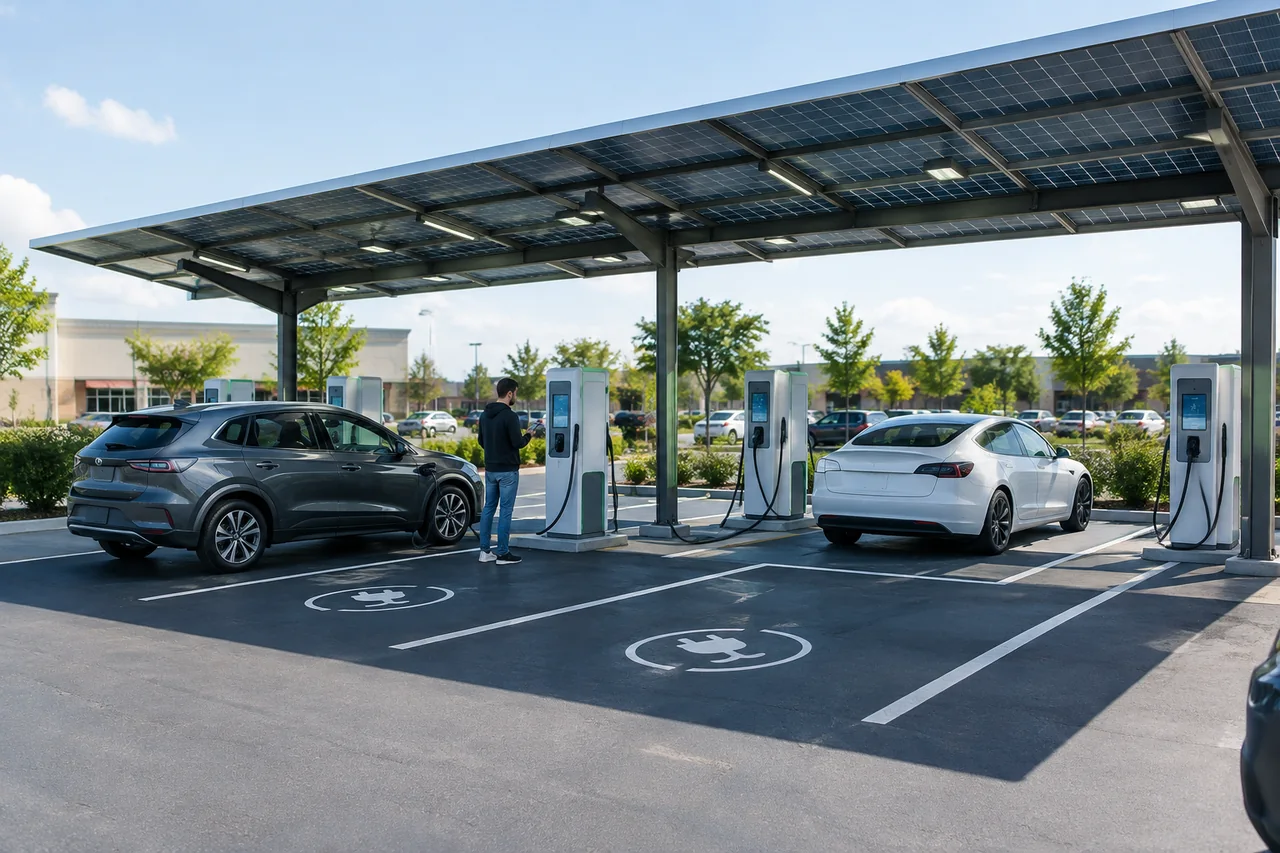
A car electric charging station can look simple: a post, a cable and a screen. Yet every session involves grid power, a data exchange between car and charger, and a shared space other drivers depend on. Knowing how stations work, how to find and start one, and how to behave around them makes public charging quicker, cheaper and much less stressful.
What a Public Electric Car Charging Station Is and What Powers It
A public charging station is grid-connected equipment that delivers electricity to a vehicle through a standardized charging connector. A single charging point serves one car at a time, while a station or charging hub groups several bays at one site. In public you will meet two broad types. With Level 2 AC charging, common at destinations, the car's onboard charger converts alternating current for the battery. DC fast charging moves that conversion into the station itself, feeding direct current straight to the battery at much higher kilowatt output.
Every station depends on a grid connection. Some sites add solar canopies or on-site battery storage to smooth demand peaks, but the energy mix reflects the local grid rather than the brand on the canopy. Actual speed is capped by the lowest of three limits: the station's rated output, the maximum rate the vehicle accepts, or what the battery allows given its state of charge and temperature. Before power flows, car and charger exchange data to authorize, monitor and safely end the session, which is why the plug locks in place until charging stops.
Charging Networks, Infrastructure and How to Find Public Charging Points
A charging network is the operator that owns or manages the hardware, processes payment and runs customer support. One site can host equipment from more than one network, each with its own pricing and app. Drivers find chargers through in-car navigation, network apps, third-party aggregator maps and roadside signage, though live availability data can lag reality. Infrastructure tends to cluster along highway corridors, in retail lots, at urban curbside points and at destinations such as hotels, so trip planning should follow where chargers actually are.
Access models vary. Some chargers accept contactless bank cards, others require app or account registration, and many support RFID cards that start a session with a tap. Roaming agreements let one account work across several networks, reducing app clutter, though roaming rates may differ from a network's own pricing. Before relying on a site, confirm the connector matches your car, check its rated power and read recent user reports for faults or crowding. On longer trips, keep a backup location within comfortable range in case the first choice disappoints.
Charging Options on the Road: Connectors, Speeds and Cost Structures
Away from home, options run from slow destination points, suited to a meal, shopping or an overnight stay, up to high-power fast chargers built for short stops on long drives. Match the charger to your time: occupying a fast unit through a two-hour dinner wastes a scarce resource, while a slow post barely helps during a coffee break. Your vehicle has a specific inlet for AC and DC charging. Adapters exist for some combinations, but use one only where both the vehicle and charger manufacturers support it.
Public charging is commonly billed by energy delivered, by time connected, per session or through a subscription, and many networks add an idle fee if the car stays plugged in after charging ends. On road trips, fast charging from a low level to a moderate one usually beats filling to full, because charging slows noticeably in the upper range of the battery. Cold batteries accept power more slowly and winter trims range, while heat can also limit speed. If your car offers battery preconditioning, using it en route to a fast charger can help.
How to Use a Public Charging Station Step by Step
Park so the cable reaches your inlet without stretching, then check the charger's screen or app to confirm the unit is available. Authenticate with the app, an RFID card, contactless payment, or plug and charge if your car and the network support it, then connect firmly. Confirm the session has started on both the charger display and the vehicle. Watch delivered power and estimated time remaining; a reading stuck near zero or far below expectations may reflect a cold battery, a high state of charge, shared power or a fault.
To finish, stop the session from the app, charger or vehicle before unplugging, since the connector usually stays locked until the session closes, then return the cable to its holster. Sessions often fail because of an unregistered account or declined payment, a communication error, a damaged connector or a unit that is out of service. Retry once, move to another bay, or call the support number shown on the unit. Never use a charger with visibly damaged cables, exposed wiring or a cracked connector; report it rather than attempting any fix.
Workplace and Car Park Charging: Access, Rules and Parking Bays
Workplace charging usually relies on employer-installed Level 2 AC points unlocked with a fob, app or building badge. Policies often define who may use them, for how long and whether employees pay. Parking garage and car park charging points share that slower, all-day character, unlike highway hubs designed for quick turnover. They suit stays measured in hours and are frequently tied to parking payment or time limits, so depending on the site you may pay separately for space and energy or through one combined fee.
An EV charging bay is not the same as an ordinary parking space. Signage and enforcement vary widely, and some operators penalize vehicles that occupy a bay without actively charging. In shared workplace or residential lots, simple habits keep things fair: a sign-up rota, moving the car once it has enough charge, and a quick message to colleagues when a point frees up. Because access rules, pricing and time limits are set by the site operator or employer, confirm local terms rather than assuming a policy seen elsewhere applies.
Public Charging Etiquette: Sharing Chargers Without Friction
The central rule is to occupy a charger only as long as you need it. At a fast charger, unplug and move once the battery reaches a sensible level for your next leg or charging slows sharply, especially when others are waiting; idle fees exist partly to enforce this. At busy sites, join a visible queue, do not jump ahead when a bay opens, and tell waiting drivers roughly how long you expect to be. A brief conversation removes guesswork and heads off most disputes.
Holster the connector after use and keep cables out of walkways and the neighboring bay. Never unplug another driver's car unless the session has clearly finished and site rules allow it. ICE-ing, when a gasoline or diesel vehicle blocks a charging bay, can strand drivers who need power; report it to the site operator rather than confronting anyone. Smaller courtesies matter too: leave a note or use the car's charging status display to show your finish time, never reserve bays with cones, and report faulty units promptly.