Prius Hybrid Battery Failure Symptoms and Warning Lights
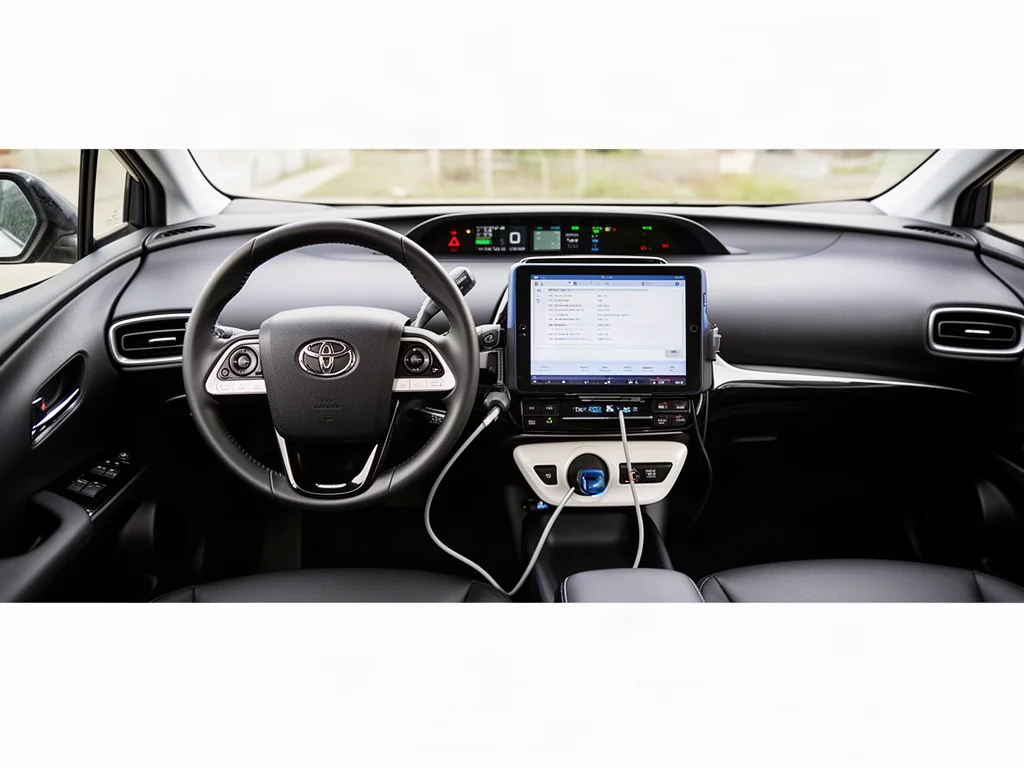
A Prius hybrid battery warning light can appear when the hybrid system detects a problem, but the indicator alone does not prove the traction battery has failed. Prius hybrid battery failure symptoms, voltage readings, and knowing how to test a Prius hybrid battery help you collect useful information before a shop visit. Warning messages, drivability changes, and safe observations give technicians a clearer starting point than the lamp by itself.
What Prius Hybrid Battery Warning Lights Can Tell You
When a Prius hybrid battery warning light or a hybrid system warning appears, the control module has stored a condition that needs diagnosis. That light is a request for investigation, not a verdict that the traction battery has failed. Related messages can mention reduced power, a charging issue, or a temperature concern, and those phrases still describe system behavior rather than a confirmed failed pack. Confirm the exact wording and indicator meaning in the owner's manual for your model year, because labels and cluster layouts differ across generations.
Drivability changes that accompany the warning help you judge urgency without naming a failed part. A message that asks you to stop, combined with loss of propulsion, overheating, or an inability to stay in READY, is a reason to follow the displayed instructions and arrange assistance rather than continue driving. If the car still moves normally and the display is only an alert, you can usually drive to a qualified shop, but treat repeated hybrid system warnings as a reason to schedule diagnosis rather than a self-repair cue.
Symptoms That Can Suggest a Failing Prius Hybrid Battery
Symptoms of Prius hybrid battery failure often show up as changes in how the car uses the gasoline engine and how the charge display behaves. Unusually rapid swings in the displayed state of charge are a reason to investigate, yet that gauge is an estimate, not a laboratory measurement of pack capacity. Increased engine operation, reduced fuel economy, or a noticeable drop in available power can accompany traction battery trouble, but the same complaints can also come from cooling problems, control faults, or driving conditions that simply demand more engine assist.
Repeated complaints under familiar routes, speeds, and loads are more informative than a one-time event. A single episode during extreme heat, extreme cold, or heavy accessory use can reflect temporary demand rather than a failing pack. Persistent or unusually loud battery cooling fan operation is a useful observation, because restricted battery cooling airflow or elevated battery temperature can trigger hybrid system warnings even when the cells themselves are not the root cause. Note whether the fan stays loud after the cabin has cooled and the car has been driven gently.
Safe Observations to Record Before Testing
Before anyone tests a Prius hybrid battery, write down the exact warning text, the time of day, ambient conditions, and whether the vehicle reaches READY. Note whether the problem appears after a short trip, a long highway run, or a hot soak in traffic, because those details help a technician reproduce the condition. Startup hesitation, dim lights, or a cluster that fails to power normally can point to the 12-volt auxiliary battery rather than the high-voltage traction battery, so those electrical symptoms belong in the same notes and should be checked during diagnosis.
You can inspect only the visible battery cooling intake for obstructing belongings, using the owner's manual to locate that vent on your model. Clothing, cargo, or pet hair in the intake can reduce battery cooling airflow and raise battery temperature without any cell failure. Do not remove battery covers, disconnect orange high-voltage cables, probe traction battery terminals, or look under high-voltage protective panels. Those steps expose hazardous voltage and are not a consumer inspection. Safe observation stops at what you can see from the cabin, cluster, and published intake location.
How to Interpret Prius Hybrid Battery Voltage Readings
Prius hybrid battery voltage is not a single number that applies to every car. Nominal pack voltage and the way cells are grouped into blocks depend on model year and variant, so the vehicle must be identified before any specification is discussed. A total-pack reading also changes with state of charge, battery temperature, and operating load. Because of that variation, one snapshot of pack voltage cannot establish whether the traction battery is healthy, weak, or failed, even when the number looks high or low compared with a remembered figure from another Prius.
Technicians therefore look at battery block voltage or module-group readings and how those values move under controlled conditions, not just the overall pack figure. A spread that appears under load, after a charge event, or as temperature changes can be more informative than a parked reading. Before interpreting any number, confirm the scanner's units, data labels, and whether the tool actually supports that Prius hybrid battery control system. No single pass-or-fail voltage threshold applies across model years, because unsupported conversions and mixed data streams produce misleading conclusions.
How a Prius Hybrid Battery Is Tested
To test a Prius hybrid battery, use a scan tool that supports the vehicle's hybrid battery control systems rather than a handheld meter on orange cables. The first useful step is reading stored diagnostic trouble codes and freeze-frame data, then verifying each code's vehicle-specific definition before interpretation. Manufacturer-dependent codes in particular require confirmation against that model year's service information. A code is evidence of a detected condition, not proof that a battery block has failed, and the same code can be set by cooling, communication, or control issues.
A qualified technician then assesses voltage behavior, battery temperature data, charge behavior, and cooling operation under controlled test conditions. Load testing of the high-voltage pack belongs in that professional setting, along with any direct high-voltage measurement. Consumer scanner reports can be helpful preliminary evidence, but their usefulness depends on tool support and the conditions under which the data were captured; they are not certificates of battery health. Preserve the recorded codes and live data before clearing anything, because erasing information removes the history a shop needs to reproduce the fault.
What to Do With the Diagnostic Findings
Warning lights, symptoms, and Prius hybrid battery voltage data should be considered together before anyone recommends replacing the traction battery. Cooling problems, a weak 12-volt auxiliary battery, and faults elsewhere in the hybrid system can produce similar lights and similar charge-display behavior. If intake restriction, fan operation, or auxiliary-battery condition has not been ruled out, battery replacement is premature. Ask for the recorded diagnostic trouble codes, the relevant test results, and a plain explanation of how those results support the diagnosis rather than a parts list based on the warning lamp alone.
Recurring hybrid system warnings or reduced available power warrant prompt professional assessment even if restarting temporarily clears the display. A cleared lamp does not erase stored history, and the condition that set the warning can return once the pack is under load again. Bring the written observations, any consumer scanner report, and cooling-intake notes so the shop can compare live data with the original freeze-frame. If propulsion is lost or the car will not remain in READY, do not keep cycling the power switch to chase a temporary clear; arrange assistance and have the vehicle evaluated.