PPE Transmission Coolers: Fitment and Selection
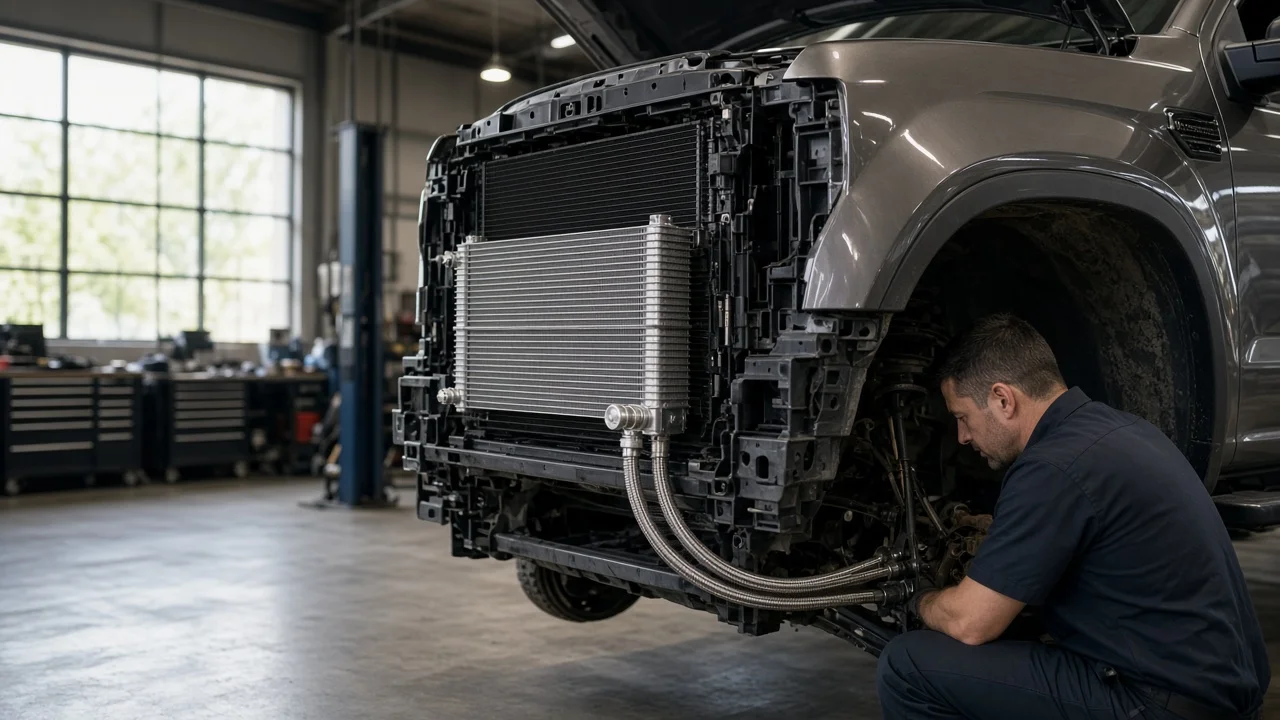
Most people buy a PPE transmission cooler for one of two reasons. Either the existing cooler has leaked or been damaged, or the truck now works harder than it did from the factory and fluid temperatures climb under load. The right choice depends on the exact transmission, how the truck is used and what the cooler connects to. This guide covers how to confirm fitment, which features matter and what a cooler can and cannot fix.
Define the job the product must do
Start by stating the problem plainly. A stock-replacement unit restores factory cooling after a leak, a cracked tank or road damage. An upgraded or auxiliary cooler is meant for sustained heat. That heat can come from towing heavy trailers, climbing long grades, plowing, or added engine power that puts more load through the torque converter. These jobs overlap but are not identical. A part built to match original capacity may not solve a heat problem that began after a tuning change or a move to a heavier trailer.
Write down your practical constraints as well. Cold winters matter, because overcooling can keep fluid below its intended operating range. Measure the space in front of the radiator or behind the bumper. Decide whether you will do the work yourself and how long the truck can be off the road. PPE is best known in the diesel truck aftermarket, particularly for heavy-duty pickups. Many owners shopping the brand drive work trucks, where downtime and towing reliability can matter more than purchase price.
Check compatibility
Fitment begins with the transmission type, not just the truck's model name. The same nameplate and model year can be built with different transmissions, engines, cab configurations and cooling packages. Each of these can change line routing, fitting style and mounting points. Confirm the transmission from the build sheet, the option code label, a VIN decode or the transmission identification tag rather than assuming it from the engine. Then check that combination against the product's stated applications line by line.
Look closely at the interfaces. Find out whether the original cooler is built into the radiator, mounted as a separate core, or both. Check whether the lines use quick-connect couplers or threaded fittings, and what size they are. Note whether the new unit needs different lines, adapters or brackets that are sold separately. Also look at what sits nearby, such as an intercooler, A/C condenser, grille shutters or a front camera. A thicker or relocated core can interfere with their clearance or airflow.
Confirm the fluid specification your transmission requires. The cooler does not change it, but any fluid lost during installation must be replaced with the correct type. On many modern automatics, the level check also depends on fluid temperature and a specific procedure, so plan that step before you start.
Features that affect the choice
Core construction is the main trade-off. Stacked-plate and bar-and-plate designs generally fit more heat-transfer surface into a given size and handle pressure well. Tube-and-fin designs tend to be lighter and less restrictive, but they usually move less heat for their size. Neither label proves performance on its own. Useful evidence includes a clear application list, stated dimensions and fitting specifications, and installation instructions you can read before buying. Phrases such as maximum cooling or race-proven, without supporting detail, tell you little.
Consider flow and temperature control. A larger core adds cooling capacity but can also add flow restriction. A cooler without thermostatic control may overcool in winter, which can affect shift behavior and how well the fluid holds up. Some systems rely on a factory thermal bypass or valve, so confirm that the new part works with it. Also weigh build details you can actually inspect: fitting material, tank welds, mounting hardware, and whether a guard is included for exposed locations.
Limitations and ownership costs
A cooler manages heat; it does not repair a transmission. Slipping, flare between gears, harsh engagement, shudder or stored diagnostic codes can point to several causes. These include fluid level, a sensor, wiring, the valve body, the torque converter or clutch wear. High temperature can be a symptom of those problems rather than the cause. Before deciding a new cooler is the fix, scan for codes and review live data, including fluid temperature and converter slip if your tool shows them. If temperatures rise only under heavy towing and the transmission otherwise behaves normally, cooling capacity becomes a more reasonable suspect.
Budget for more than the part. Installation usually means draining some fluid and refilling it to the correct level with the specified type. It may also mean removing the grille, bumper or radiator support pieces. If the transmission has had an internal failure, debris can lodge in the old cooler and lines. Many shops replace a contaminated cooler rather than trying to flush it, and your service history should record what was done. After installation, inspect lines and fittings periodically for seepage and clean debris from the core face. Change the fluid on the interval your owner's manual sets for your type of use.
Build a practical shortlist
Use a short checklist to narrow the candidates. Confirm the exact year, engine, transmission and cooling package against the listing. Match the fitting type and size, and note any lines, adapters or brackets you must add. Check the core dimensions against your measured space and the components around it. Decide whether you need stock-style replacement capacity or extra capacity for towing and work use, and whether your winters call for thermostatic control. Read the installation instructions and warranty terms before ordering.
Compare the remaining options on total cost and repair options, not part price alone. Include labor time, extra fluid, any new lines and the cost of downtime. If diagnostics point toward an internal transmission problem, resolve that first. A cooler is a sound investment when the transmission is healthy and heat is the limiting factor, but it is not a substitute for repair.