Power Window Switch Not Working: Causes, Safe Checks and When to Get Help
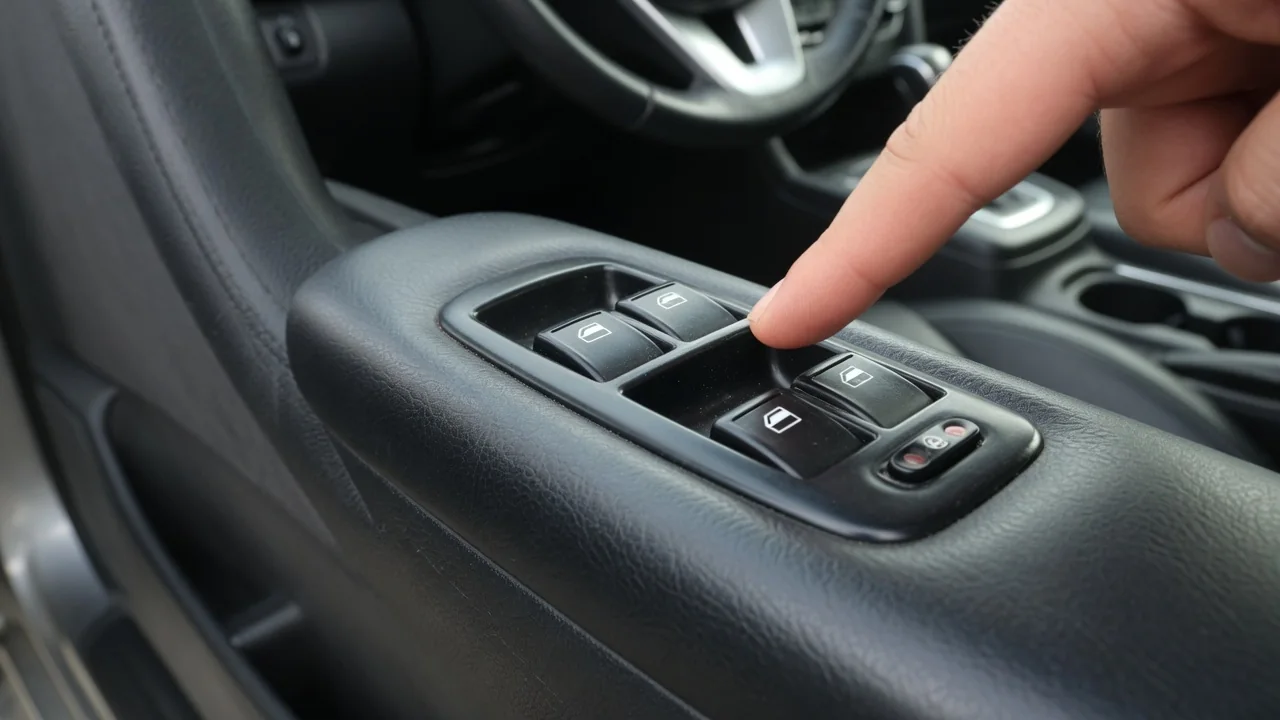
When a car power window switch is not working, the fault may sit in the switch itself or anywhere between the fuse box and the glass. A typical window system links switches, a window motor, a regulator and the door wiring harness, so a dead button is a symptom rather than a verdict. A few safe checks can narrow the cause before you spend money on parts.
What a Failed Power Window Switch Looks and Sounds Like
A failing window power switch doesn't always fail the same way. Some windows give no response at all, and others move down but won't come back up. Some work only after several presses or only in certain weather, a pattern known as intermittent window operation. Another useful case is a window that responds to its own door switch but not to the driver's panel, or the other way around. Each pattern points to a different part of the circuit, so note it carefully before changing anything.
With the cabin quiet, press the switch and listen at the door. A faint hum or click suggests that power is reaching something, but it doesn't show whether the motor, the regulator or the switch is at fault. A switch that feels sticky, loose or crunchy may be worn or contaminated. Spilled drinks and rainwater getting past a door seal are common causes. Write down exactly which windows and switches fail, because one dead window points to different causes than every window failing at once.
Check the Window Lock Button Before Assuming a Fault
Most vehicles have a window lockout button on the driver's switch panel that disables the passenger switches, usually so children can't operate the windows. With the lock engaged, the driver's switch normally still controls every window while the passenger buttons do nothing, which is easy to mistake for a broken switch. Before assuming a fault, turn the lock off and on, then retest each passenger switch in turn. A lock that was left on by accident is one of the easiest causes to rule out.
If the power window lock switch is not working correctly, the passenger windows may stay disabled after the lock is turned off, or the lock may seem to do nothing at all. Where an indicator light is fitted, it may not match how the windows actually behave. Lock button designs vary a lot, and some vehicles link the button to other functions. Check the owner's manual to see how the feature should work on your car before deciding that something has failed.
How the Driver's Master Switch Affects Every Window
The driver master switch is the group of buttons on the driver's door that controls all the windows. It usually includes the lock function, and on some vehicles it also handles mirrors or door locks. When a power window master switch is not working, a typical sign is several windows failing only from the driver's side while their own door switches still work normally. The master switch gets the most use, so worn contacts are a reasonable suspect, though not a confirmed cause.
Designs differ in important ways. In some vehicles the master switch sends current straight to each motor. In others it sends signals over a data network to door or body modules, which then run the motors. In network-based systems, a communication fault can look like a bad switch, so symptoms and diagnosis depend on the design. Any replacement switch must suit the specific vehicle and trim. Don't assume switches from different models or years are interchangeable, even if they look identical.
Switch, Motor, Regulator or Wiring: Narrowing Down the Cause
A window that will not move can stem from a worn switch, a failed window motor, a bound or broken window regulator, a blown power window fuse or faulty window relay, or damaged wiring in the door jamb wiring boot, where the harness flexes each time the door opens. Comparison checks help separate these. Operate the window from both its door switch and the master switch, then see whether locks or mirrors in that door still work. A shared failure points toward power or wiring rather than one switch.
A window that drops into the door, moves crookedly or grinds suggests a problem with the regulator or its guides, but these signs are clues, not a diagnosis. A sensible first step is to look up the fuse location and rating in the owner's manual and check the fuse. If a replaced fuse blows again, get professional testing. Even then, reliably telling a switch fault from a motor or wiring fault usually takes electrical testing at the connectors, which looking and listening alone can't do.
Ford F-150 Power Window Switch Problems
If an F-150 power window switch is not working, first confirm the truck's model year, trim and cab style, because Ford has changed its window systems across generations and configurations. Then use the same step-by-step approach as on any vehicle. Turn the lock button off and on, compare the driver master switch with the passenger switch for the affected window, and note whether one window or several are affected. Those notes will help whether you keep checking yourself or take the truck to a technician.
Some trims may have auto-up or one-touch windows, which can lose their settings after battery or other power work. The window may then move only while you hold the switch. Your owner's manual explains any auto-up window reset for your specific truck. If you buy a replacement Ford F150 power window switch, use the VIN to avoid mismatched connectors or missing functions. Also ask a Ford dealer to check for open recalls or service bulletins that may apply to your truck.
Safety Limits and When to Get Professional Diagnosis
Testing windows carries a real pinch hazard, especially with children or pets in the vehicle. Not every window has an anti-pinch feature that reverses the glass when it meets resistance. Where one is fitted, it may stop working after a fault or a power interruption, so keep hands and heads clear. Door panels can also hide side-impact sensors, airbag-related wiring and sharp regulator parts. For these reasons, taking the door apart is a job best left to a qualified technician.
Get a professional diagnosis if fuses keep blowing, you notice a burning smell or melted connectors, a window moves on its own, or several electrical features fail at once. These signs suggest a wiring or module problem rather than simple switch wear. If a window is stuck open, park under cover and use a temporary weatherproof covering. Don't force the glass up by hand, because pushing against the mechanism can bend or break the regulator and turn a switch problem into a bigger repair.