Power Steering Rack and Pinion Replacement Cost
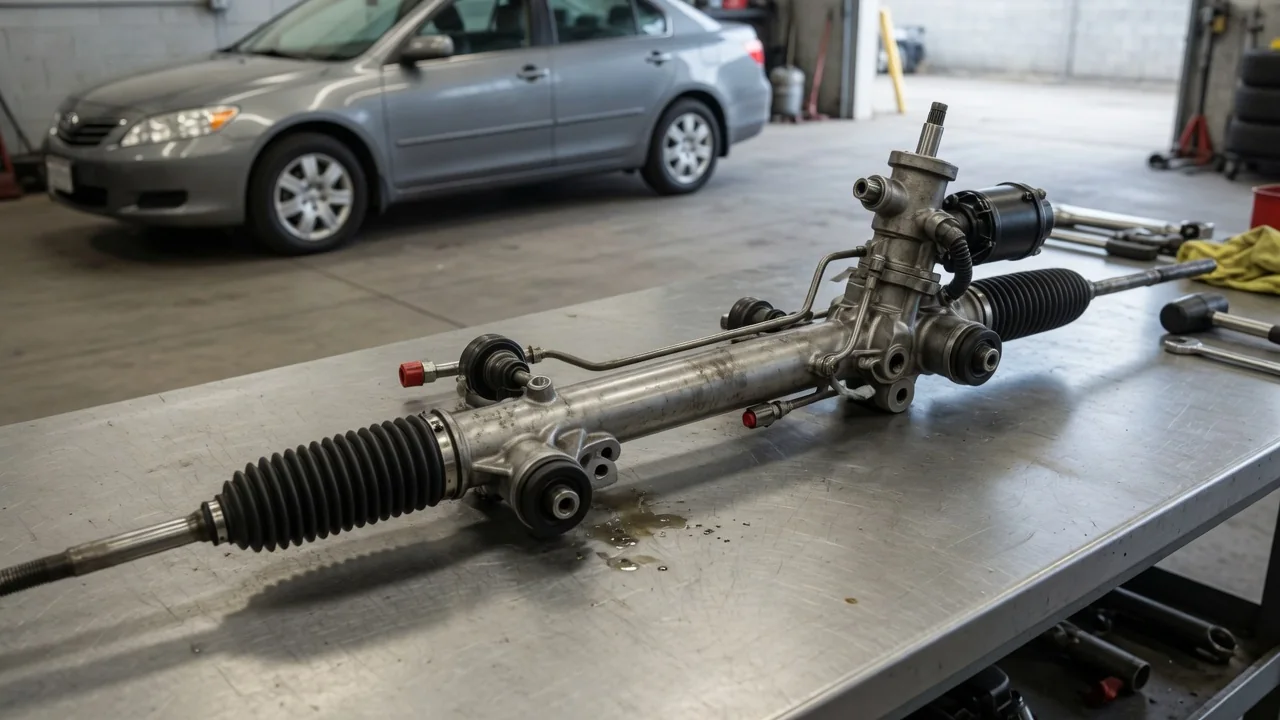
Planning the cost of power steering rack replacement starts with a complete steering rack assembly, installation labor, and supporting services the vehicle requires. The cost of replacing a power steering rack is not a national price; hydraulic and electric power steering jobs differ, and shops quote locally after confirming the repair. Until a written estimate names the exact work, any rack-and-pinion figure is only a planning tool.
How Much to Budget for Steering Rack Replacement
Many complete replacements in the United States fall in a broad planning range of roughly $1,000 to $3,000, and some applications exceed that span. That range is not a current local quote and is not a vehicle-specific estimate for the cost to replace a power steering rack. A power steering rack replacement cost figure at this stage only helps owners set aside funds while they gather written numbers from shops that inspect the vehicle and name the parts and labor they intend to bill.
A complete rack replacement estimate typically covers the steering rack assembly, the labor hours to remove the old unit and install the new or remanufactured one, and required supporting services such as wheel alignment when the shop includes them. Year, make, model, steering system type, shop location, and the confirmed repair scope all change the number because access, parts pricing, and billed labor hours vary widely. Without those details, the cost of a rack-and-pinion replacement remains a rough envelope rather than a binding price.
What Determines the Rack Assembly's Price
The parts charge follows the exact steering system and assembly configuration on the vehicle. Hydraulic power steering racks, electric power steering racks with integrated assistance, and other rack-and-pinion layouts are not interchangeable line items, so the quote must name the assembly that matches the vehicle. Shops may list a new original-equipment steering rack assembly, a new aftermarket unit, or a remanufactured assembly; availability and compatibility should be confirmed for that application rather than assumed from a generic catalog description.
A refundable core charge often appears when the shop supplies a remanufactured or exchange assembly, and the credit depends on returning the old unit in the condition the supplier requires. Missing pieces, severe housing damage, or a unit that cannot be rebuilt can reduce or eliminate that refund. Parts warranty terms also change the financial scope of the repair, because coverage length, labor inclusion, and conditions such as proper fluid service or alignment can determine whether a later leak or looseness is the owner's cost or the supplier's.
Labor and Supporting Services on the Estimate
Billed labor depends on how the rack is reached, the vehicle's layout, local labor rates, and corrosion that slows fasteners, subframe work, or boot replacement. Tight engine bays and rust-belt underbodies can add time beyond a textbook labor-hour allowance. Wheel alignment commonly belongs on the estimate after rack work because tie-rod geometry changes, and some vehicles also need manufacturer-required setup or electronic calibration so the electric power steering system and related sensors operate as designed.
On hydraulic power steering systems, the estimate may include fluid, seals, and a fluid-service charge because a steering fluid leak or dirty fluid can damage a new assembly if it is not addressed. Additional hose, tie-rod, rack bushings, or mounting-component work should be justified with inspection findings rather than added as a default package. Owners should also confirm whether a diagnostic fee, shop fees, taxes, alignment, and other supporting services sit inside the quoted total or will appear as separate lines after authorization.
Confirm the Rack Is the Source of the Problem
Fluid loss, steering looseness, noise, binding, or inconsistent assistance are reasons to seek diagnosis, not proof that the rack itself has failed. Hoses, the pump, steering joints, suspension wear, rack bushings, and electrical faults can produce similar complaints, and a fault message or stored code is evidence to interpret rather than a mandate to replace the assembly. Professional inspection isolates the source before anyone prices a full replacement, because swapping the rack will not correct a leaking hose, a weak pump, or a worn outer tie rod.
Safe observations include noting when the symptoms appear, recording any warning messages, and looking for puddles of fluid in the parking space without crawling beneath the vehicle. Photographing the spot and describing pull, play, or effort changes gives the technician a useful starting point. Sudden assistance loss, binding, or difficulty controlling direction is a reason to stop in a safe location and arrange professional assistance rather than continue driving to diagnose the problem on the road.
When Replacing the Rack Is Worthwhile
Replacement is worth considering when inspection confirms a fault inside the steering rack assembly and a professional explains how the proposed repair addresses that fault. Vehicle condition, other outstanding repairs, expected remaining ownership, and the owner's transportation budget then decide whether the job is a sound use of funds. A well-maintained vehicle that will stay in service can justify a complete assembly, while a car already facing major unrelated work may call for a harder look at total cost versus remaining value.
Damaged adjacent components or unresolved contamination in a hydraulic circuit can expand the repair scope and affect parts warranty if the shop does not correct those conditions, though they should not be assumed to exist on every vehicle. Ask the estimator to show why extra parts are needed. Postponing a confirmed steering defect requires professional guidance about whether the vehicle is safe to drive; there is no universal remaining mileage or delay period that applies to every rack problem.
Questions to Ask Before Authorizing Replacement
Request a written estimate that identifies the diagnosed fault, the exact steering rack assembly, whether the part is new original-equipment, new aftermarket, or remanufactured, the labor allowance, and which services are included. Ask what inspection evidence supports replacing the rack rather than repairing a hose, pump, or joint, and which additional charges need approval before work proceeds. That conversation keeps the cost of power steering rack replacement tied to findings instead of a generic menu price.
Confirm parts warranty and labor coverage, how the core charge and core-return handling work, and who pays for required wheel alignment or electronic calibration. Ask how the shop will verify steering operation after installation, including a check for leaks on hydraulic systems and for warning messages on electric systems. Clear answers on those points turn a quoted rack-and-pinion replacement into an authorized job with defined parts, labor, and follow-up rather than an open-ended invoice.