Power Steering Pump Rebuilding, O-Rings, and Remanufactured Units
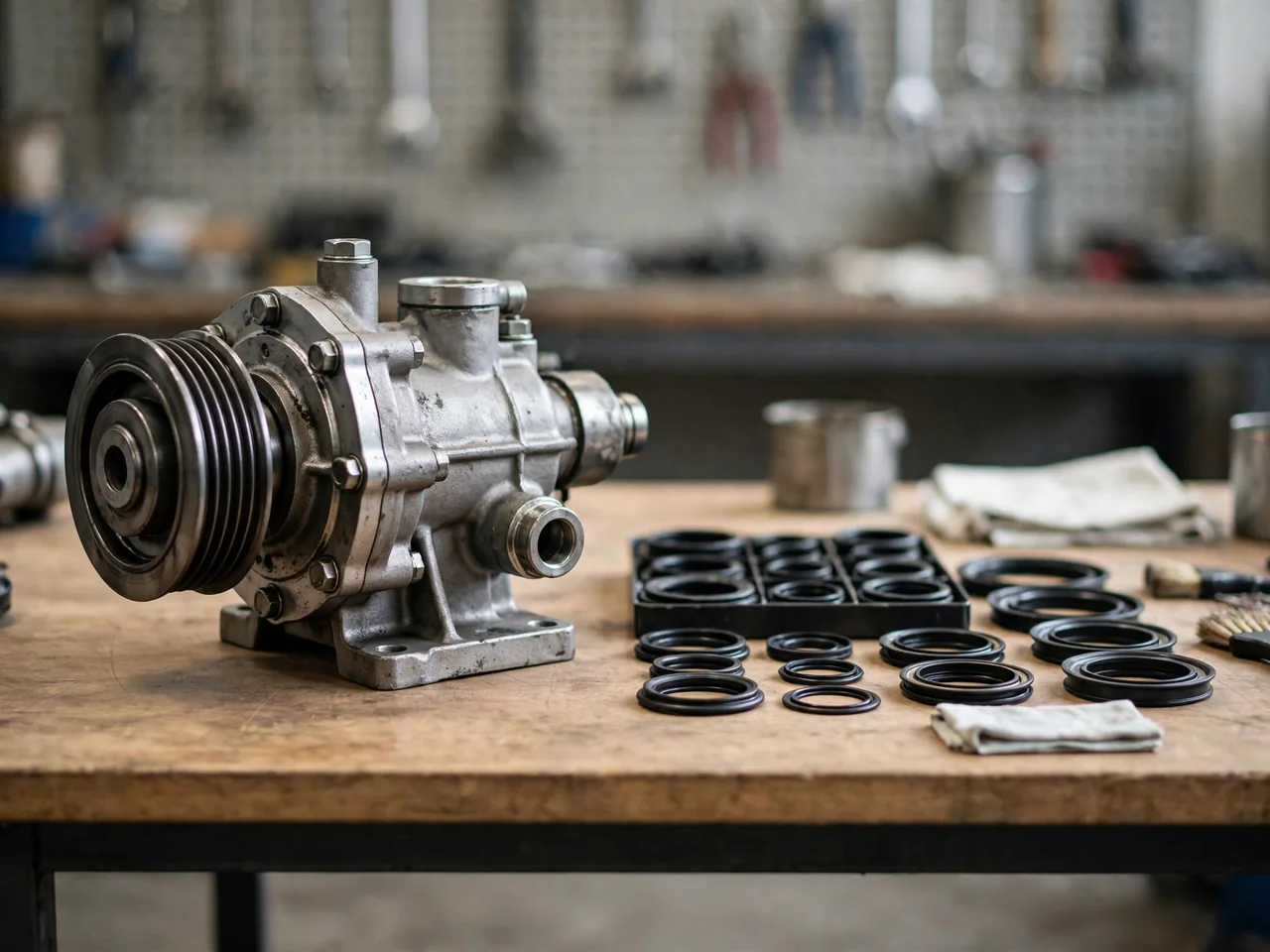
When hydraulic steering assist fades, leaks, or grows noisy, owners often choose between a power steering pump rebuild kit and a remanufactured power steering pump. A seal or o-ring repair can restore a sound housing, while a reman unit or a professional overhaul may be the better path when internals are worn. Matching the actual fault to the service keeps cost, downtime, and warranty coverage in line with the vehicle.
Confirm the Source of Steering Noise or Fluid Loss
Before ordering a rebuild kit for a power steering pump or a remanufactured unit, confirm the vehicle uses a hydraulic power steering pump rather than electric assist. Groan, leak stains, and fading assist can come from hoses, fittings, a drive belt, the rack, or the gearbox, so those symptoms do not prove the pump itself has failed. Identify the pump family from housing marks, reservoir style, and the vehicle application so later kit or reman choices match the hardware on the car.
With the engine off and cool, look for wet traces around the reservoir, shaft area, and hose connections, then check fluid level and appearance according to the owner's manual. Dark, aerated, or metallic fluid can point to contamination that a seal swap will not cure. When the source is unclear, a shop can trace leaks and test hydraulic pressure rather than guessing. If assist becomes unreliable, stop driving as soon as it is safe; heavy unassisted steering can make the vehicle difficult to control.
Check What a Power Steering Pump Rebuild Kit Includes
Power steering pump rebuild kits are not uniform. Many packages center on O-rings, gaskets, and a shaft seal, while some add a reservoir seal or fitting hardware. Bearings, vanes, cam rings, and other pumping parts must not be assumed to be in the box. Compare the itemized contents with pump identification and with what the technician found. A listing that says complete still describes only that seller's assortment, not every part a particular overhaul may require.
Replacing the o rings for a power steering pump can stop seepage at intended joints when the mating surfaces are still sound. New seals do not restore scored housings, worn bushings, or damaged pumping surfaces, so a kit repair is a sealing service, not a mechanical rebuild of the internals. If inspection shows metal in the fluid or roughness at the shaft, a power steering pump rebuilder or a remanufactured power steering pump is the more honest next step than stacking extra gaskets onto a worn core.
Identify the Correct O-Ring and Its Sealing Location
An o-ring for a power steering pump may sit at the reservoir neck, a cap, a pressure fitting, or another joint, depending on how that pump is built. Fluid that appears on the housing can have traveled from a hose, a cooler, or a remote reservoir, so the wet spot is not always the leak. Confirm the actual seepage path before ordering an o ring on a power steering pump. Ordering by photograph or generic size risks a seal that looks right but misses the groove.
Cross section, inside diameter, material, and compatibility with the specified steering fluid all matter; appearance alone cannot confirm that o-rings for a power steering pump will hold. A slightly smaller or harder ring can leak under heat and pressure even if it seats during assembly. If the groove, housing face, or fitting is nicked, corroded, or distorted, a new o-ring power steering pump repair will not last. In that case the housing or connection needs professional evaluation rather than another seal of similar look.
Determine Whether the Existing Pump Can Be Rebuilt
A professional overhaul of a power steering pump is more than a seal kit. A rebuilder inspects the housing and internals, cleans the unit, replaces applicable service parts, and then verifies operation, often with bench testing. Housing cracks, scored bores, worn shaft journals, and missing service parts can make rebuilding impractical even when O-rings are available. Ask whether the existing pump can be saved before committing to either a kit or a reman power steering pump.
Useful questions for a power steering pump rebuilder include what the inspection found, which parts will be renewed, how the finished unit will be tested, expected turnaround, and what the repair warranty covers. The word rebuilt does not, by itself, specify whether only seals were changed or whether pumping elements and bearings were renewed. A rebuilt power steering pump from one shop can differ widely from another, so the written scope and test method matter more than the label.
Understand What a Remanufactured Pump Listing Promises
A remanufactured power steering pump generally starts as a used core that a supplier inspects, reconditions, assembles, and tests. The actual replacement criteria, machining limits, and quality controls belong to that remanufacturer, not to a uniform industry recipe. Ask what fails a core, which parts are always renewed, and what functional testing is performed. Power steering pump remanufacturers can follow different standards, so two remanufactured power steering pumps with similar photos may not have received the same work.
Check whether the supplied assembly includes a reservoir, pulley, shaft seal, and mounting hardware, because listings vary. A remanufactured label does not confirm fitment, pulley alignment, or reservoir style, and it does not repair a contaminated hose, a failing rack, or air in the system. If fluid contamination caused the original failure, installing a remanufactured unit without addressing that contamination can shorten the new pump's life. Match the listing to the identified pump and the rest of the hydraulic circuit.
Verify the Remanufacturer, Fitment, and Return Terms
When buying through a retailer, identify the company that actually remanufactured and tested the unit, not only the store brand on the box. Verify the application with year, make, engine, steering type, and pump identification from the housing or supplier documentation. Photographs of a similar pump are not enough, because pulley diameter, reservoir shape, and port layout can differ within the same model line. A mismatch can leave a core return problem and a vehicle without reliable assist.
Most reman programs add a core deposit that is refunded when the old pump is returned on time and in acceptable condition. Ask about return deadlines, what damage or missing parts void the core credit, and how shipping is handled. For the repair warranty, confirm the term, exclusions, whether labor is covered, what documentation is required, and how to report a problem. Those terms can matter as much as the unit price when choosing among remanufactured power steering pumps.
Build a Complete Repair Estimate and Verification Plan
A useful estimate should spell out diagnosis, the chosen service (kit, local rebuild, or remanufactured unit), labor, specified fluid, extra seals, and any core charge or shipping. If contamination or a related hose, cooler, or rack fault was confirmed, that work belongs in the same plan; otherwise a new pump can fail the same way. Keep installation, fluid handling, and air removal tied to vehicle-specific service information and qualified workmanship rather than generic shortcuts.
Ask the shop to document leak inspection, normal hydraulic steering assist at idle and while turning, and any remaining abnormal noise after the work. Request the part numbers used, whether a power steering pump o-ring or a full unit was installed, fluid type, and warranty paperwork. Those completion checks confirm that the repair addressed the original complaint rather than only swapping a component. Keep the records with the vehicle so a later rebuilder or retailer can see what was already done.