Power Steering Hose Replacement: Lines, Seals, and Bleeding
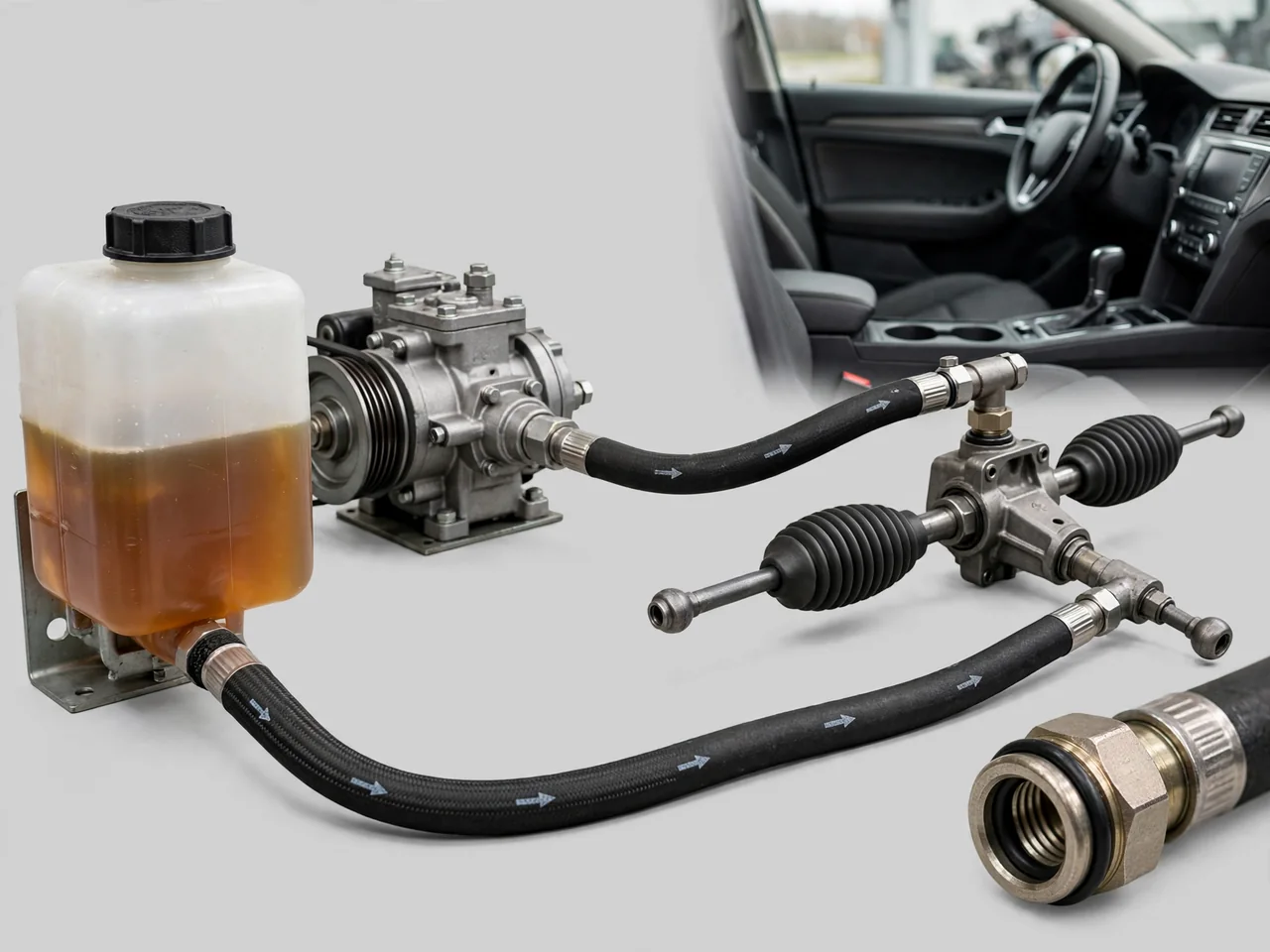
A hose for power steering does more than connect two parts. In a hydraulic system, each hose and line carries fluid under different conditions, and its fittings and seals must match the application. This guide explains how pressure and return hoses work, which kinds of damage need attention, what replacement involves, and why bleeding and final checks matter.
How Hoses Carry Fluid Through Hydraulic Power Steering
In a hydraulic power steering system, fluid moves in a continuous loop. The reservoir supplies the pump, which is typically driven by the engine. The pump sends fluid through the pressure hose to the steering gear or rack, where internal valving directs it to help turn the wheels. Fluid then leaves the gear through the return circuit and flows back to the reservoir. On some vehicles, it passes through a cooler along the way. Each hose must handle the conditions on its side of that loop.
Hose usually means the flexible rubber section, while line often means rigid metal tubing. Many parts combine both in one assembly joined by crimped fittings. A simplified diagram shows fluid flowing from the reservoir to the pump, then to the gear and back again. Actual routing, cooler placement, and mounting points vary by vehicle. Before shopping for parts, confirm that the vehicle actually uses hydraulic assist. Some vehicles use electric power steering, which has no pump, fluid, or hoses to replace.
Pressure Hose Construction and Return Circuit Requirements
The pressure hose carries fluid from the pump outlet to the steering gear. It sees the highest pressure anywhere in the system, and that pressure rises sharply during low-speed turning. To withstand it, the flexible section has internal reinforcement layers, and the ends use fittings built for the load. Operating pressure and assembly specifications differ between vehicles, so no single rating applies to every hose. A generic hose that looks similar may not be built for the demands of a particular system.
The return hose runs at much lower pressure and carries fluid from the gear back toward the reservoir. It still has to resist hot fluid, the specified fluid type, and engine-bay heat, and its route must avoid kinks. Choose a replacement by vehicle application rather than appearance. Some pressure assemblies include integral formed tubing or built-in flow-control features. A hose that simply fits the ports may therefore behave differently from the part the system was designed around.
Visible Hose Damage and Symptoms That Need Attention
Visible deterioration is a good reason to have a hose assessed professionally. Warning signs include surface cracking, abrasion where the hose may rub against brackets, bulges or soft spots, exposed reinforcement, and fittings that look bent, corroded, or damaged. Only inspect areas you can reach easily, with the engine off and the components cool. Never touch a hose on a running system or feel for escaping fluid by hand. Fluid released under pressure can cause serious injury.
Steering noise, inconsistent assist, or heavier effort can come with hydraulic problems, but those symptoms do not prove that a hose is the cause. Tape, sealant, and add-on clamps cannot restore a damaged pressure assembly to its specified condition, and they may fail suddenly under load. If steering becomes unusually difficult or unpredictable while driving, stop somewhere safe and arrange assistance. Tracing a leak to its source and assessing the pump are separate diagnostic jobs.
Selecting the Replacement Assembly and Fitting Seals
Confirm a replacement assembly against the vehicle identification number, the steering configuration, and the applicable parts information. Similar vehicles can use different hoses depending on engine, steering gear, or options. Physical checks matter too, so compare the connection type, formed bends, overall length, mounting points, and clearance to nearby components. An assembly that reaches both ports but runs too close to exhaust parts or moving components is not a correct fit.
Sealing methods vary. Some connections use O-rings, while others rely on flare seats, sealing washers, or other designs, so not every fitting needs an O-ring. Where seals are used, their dimensions and material must match the specification for the fluid and temperatures involved. Renew and prepare them as the vehicle's service information directs. Extra tightening or sealing products cannot correct a mismatched seal or connection. Excess force can also damage threads, sealing seats, or the component the hose connects to.
What Professional Hose and Line Replacement Involves
Professional replacement generally follows a set sequence. The technician confirms which assembly is affected and prepares the system as the service information directs. They then contain the fluid, remove the old assembly, and install the correct replacement. Open ports and hose ends need protection from dirt throughout the job, because debris in the circuit can harm the steering gear and pump. Nearby belts, wiring, and painted surfaces also need protection from fluid released during removal.
Installation includes restoring the specified routing, retaining brackets, and clearances. The new hose should not be twisted, rubbing, sitting near heat sources, or touching moving parts. Fittings should be tightened to the vehicle-specific torque values using the documented procedure, not by feel. The job can grow when access is tight, fittings are seized or corroded, or a connection at the pump or gear is damaged. A technician with the proper tools and service information is best placed to handle these conditions.
Refilling, Bleeding, and Checking Steering Operation
Opening any part of the hydraulic circuit lets air in. Unlike fluid, air in the steering system compresses, which can cause noise and uneven assist. Refill with the fluid type named in the vehicle's specifications, because steering fluids are not all interchangeable. Bleeding removes the trapped air while the fluid level is kept where the specification requires. The exact method varies by vehicle, and some applications call for special equipment such as vacuum bleeding tools.
After bleeding, foaming fluid, persistent whining, or uneven assist are reasons for further assessment, though none of them points to a single fault. The job is complete only after several checks. The fluid level is checked under the specified conditions, connections are confirmed secure and dry, hose clearance is verified, and steering operation is tested. Bleeding sequences depend on the vehicle, so there is no universal routine. If symptoms continue, professional testing can show whether air remains or another part of the system needs attention.
What a Power Steering Hose Replacement Estimate Includes
The part is only one factor in a replacement estimate. A pressure assembly with integral tubing often costs more than a simple return hose. Labor goes up when access is tight, fittings are corroded, or the vehicle requires specific service steps. Typical line items include the hose or line assembly, specified seals, fluid, labor, bleeding, and final checks. Prices and labor times vary by vehicle and region, so a written quote for your vehicle is more reliable than a general figure.
Before approving work, confirm which assembly is being replaced: the pressure hose, the return hose, or a cooler line. Also check that the quote uses the part specified for the vehicle. Ask whether the estimate covers damaged connections, worn mounting brackets, or retaining hardware that may need replacing. It also helps to ask how the shop handles problems found after work begins, such as a seized fitting. That way, unexpected charges are less likely.