Portable Wireless Trailer Brake Controllers: What They Do and When They Fit
Answer upfront
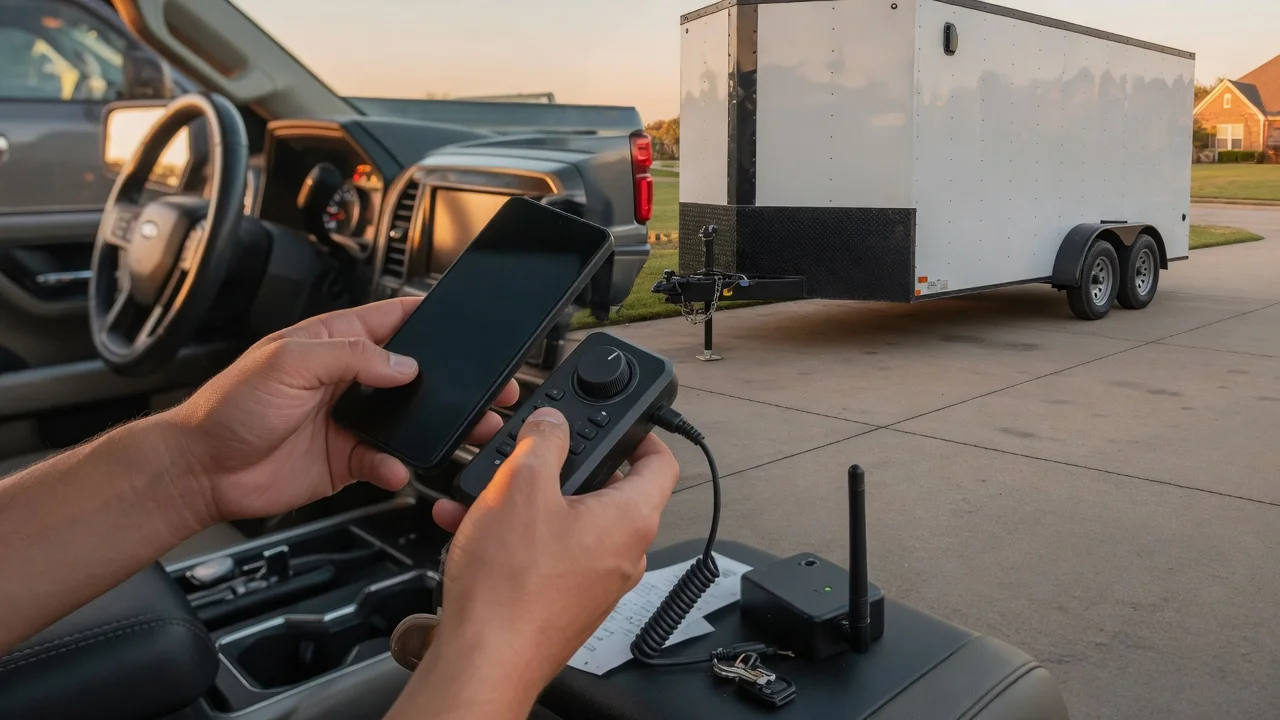
A portable wireless trailer brake controller can work when you need a movable brake control unit without permanently mounting hardware in the tow vehicle. The key condition is that the trailer already has electric brakes and a compatible power source. This type of controller is most useful when switching between multiple tow vehicles, renting a truck, or avoiding dashboard wiring changes. It is not a full replacement for a hardwired controller in every situation, but it can provide proportional or time-delayed braking depending on the model.
How a portable wireless controller differs from a fixed controller
A fixed trailer brake controller is mounted under the dash and wired into the vehicle brake circuit. A portable wireless trailer brake controller moves the control interface into a handheld or smartphone-linked module. The power and braking signal still need to reach the trailer brakes, usually through the seven-way trailer connector. The wireless part typically refers to communication between the in-cab control and a module mounted on the trailer or inserted near the connector, not to a brake system that works without wiring.
When a portable controller makes sense
You tow the same trailer with more than one vehicle and do not want to install a controller in each one. You drive a rented or borrowed tow vehicle that does not have a built-in brake controller. You want to avoid cutting or modifying the tow vehicle dashboard and wiring. You need a temporary solution for occasional towing rather than daily or heavy commercial use.
Compatibility conditions to check
Portable wireless trailer brake controllers generally require an electric trailer brake system, not hydraulic surge brakes. The trailer must have brakes that respond to an electrical signal. Most models also need a seven-way RV-style connector to receive power and brake output. A four-pin flat connector alone is usually not sufficient because it lacks the brake and auxiliary power circuits.
Vehicle-side compatibility can vary by model year and electrical system. A controller that relies on a smartphone app may require a specific operating system version. A controller that plugs into the vehicle OBD port or 12-volt outlet may have different behavior depending on the vehicle electrical architecture. Always match the controller to the specific trailer brake type, connector wiring, and vehicle model rather than assuming universal fit.
Main types of portable controls
Handheld remote trailer brake controller: a physical in-cab remote that sends a signal to a trailer-mounted receiver module and lets the driver apply trailer brakes manually. Smartphone-based mobile trailer brake controller: uses an app as the control interface and usually requires a separate power or receiver module on the trailer. Portable electric trailer brake controller with a dedicated screen: a self-contained unit powered by the vehicle accessory outlet and connected to the trailer through the existing seven-way plug.
Connection path is still wired
The term wireless can be misleading. The trailer brakes still receive power through the trailer wiring harness. What becomes wireless is the link between the driver control and the trailer-mounted module. The module may be installed on the trailer tongue or inside a battery box, then connected to the trailer brake circuit. Some systems also draw power from the trailer battery or the tow vehicle auxiliary circuit through the seven-way connector.
Proportional versus time-delayed braking
A proportional portable controller adjusts trailer braking based on how hard the tow vehicle is stopping, normally using an accelerometer or vehicle motion signal. A time-delayed controller applies a user-set braking force after a delay. For smooth stops and variable loads, proportional control is generally preferred. Some portable wireless units only offer manual or time-delayed braking, so check which control method is present before choosing one.
Battery and signal reliability
A remote trailer brake controller that depends on a battery in the trailer-mounted module can lose function if that battery is low. Smartphone-based controllers may introduce latency or connection dropouts in areas with heavy radio interference. For critical towing, consider a system with a hardwired fallback or clear low-battery and signal-loss warnings. Do not treat a wireless link as equivalent to a direct wired brake signal in every road condition.
Installation and setup basics
Setup usually involves mounting the receiver module on the trailer, connecting its brake output to the trailer brake wire, and pairing the in-cab remote or phone. The tow vehicle must still provide the correct seven-way socket. After installation, the brake gain or output needs to be tested at low speed in a safe area. The trailer brakes should engage firmly but not lock up under normal stopping.
Limitations to keep in mind
Not suitable for hydraulic surge brake trailers without an electric brake conversion. May not meet all legal requirements for heavy trailers in every jurisdiction. Wireless signal range can be affected by trailer material, module location, and nearby electronics. Some vehicle integrated trailer brake settings will not be mirrored by a portable unit. A portable controller is not a substitute for correctly sized trailer brakes and proper trailer loading.
Choosing a suitable next step
If the trailer has electric brakes, a seven-way connector, and the tow vehicle changes often, a portable wireless trailer brake controller can be a practical choice. If the tow vehicle is always the same and wired for a fixed controller, a permanently mounted proportional controller may be simpler and more predictable. Check the brake type, connector wiring, power source, and control method before purchase rather than relying on a general compatibility claim.