Portable EV Charging Cables: Level 1 and Level 2 Home Charging
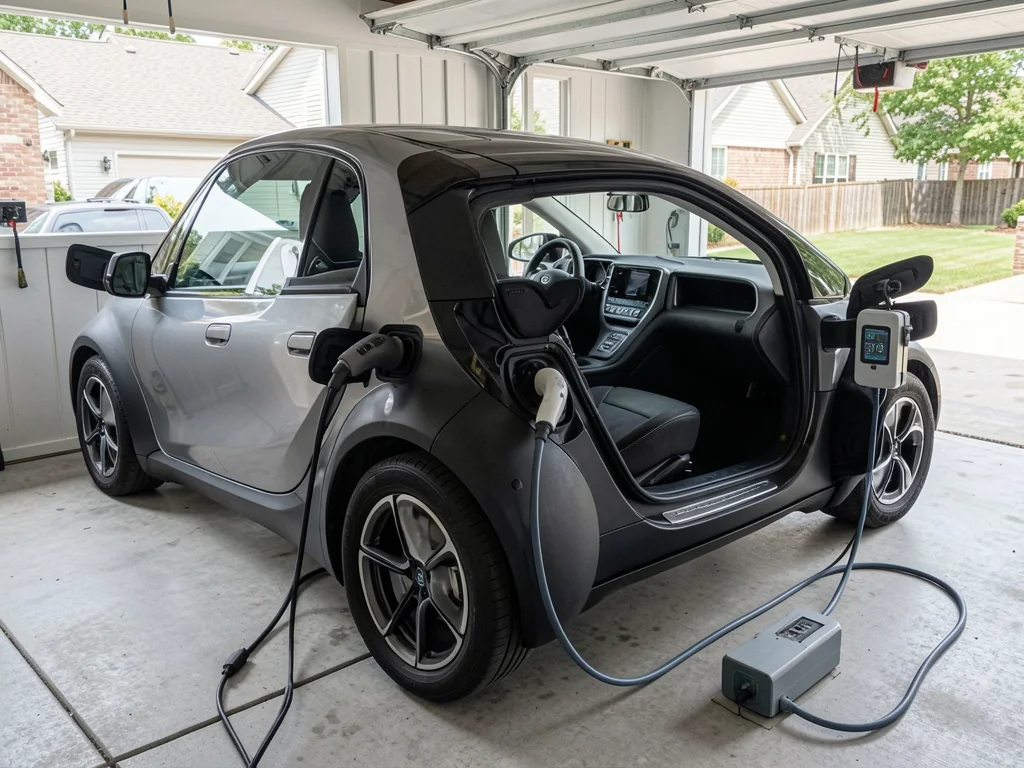
A portable EV charging cable lets a driver add energy at home from a household outlet when a hardwired wallbox is not available. The assembly is a portable EVSE with an inline control box, a plug for the supply, and a connector for the vehicle inlet. Charging power depends on the outlet rating, the equipment setting, and the onboard charger. Those limits decide whether a home EV charging cable can cover daily driving.
How a Portable EV Charging Cable Controls Charging
A portable EV charging cable is more than a length of cord. The complete assembly includes a plug that matches the outlet, a cable, a vehicle-side connector for the inlet, and control and protection equipment usually housed in an inline control box. That portable EVSE tells the vehicle how much current is available and can interrupt power if a fault appears. The vehicle's onboard charger then converts the incoming AC into the DC the battery actually stores, so charging power is never set by the cable alone.
Mode 2 is the term for charging equipment that places control and protection in the cable rather than in a wallbox. An EV mode 2 charging cable listed for a BYD still needs the correct voltage, current, and connector for that vehicle and market. The Mode 2 label does not establish those details. Start with the equipment nameplate and the vehicle manual to confirm supported voltage, current, and operating requirements before treating any home charging cable for EV use as compatible.
Level 1 Charging from a US 120V Outlet
In the United States, a level 1 EV charging cable is the portable EVSE that draws from a grounded 120V household outlet. Compatibility still depends on the plug, the outlet rating, and the equipment's current setting. As a labeled example, 120 volts at 12 amps supplies about 1.44 kW before charging losses; that figure does not mean every receptacle or every EV charging cable level 1 product can run at that setting. A dedicated, correctly grounded circuit in good condition is the practical starting point, not a convenient unused socket.
Whether an overnight session covers daily driving depends on usable battery capacity to replace, available hours, temperature, and how much energy the vehicle uses on the road. A familiar household outlet is not proof that its circuit and connections can carry a continuous electrical load for hours. Overheated plugs, shared circuits, and worn receptacles are common reasons Level 1 charging disappoints or becomes unsafe. Have an electrician assess the outlet when its history and condition are unknown before relying on a home EV charging cable for routine charging.
Level 2 Portable Charging on a Suitable 240V Supply
A level 2 EV charging cable for portable use needs a supported 240-volt supply, the matching plug and receptacle, and a circuit that can carry the equipment's continuous electrical load. A 240V EV charging cable is not interchangeable with a 120V Level 1 unit simply because both are portable. If the complete installation can support equipment operating at 240 volts and 24 amps, charging power is about 5.76 kW before losses. That example applies only when the supply, EVSE, and vehicle all allow that current.
Charging power is the lowest of the electrical supply, the portable EVSE setting, and the vehicle's onboard AC charging capability. An EV charging cable level 2 cannot push more current than the weakest of those three. A useful time estimate is energy needed in kilowatt-hours divided by charging power in kilowatts, then extra time for losses and tapering near a full charge. An unfamiliar 240V outlet or a new installation should be assessed by a qualified electrician. Do not convert outlets, change wiring, or resize breakers based on a product listing.
Understanding Three-Pin, Type 2, 13A, and Commando Labels
Three-pin and 13A wording on a 13A EV charging cable often comes from UK listings. A 3 pin EV charging cable with a household-style plug is not the same as a US NEMA outlet, and an EV charging cable 3 pin plug does not establish voltage, grounding, or suitability for a US home. Pin count alone never identifies the plug standard. Read the complete specification for an EV 3 pin charging cable instead of treating the pin label as proof of domestic compatibility.
Type 2 names a vehicle-side AC connector in many markets; confirm the actual inlet and market specification. An EV charging cable type 2 to 3 pin, or an EV home charging cable type 2 to 3 pin plug, should be a complete portable EVSE with control and protection, not a jumper between unmatched plugs. An EV charging cable type 2 to 32A Commando names an industrial supply connector; that current marking does not approve the setup or an adapter. For a BYD listing, confirm the exact model, year, sales market, inlet, and manufacturer instructions.
Choosing Enough Cable Length for Your Parking Space
Cable length should follow the actual path from the outlet to the vehicle inlet, including slack so neither the plug nor the inlet is pulled, and so the cord does not cross a walkway or driveway. An extra long level 1 EV charging cable only helps if that extra length is part of a complete, manufacturer-approved portable EVSE. The same applies to a 10m EV charging cable 3 pin or a 3 pin EV charging cable 10m: buy the approved assembly at the needed length rather than adding cord after the fact.
Length does not establish electrical safety, supported current, weather resistance, or equipment certification. A longer EV charging cable for home use still needs a rating that matches the outlet, the vehicle inlet, and outdoor exposure if the parking space is not enclosed. Household extension cords, power strips, and improvised splices are not substitutes for a listed EVSE of the required length. Follow the manufacturer's instructions for how to uncoil, support, and store the cable so insulation and connectors stay intact.
Planning Portable Charging at Home
Planning a home charging cable for EV use starts with daily energy needs, how long the vehicle sits, and whether a suitable outlet is consistently reachable from the parking space. A portable unit can handle routine overnight charging, occasional use at another assessed location, or travel when the destination has a compatible receptacle. If the vehicle rarely parks within reach of that outlet, or if charging windows are short, the same EV home charging cable may not restore enough energy before the next trip.
Before purchase, match the plug to the outlet, the connector to the vehicle inlet, the supported supply to the circuit, and the cable reach to the parking layout. Look for recognized equipment certification and an environmental rating that covers weather if the unit will sit outdoors. An electrician should plan permanent charging infrastructure, including a hardwired wallbox, when outlets are unsuitable, connections keep overheating or tripping, or charging needs exceed what the available supply can support. Portable equipment is a tool, not a workaround for an undersized circuit.
Safe Use and Signs That Charging Should Stop
Before each session, look at the portable EV charging cable, plug, inline control box, and vehicle inlet for cut or flattened insulation, cracked housings, discoloration, moisture, and visibly loose connections. Do not open the equipment or the outlet. Support the control box so its weight does not hang from the plug, keep the cable clear of tires and doors, and stay within the product's weather resistance limits. Rain, standing water, and sun-baked pavement can exceed what a listing allows even when the cable looks intact.
Stop charging if you smell burning, see melting, feel unusual heat, notice repeated protective trips, or get a persistent fault indication. Those signs show something is wrong, not that a particular part has failed. Fault lights and interrupted charging cannot identify whether the cause is the supply, the EVSE, or the vehicle; use the manual's fault guidance and have the setup tested. Do not keep resetting protection, bypass safeties, use improvised adapters, or treat a lower current setting as proof that a damaged or unsuitable outlet is safe.