Portable and Battery-Buffered EV Chargers: Can a Power Bank Charge Your Car?
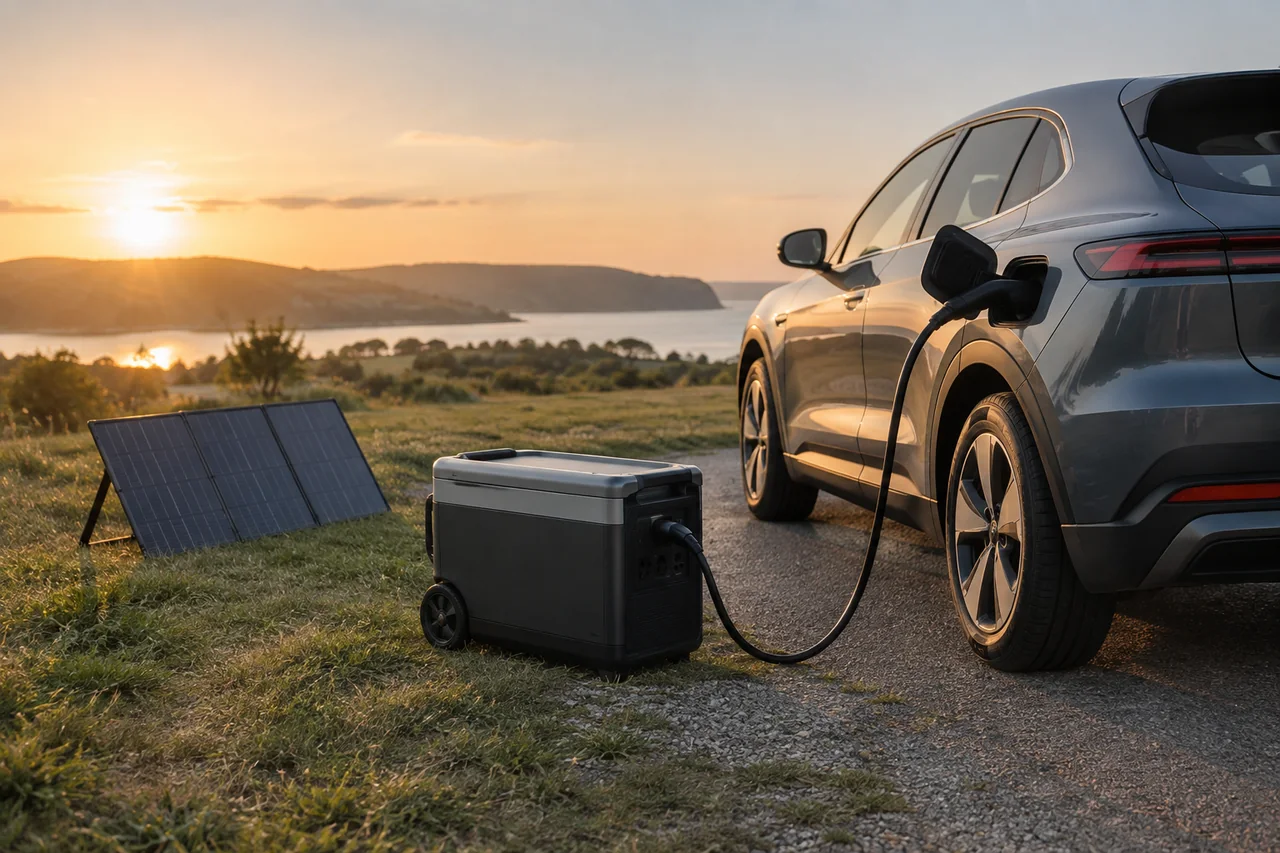
A portable EV charging battery offers a possible answer to range anxiety, but understanding its real capacity and output is essential before relying on one. These packs store energy to feed a vehicle’s onboard charger, yet many drivers confuse them with backup options for the 12-volt accessory battery. Knowing the difference between stored kWh and delivered kW helps set realistic expectations for roadside or emergency use.
What a Portable EV Charging Battery Is and How It Delivers Power
A portable EV charging battery pack is a self-contained energy source with an inverter or charging output that connects to a car’s charging port. It does not replace the traction battery but feeds it through the vehicle’s own onboard charger. The stored DC energy must usually be converted to AC for Level 1 or Level 2 style charging, which introduces conversion losses; some units offer DC output directly to reduce that loss.
Energy capacity, measured in kWh, indicates how much electricity the pack holds, while output power, measured in kW, determines how quickly it can transfer that energy. Both matter: a large capacity with low output takes many hours, while high output with small capacity depletes quickly. Portable units range from luggable boxes to trailer-sized or van-mounted packs. Always confirm connector type and charging standard compatibility with your vehicle’s documentation.
How Much Range a Portable Battery Can Realistically Add
A general estimate for added range is: usable pack energy minus charging losses, divided by the vehicle’s consumption. For example, a 5 kWh pack with 10% loss delivers about 4.5 kWh; at 3 miles per kWh, that adds roughly 13 miles. These illustrative numbers vary with temperature, speed, and vehicle design, so real results will differ.
A pack small enough to carry by hand typically holds far less energy than an EV traction battery, so added range is limited. Low output power also stretches charging time even when energy capacity is meaningful. These packs are best for getting to the next charger or emergency top-ups, not routine daily charging.
Battery-Buffered and Battery-Integrated EV Chargers Explained
Battery-buffered EV charging is a stationary charger with its own battery that stores energy from a limited grid connection and releases it faster to the vehicle. This solves problems at sites with weak grid supply or high peak-demand costs, though specific installations vary. The buffer absorbs grid power over time and can deliver it at a higher rate for a short session.
Battery-integrated chargers combine storage and charging hardware in one enclosure, unlike a separate home battery wired to a charger. Once the buffer is depleted, charging speed falls back toward what the grid connection alone can supply. Installation and grid connection must follow licensed electrician and local utility rules.
Using an EV Backup Battery for Emergencies and Roadside Situations
An EV backup battery can help reach a nearby charger after running low, or roadside assistance vehicles may carry mobile charging units. Some providers offer this service in certain areas, but coverage varies; check your own assistance plan. Prevention through trip planning and charger mapping is usually more practical than carrying a large pack.
If the car is low or out of charge, pull over safely, use hazard lights, and follow the owner’s manual for low-battery behavior. If warning lights beyond a low charge indication appear, do not force charging; have the vehicle assessed by professionals.
Traction Battery Charging vs the 12-Volt Battery: Avoiding a Common Mix-Up
EVs have a high-voltage traction battery for driving and usually a separate low-voltage auxiliary battery that powers electronics and startup systems. A conventional portable car battery charger or jump starter addresses the 12-volt system only and cannot add driving range. It cannot feed the high-voltage system through the charging port.
Symptoms like a car that will not power on or unlock normally may suggest a weak 12-volt battery, though other causes are possible. Follow the owner’s manual for any 12-volt support and never access high-voltage components, which are typically orange. Persistent power-on problems or high-voltage warnings need professional diagnosis.
Solar Panels and Solar Batteries for EV Charging
A solar-fed setup uses panels to charge a stationary or portable battery, which then supplies an EV charger through an inverter. The daily energy depends on panel area, sunlight hours, and weather. Portable panel sets produce modest amounts, often too low for meaningful range in a single day.
Home rooftop solar with storage can meaningfully offset charging over time, while small portable panels add limited range per day. Sizing, wiring, and grid interconnection require qualified installers and local permits. Avoid relying on specific payback periods or output figures without a site-specific assessment.
Safety Limits and When to Involve a Professional
Large lithium battery packs store significant energy and must be used, stored, and transported according to manufacturer instructions. Improvised adapters, modified cables, or homemade connections between batteries and a vehicle’s charging port are unsafe and can cause damage or fire.
Stop using a pack if you notice swelling, unusual heat, odor, or damaged cables, and seek qualified help. Check whether your vehicle manufacturer addresses third-party portable charging in documentation, but do not assume warranty outcomes. Any fixed charger, buffered charger, or solar integration work should be done by a licensed electrician.