Porsche Taycan and Macan Regenerative Braking Explained
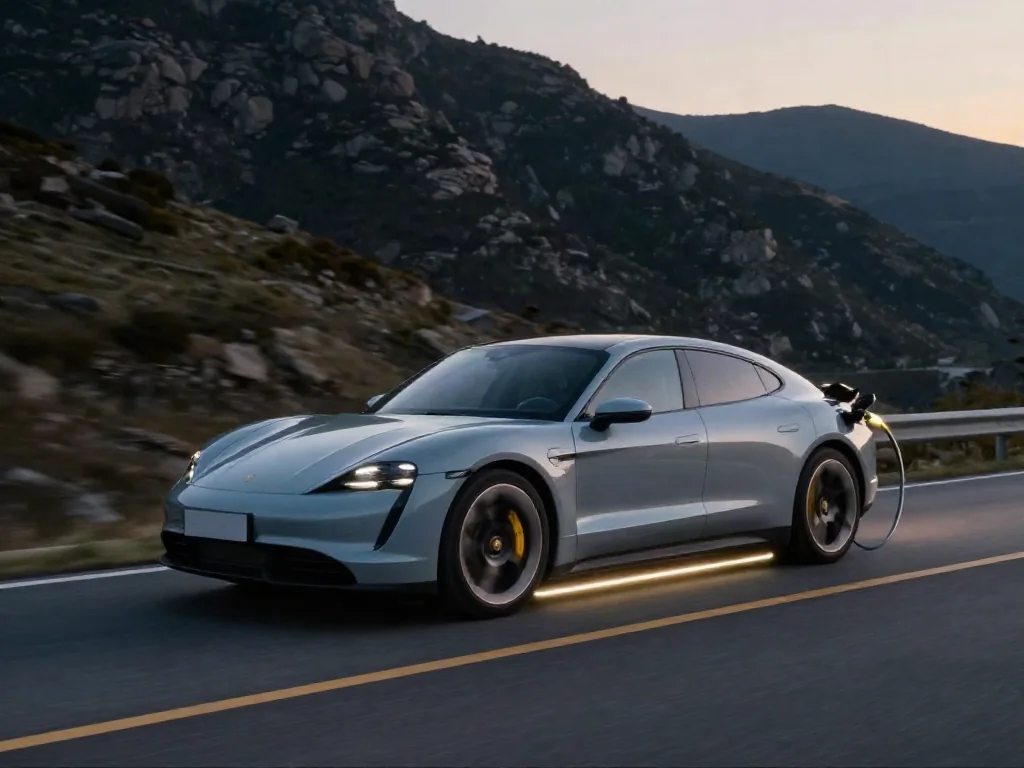
Porsche Taycan regenerative braking and the Macan Electric’s recuperation take a different path from many EVs. Instead of strong one-pedal lift-off deceleration, Porsche blends energy recovery into the brake pedal for predictable feel and high recuperation potential. Drivers can still choose coasting or stronger lift-off regeneration in settings. This approach aims to preserve driving character while recovering energy to the high-voltage battery whenever slowing is needed.
How Porsche Approaches Regenerative Braking on Its EVs
The electric motors invert their role during deceleration, becoming generators that convert kinetic energy into electricity and feed it back to the high-voltage battery. This recuperation creates drag on the drivetrain, slowing the car without using the friction brakes. Porsche tunes this effect to feel natural, with most everyday braking handled invisibly through the brake pedal rather than aggressive lift-off deceleration that many EVs employ.
The friction brakes remain fully available and automatically take over when more stopping force is needed than regeneration can provide. This happens during hard stops, emergency braking, or when stability systems intervene. Exactly how the system blends between motor braking and hydraulic friction depends on model, model year, and software version. Owners should verify behavior in their owner’s manual or in-car settings for their specific car.
Brake Blending on the Taycan: What Happens When You Press the Pedal
Brake blending is the process of deciding how much of a stop comes from motor recuperation and how much from the friction brakes. When the driver presses the pedal, the Taycan’s control unit calculates the total braking force requested, then apportions as much as possible to regeneration while keeping the response consistent. The transition between regenerative and friction braking is managed continuously, so the driver feels a stable pedal even as the mix changes.
Moderate, progressive braking allows more energy recovery than sudden hard stops because the motors have time to absorb kinetic energy at a lower rate. If the driver demands maximum deceleration, the friction brakes and stability systems engage immediately, and regeneration cannot capture all the energy. Drivers should not worry that regenerative braking limits stopping power—emergency braking always relies on the full friction brake system.
Taycan Recuperation Settings and How to Adjust Them
Taycan drivers may find selectable recuperation settings, often labeled as off/coasting, on, or an automatic mode. The exact names and locations vary by model year and software version. In general, off allows the car to coast freely when lifting off the accelerator, while on provides noticeable lift-off deceleration that can simulate engine braking. Automatic mode lets the car adjust recuperation based on traffic, navigation, or driving situation.
These settings are typically accessed through touchscreen vehicle menus or, on some versions, a steering wheel control. Drivers should check their own car to confirm the method. Drive modes can also change or reset recuperation behavior—for example, Sport mode may increase lift-off regeneration for sharper response, while Range mode may favor coasting. After switching modes, it is wise to verify the recuperation setting.
Regenerative Braking on the Porsche Macan Electric
The Macan Electric uses the same fundamental approach as the Taycan: blended recuperation through the brake pedal alongside selectable lift-off behavior. When the driver presses the brake pedal, the system prioritizes regenerative braking to recover energy, only using friction brakes when needed. Lift-off recovery can be adjusted through the vehicle settings, allowing the driver to choose between coasting and stronger deceleration when releasing the accelerator.
Recuperation options may be found in the Macan’s on-screen vehicle settings, but exact menu names and features should be confirmed in the owner’s manual or dealer documentation for the specific model year. In daily SUV driving, recuperation helps manage speed smoothly in city stop-and-go traffic and can reduce brake wear. On long downhill stretches, selecting stronger lift-off regeneration can maintain speed while feeding energy back to the battery.
How Recuperation Affects Driving Feel, Efficiency and Brake Wear
Choosing coasting or stronger lift-off regeneration changes driving feel. Coasting lets the car glide with minimal drag, which can feel smoother on highways and may suit drivers who prefer to plan ahead and brake gently. Stronger lift-off regeneration decelerates more noticeably when lifting off, reducing the need to move to the brake pedal in traffic but requiring smoother throttle modulation to avoid jerky transitions.
Recovering energy can help real-world efficiency, especially in stop-and-go driving where frequent braking would otherwise waste kinetic energy as heat. However, the benefit depends on terrain, traffic, and driving style—downhill stretches and urban driving gain more than steady highway cruising. Heavy use of regeneration means friction brakes do less work, which can reduce pad wear. Still, low-use brakes need regular inspection for corrosion and condition.
When Regeneration Feels Different and When to Get It Checked
Regeneration may feel weaker or absent in certain conditions. A nearly full high-voltage battery cannot accept more charge, so the system reduces recuperation and the car coasts more than usual. A cold battery also limits charging power until it warms up. Drivers may notice less lift-off slowing in these situations; this is normal. Dashboard messages may explicitly state that recuperation is limited.
Drivers should watch for warning lights, messages about limited recuperation, unusual brake pedal feel, grinding noises, or pulling during braking. These could indicate a fault in the brake-by-wire system or high-voltage components. No driver can diagnose the exact cause from feel alone. Any brake warning or persistent unusual behavior should be checked by a Porsche dealer or qualified EV technician. Owners should never attempt repairs on high-voltage or brake-by-wire parts.