Porsche Cayenne Air Suspension Valve Block: Choosing the Correct Part
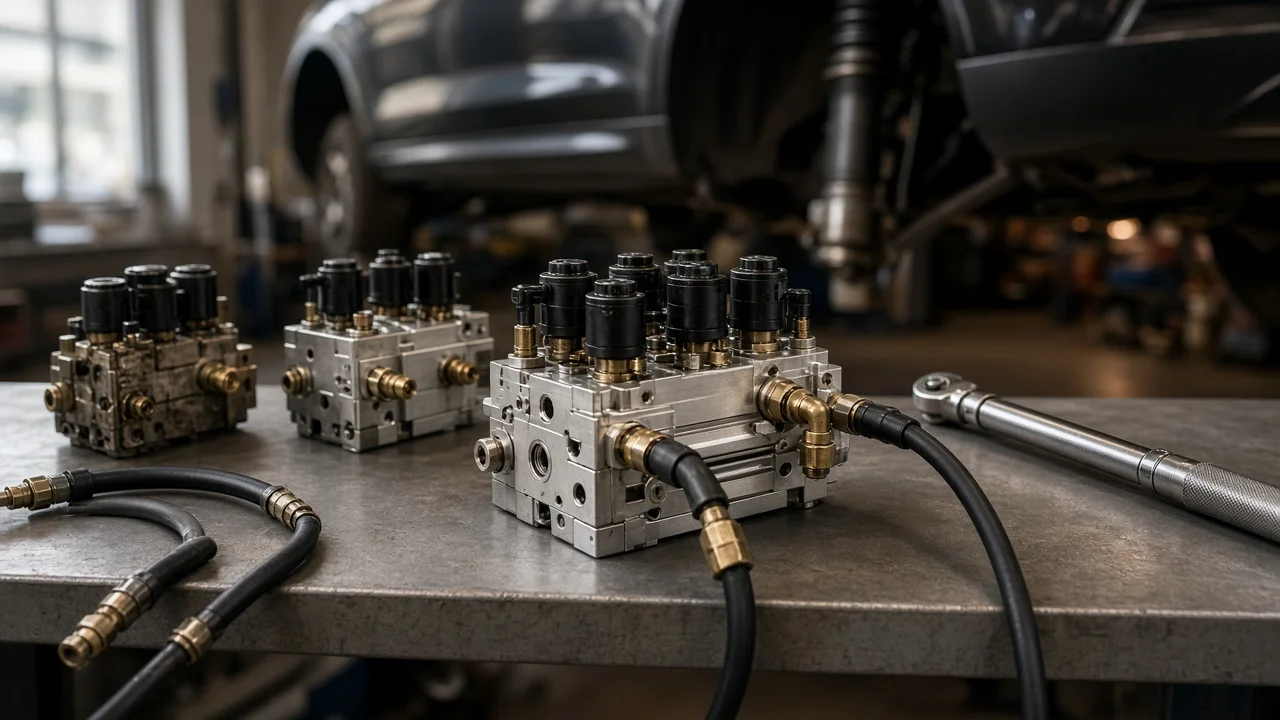
When a Porsche Cayenne sits low on one corner after parking, the compressor runs longer than it should, or the dash reports a level control fault, the air suspension valve block is one of several suspects. Buying the right replacement starts with proving the block is actually at fault, then matching it to your exact vehicle. This guide explains what the valve block does, how to confirm fitment, which features matter and what the part cannot fix.
Define the job the product must do
The valve block is the distribution hub of the air suspension. It routes air from the compressor and reservoir to each air spring through solenoid valves, holds pressure while the vehicle is parked, and releases air when the control unit lowers the vehicle. A block that leaks internally lets one or more corners drop. A block with a sticking valve can leave the system unable to reach the requested ride height, or force the compressor to work harder to compensate.
Before ordering, confirm the fault. The same symptoms can come from a leaking air spring, a cracked line, a loose fitting, a worn compressor or a saturated air dryer. A soapy water test on lines and fittings, a scan for stored level control faults, and noting which corners drop overnight help separate these causes. A single low corner usually points to that spring or its line first, although one leaking valve inside the block can produce the same result. Also be clear about your constraints: whether you will do the work yourself, whether you have a scan tool that can communicate with the suspension control unit, and how long the vehicle can be off the road.
Check compatibility
Start with the VIN and the part number printed on the existing block. Cayenne air suspension hardware changed between the three generations, and variants within one generation can use different components. Only vehicles built with factory air suspension use this part; a Cayenne on steel springs cannot simply receive a valve block. A listing that says only Cayenne plus a year range is not enough to rely on.
Then compare the physical interfaces: the number and arrangement of air line ports, the fitting type and line diameter, the electrical connector shape and pin count, whether a pressure sensor is integrated into the block or mounted separately, and the bracket and mounting points. A unit that matches on paper but uses a different connector or port layout will not install cleanly. If the listing shows clear photos of every side, compare them against your old block, and check whether fittings, seals and the bracket are included or must be transferred.
Features that affect the choice
Options generally fall into genuine Porsche parts, units from original equipment suppliers, new aftermarket blocks, and remanufactured or repaired units. Genuine parts give the most certain fit and usually cost the most. Aftermarket quality varies widely, so look for useful evidence: a stated cross-reference to the original part number, clear connector and port photos, a written warranty with defined terms, and a seller who explains exactly what is in the box. Labels such as OEM quality or heavy duty say little on their own.
Remanufactured blocks can make sense when new supply is limited, but ask what was replaced, whether every valve was pressure tested and whether a core return is required. Included hardware matters too, because new fittings and O-rings reduce the chance of leaks at reused connections. Inspect the vehicle-side plug as well; if it is corroded, budget for terminals or a repair harness, since a fresh block will not cure an intermittent electrical fault in the wiring.
Limitations and ownership costs
The air system is pressurized, so follow the model-specific procedure for depressurizing it before disconnecting any line, and never work under a Cayenne held up only by its air springs. Raise it at the correct lift points and use rated stands or a lift so vehicle support never depends on suspension pressure. Tighten fittings and bracket fasteners to the fastener specification in the factory service information rather than by feel; overtightened plastic fittings crack and loose ones leak. Many systems need ride height checked or calibrated with a diagnostic tool after the repair, so confirm you have access to one that supports that function before starting.
A new valve block cannot repair a leaking air spring, a damaged line, a tired compressor or a moisture-loaded dryer, and moisture left in the system can shorten the life of the replacement. Expect possible extra costs for lines, fittings, seals, connector repair and diagnostic time. If the vehicle sat at the wrong height for a long period or suspension parts were disturbed, it is sensible to check joint play in the control arms and have the wheel alignment verified against factory settings once the car rests at its correct height.
Build a practical shortlist
Narrow candidates with a checklist rather than chasing a best-product ranking. For each option, record the part number it replaces and how that was confirmed against your VIN; whether port count and fitting type match your old block; whether connector shape, pin count and pressure sensor arrangement match; whether the bracket is included or transferable; which seals and fittings come in the box; the warranty length and who honors it; any core charge or return terms; and the seller's return policy if fitment turns out to be wrong.
Order only when diagnosis points to the block and every line of that checklist matches. If two options are equal on fit, weigh warranty terms and included hardware ahead of a small price difference, because removing the part a second time costs more labor than the savings. When fitment information is incomplete or contradictory, ask the seller for photos or written part number confirmation, or order through a Porsche parts counter using the VIN.