Porsche 944 Timing Belt Replacement: Intervals and Service Scope
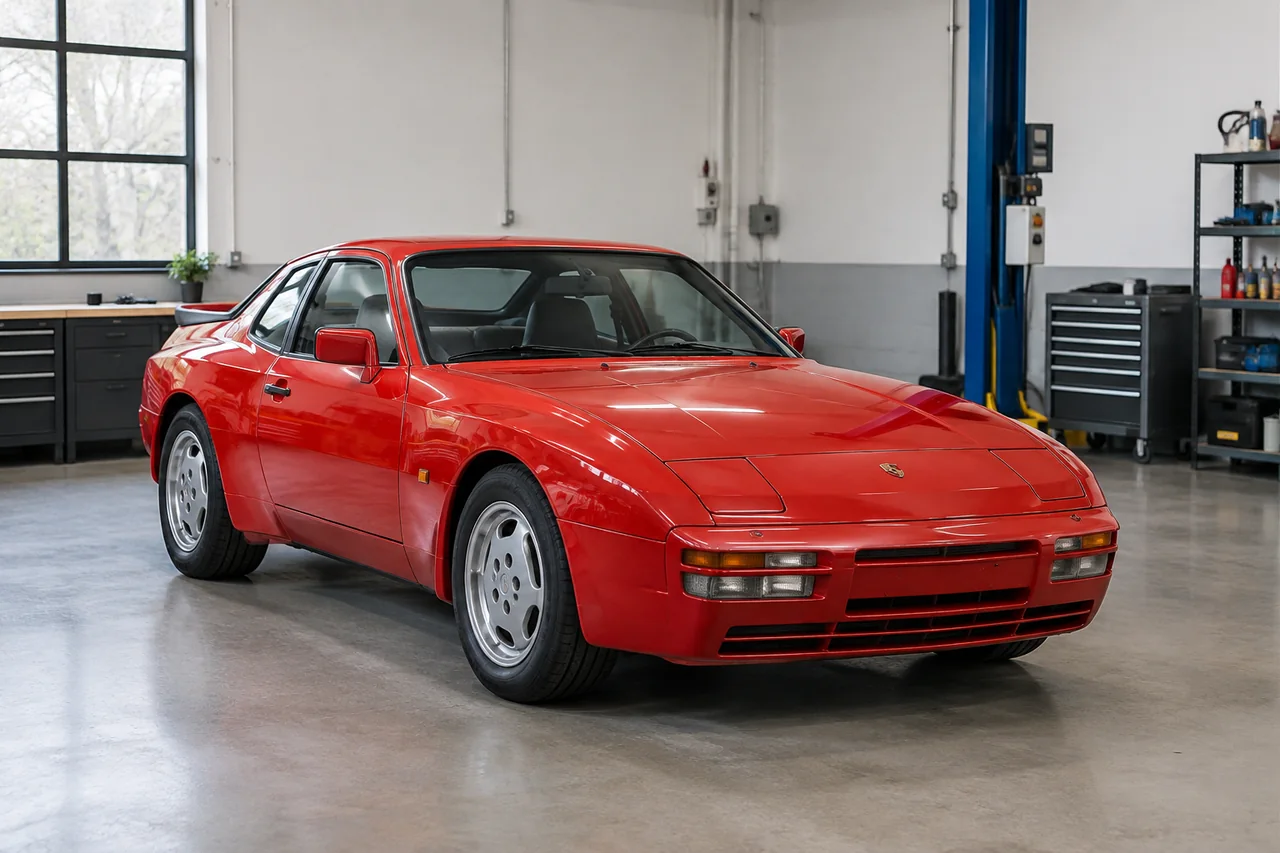
Porsche 944 timing belt replacement is scheduled maintenance that keeps the camshaft and crankshaft in step and should account for the balance shaft belt. A timing belt change on a Porsche 944 should be planned from model year, engine variant, mileage, and documented service history rather than from guesswork. The work is specialist in nature: correct timing, belt tension, and verification matter, and incomplete records or oil and coolant leaks can change the scope before parts go on the engine.
Planning a Porsche 944 Timing Belt Replacement
On a Porsche 944, the timing belt keeps the crankshaft and camshaft synchronized so valves open and close at the intended points in the piston cycle. If that relationship is lost, valve timing is no longer controlled, and the engine can suffer serious damage. That is why a timing belt change on this car is not a casual accessory job. The belt is a wear item with a finite service life, and replacement is planned maintenance intended to preserve correct valve timing before the belt stretches, cracks, or fails.
Before the shop defines the work, confirm the model year, engine variant, current mileage, and any documented belt service history. Those details determine which drive layout the car uses and whether a prior interval has already been met. Porsche 944 timing belt replacement is a specialist task because the belt must land on the correct timing relationship, belt tension must be set properly, and both must be verified before the engine is returned to service. Planning from the vehicle's identity keeps the estimate aligned with the actual engine rather than a generic 944 template.
Confirming the Applicable Replacement Interval
Do not treat a remembered mileage figure as the interval. The applicable replacement interval for a Porsche 944 comes from the maintenance schedule and service guidance for that model year and engine, and those documents should be checked before any deadline is stated. Time and mileage both matter when the schedule uses them. Rubber ages even when the car is driven little, and high mileage can reach a distance limit before calendar age does. Use only the verified requirement for the vehicle in front of the technician, not a round number borrowed from another 944.
When records are missing or incomplete, belt age cannot be read from appearance alone. A belt that still looks intact may be past its calendar life, while surface cracks do not by themselves prove remaining service life. In that situation, obtain a qualified assessment rather than guessing from photos or a visual glance. Also confirm whether the particular vehicle and procedure require a follow-up tension inspection after the timing belt change. If they do, that check belongs on the plan so belt tension is verified after the belt has seated in service.
Including the Balance Shaft Belt in the Service Plan
The 944 also uses a balance shaft belt. That belt drives the balance shafts, which help cancel four-cylinder secondary vibration so the engine runs more smoothly. It is a separate drive from the camshaft timing belt, yet both occupy the same front-end service area, so access for one often exposes the other. The estimate should name the balance shaft belt explicitly and state whether its replacement is included in the quoted Porsche 944 timing belt replacement. If that line item is missing, ask before authorizing work so the scope is not assumed.
During belt service, balance shaft belt tension, alignment, and the associated rollers need attention because a mis-set belt can run off a pulley, wear a rib, or leave the shafts out of their intended relationship. Tensioners and rollers that support this belt should be inspected with the covers off rather than treated as invisible hardware. Vibration or a new belt noise can have several sources, including mounts, pulleys, or the timing belt itself. Those symptoms cannot establish a balance shaft belt fault without inspection, so diagnosis belongs with the technician who can see the drive.
What the Belt Service Should Cover
A professional timing belt change on a Porsche 944 should start by confirming the vehicle details and inspecting the belt drive with the covers removed. Agreed components are replaced, and timing and belt tension are verified before the job is closed. Tensioners and rollers, a water pump inspection, and nearby seals belong in that look because they share the same space and can affect how the new belt runs. Inspection does not mean every part is automatically replaced. Condition, leakage, and remaining service life should decide what is added to the original authorization.
Oil and coolant leaks change the plan because contamination can swell, glaze, or weaken a new belt and can also mark a failing seal or water pump. The leak source needs assessment so the shop is not fitting a fresh belt onto a drive that will soak it again. Parts must be verified as suitable for the exact vehicle rather than a generic 944 kit assumed from memory. After inspection, any extra work should be documented and authorized separately, including additional tensioners, rollers, or sealing parts the technician recommends.
Symptoms That Need Prompt Professional Assessment
A Porsche 944 timing belt can be due for replacement with no warning the driver can feel. Interval, belt age, and service history still govern the decision even when the engine sounds normal. Unusual noises from the engine area, new vibration, or visible fluid leakage are reasons to have the car assessed promptly, but they do not automatically prove a belt fault. Pulleys, mounts, exhaust leaks, and oil or coolant leaks can produce similar clues. Treat those signs as a request for inspection, not as a parts diagnosis from the driver's seat.
Owner checks should stay limited. Review the service records, note any dashboard indications, and look for oil and coolant leaks with the vehicle parked and the engine off. Do not probe moving belts or remove covers to inspect tensioners and rollers. If the engine produces sudden severe mechanical noise or stops, pull over safely, shut it down, and arrange recovery. Repeated starting attempts are a poor idea when a timing failure is suspected, because another cranking cycle can add damage if the camshaft and crankshaft are no longer synchronized.
Reviewing the Estimate and Keeping Service Records
A useful estimate for Porsche 944 timing belt replacement lists both belts, any proposed tensioners and rollers, the labor scope, inspection findings, and work that will be authorized separately. Ask whether the water pump inspection is included and how oil and coolant leaks will be handled if they appear once the covers are off. The final bill depends on vehicle configuration, the condition of the parts that are found, leaks that must be corrected, and the agreed service scope. Those variables change labor and parts without implying a single standard price.
After the work is complete, request an invoice that records the service date, mileage, installed parts, and confirmation that timing and belt tension checks were completed. That paperwork becomes the next owner's service history and is the evidence of belt age going forward. Have the shop also document the applicable next service deadline from the schedule used for this vehicle, plus any required follow-up tension inspection. A clear record keeps the next timing belt change from guesswork and shows what was replaced rather than only discussed.