Porsche 924, 944 and 997 Turbocharger Guide
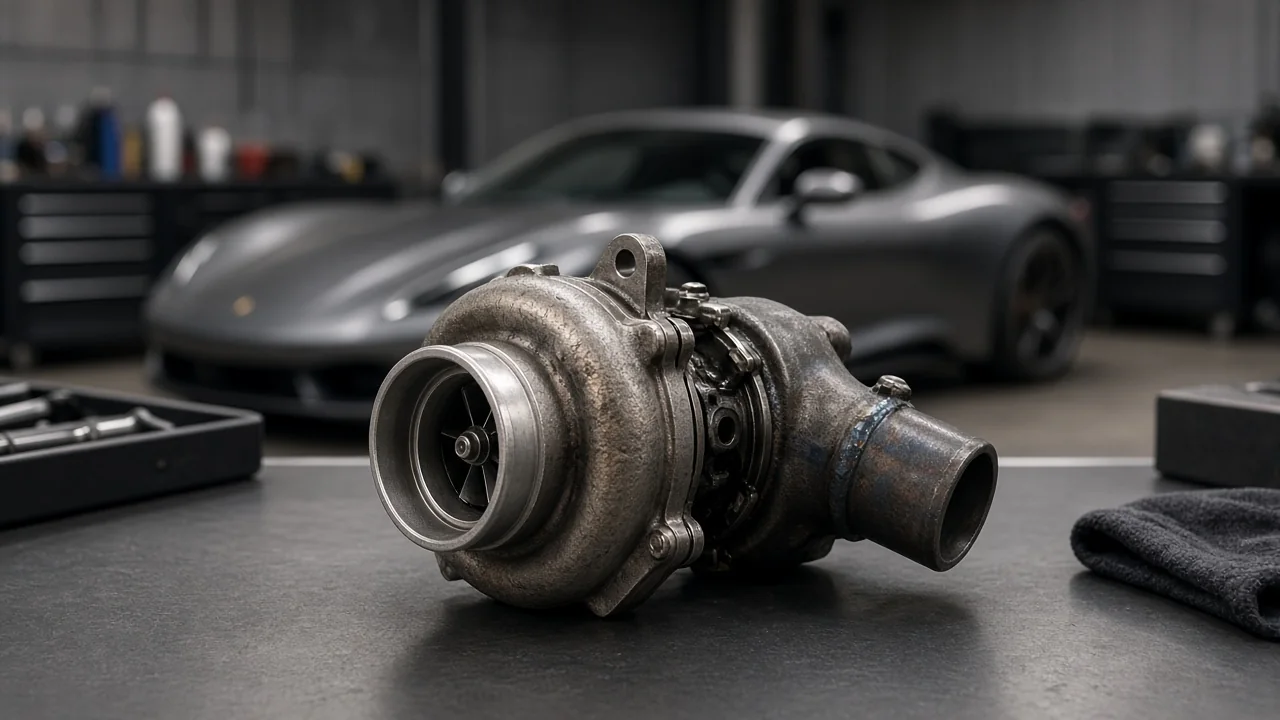
Porsche owners comparing a 924 turbocharger, a 944 turbocharger, and a Porsche 997 turbocharger need more than a model badge to plan diagnosis or replacement. Factory Turbo cars differ from naturally aspirated siblings, and later 997 Turbo hardware is not interchangeable with the earlier four-cylinder layouts. Establishing the installed engine, boost-control arrangement, and service history keeps inspection, oil-supply checks, and any turbocharger rebuilding discussion aligned with the car that is actually in the shop.
Identify the Porsche and Its Installed Turbo System
Before any conversation about a Porsche 924 turbocharger or a 944 turbocharger, confirm the model year, engine specification, and whether the car left the factory as a Turbo. A 924 or 944 badge alone does not prove a factory turbocharged engine; many examples are naturally aspirated, and some have later conversions that look similar at a glance. The factory Turbo designation, together with the installed engine code and production details, is what tells a specialist which boost hardware, wastegate arrangement, and supporting plumbing belong on that car.
Service records matter as much as the original specification. Prior turbo replacements, engine modifications, and boost-control changes alter both diagnosis and parts selection, even when the body still reads 924 or 944 Turbo. A car that has received a different turbocharger, altered wastegate control, or revised boost-pressure targets will not behave like a stock example. Ask for invoices, tuning notes, and any mention of oil-supply work so the investigation starts from the hardware that is actually fitted rather than from a brochure description.
Porsche 924 Turbocharger Concerns and Inspection Priorities
Keep the 924 discussion on the factory 924 Turbo unless paperwork shows an aftermarket conversion, which needs its own documentation and should not be treated as original equipment. Poor boost or exhaust smoke often leads a specialist to charge-air plumbing, wastegate operation, and turbocharger oil supply or drainage before the cartridge is condemned. Charge-air leaks can drop boost pressure, a sticking wastegate can hold boost too high or too low, and restricted oil feed or return can produce smoke without a destroyed turbine.
Owner notes help more than a single complaint of low power. Record whether power fades from cold start, at idle, or only under acceleration, and whether exhaust smoke appears at those same moments. Age and incomplete service history justify inspecting hoses, clamps, oil lines, and related controls before authorizing a replacement turbo. A tired 924 turbocharger may indeed be worn, but surrounding leaks, lubrication problems, or neglected wastegate hardware can create the same symptoms and will damage a new unit if they are left uncorrected.
Porsche 944 Turbocharger Symptoms and Supporting Systems
A 944 turbocharger discussion should begin by verifying the installed turbo and any tuning changes, because later work can change boost control, wastegate behavior, and the expected boost-pressure range. Weak or inconsistent acceleration on a 944 Turbo can come from intake leaks, charge-air leaks, boost-control faults, or engine-management issues without proving that the turbocharger itself is damaged. Those supporting systems share the same symptoms as a tired compressor or turbine, so a road-test complaint of lag or missing power is a starting point for testing, not a parts order.
Smoke, unusual noises, and rising oil consumption are useful clues, yet they still require contextual diagnosis rather than automatic replacement. Blue or oily exhaust smoke can follow a lubrication or sealing problem in the turbocharger, but it can also follow crankcase, valve-guide, or charge-pipe issues that only look similar. When turbocharger work is planned, assess charge-air connections, oil lines, and the relevant control components so a replacement 944 turbocharger is not fitted onto leaking plumbing or a contaminated oil supply that will repeat the failure.
Porsche 997 Turbocharger Operation and Diagnostic Needs
The factory Porsche 997 turbocharger layout uses twin turbochargers with variable turbine geometry, which changes exhaust flow through the turbine to help control boost across the rev range rather than relying only on a conventional wastegate strategy. In plain terms, each bank has its own turbo, and the vanes inside the turbine housing adjust how exhaust energy is used. Boost concerns on these cars can involve turbo control, charge-air leaks, or mechanical problems, and they require vehicle-specific testing rather than a generic four-cylinder turbo diagnosis.
Replacement parts for a Porsche 997 turbocharger must match the exact vehicle specification and the affected assembly. Engine variant, model year, and which side is involved all change what is ordered. A fault involving one turbocharger does not, by itself, establish the condition or replacement need of the other. Shared oil supply, common charge-air plumbing, and electronic boost control can make both sides look unhappy when only one assembly is mechanically distressed, so each unit still needs its own inspection before a pair is replaced.
Safe Observations and Reasons to Stop Driving
Record warning messages, when the symptom appears, recent workshop work, and oil-level trends using the vehicle's prescribed checking procedure. Owner inspection should stay with accessible visual observations after the engine is off and cool: look for oily charge-air connections, obvious hose damage, and fluid on the ground. Do not handle hot turbo or exhaust parts, do not disassemble the system, and do not perform deliberate boost testing. Those steps belong to a specialist with the right equipment and a way to interpret boost-control data safely.
Smoke color, a whistle, or an oily connection cannot independently confirm a failed turbocharger. Each of those signs can come from charge-air leaks, oil-supply misting, or exhaust joints that have nothing to do with a seized shaft. An oil-pressure warning, heavy exhaust smoke, sudden severe power loss, or harsh mechanical noise is different: those are reasons to stop driving as soon as it is safe and arrange professional assistance. Continuing under load with lubrication or mechanical distress can turn a contained turbocharger problem into broader engine damage.
Plan a Verified Turbocharger Replacement
Approve replacement only after a documented diagnosis and an investigation of contributing oil-supply, contamination, or control faults. A new 944 turbocharger, a remanufactured Porsche 924 turbocharger, or a specialist-rebuilt Porsche 997 turbocharger will fail early if dirty oil, collapsed feed lines, or unresolved boost-control errors remain. Ask for written findings that separate confirmed mechanical damage from supporting-system faults. Turbocharger rebuilding can be appropriate when the housing and application are verified, but the same oil and control issues must be corrected whether the chosen unit is new, remanufactured, or rebuilt.
Documentation for a new, remanufactured, or specialist-rebuilt unit should include application verification, testing notes, and warranty terms that match the identified engine. An estimate typically covers diagnostic labor, access work, necessary seals and lines, fluids, and post-installation checks; current prices vary and should come from the workshop, not from a general guide. Before the car returns to service, the specialist should confirm any application-specific setup, control calibration, and operating checks, including that boost pressure and oil supply behave as expected on that Porsche.