Polyurethane Control Arm Bushings: Choosing the Right Parts
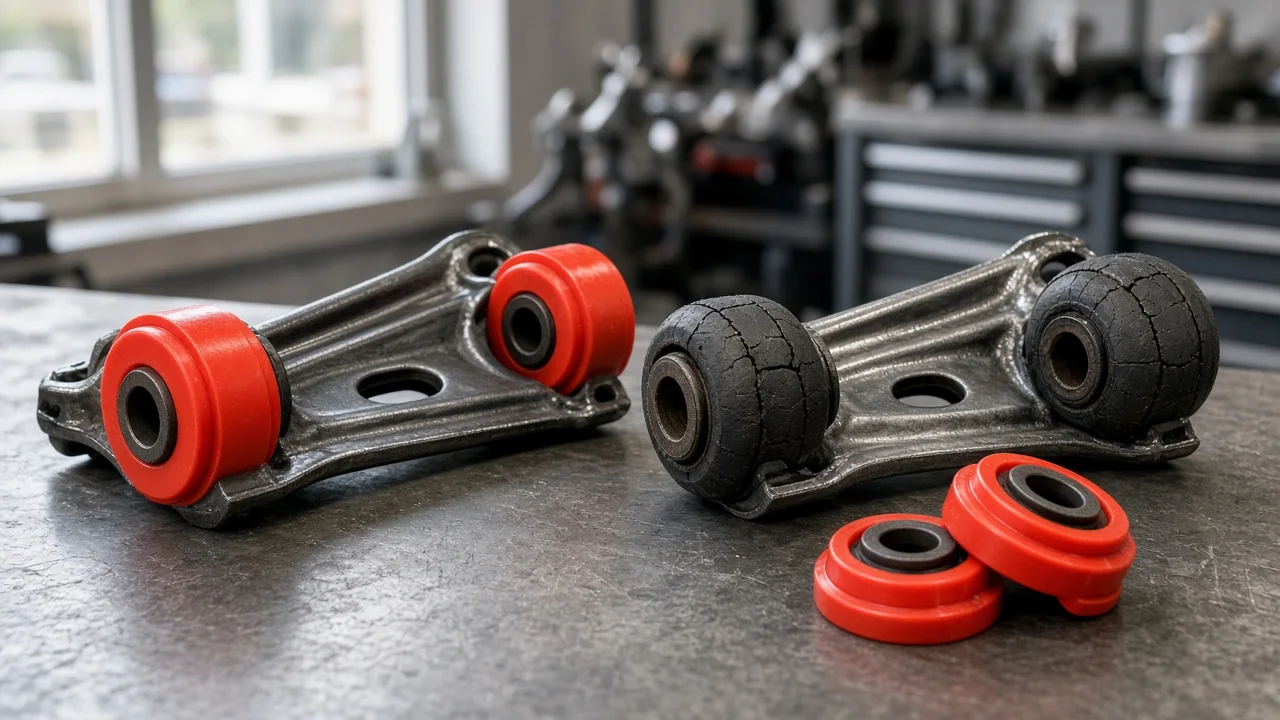
Urethane control arm bushings replace the rubber pivots that locate a control arm against the chassis or subframe. They usually resist deflection better than factory rubber, which can sharpen steering feel and keep wheel alignment more consistent under load. They also change noise, vibration and maintenance needs. This guide covers how to match polyurethane bushings to your vehicle and driving, what to check for fitment, which features matter, and what owning them involves after installation.
Define the job the bushings must do
Start with why the current bushings need attention. A cracked, torn or separated rubber bushing lets the control arm shift. You may hear clunks over bumps or notice the vehicle wandering on the highway, pulling under braking or wearing tires unevenly. Ball joints, tie rod ends and wheel bearings can cause the same symptoms, so confirm the source first. Support the vehicle on jack stands at the lift points the manufacturer specifies. Then pry gently at the arm near each mounting point and watch for movement between the bushing, sleeve and bracket. Check joint play at the ball joints separately so you do not replace bushings and leave the real fault in place.
Then define how the vehicle is used. A daily driver on rough roads, a tow vehicle, a lifted truck, an autocross car and a restoration project each ask different things of a bushing. Urethane suits owners who value precise steering and less arm deflection and who will accept a firmer, sometimes noisier ride. If quiet comfort is the main goal, a fresh OEM-style rubber bushing or a complete replacement arm may serve better. Be realistic about budget, tools and time as well. Some installations need a hydraulic press, and every control arm job ends with a wheel alignment.
Check compatibility with your suspension
Fitment is model-specific, so match parts by year, make, model, drivetrain and position rather than by appearance. Bushings at different positions often differ in outside diameter, length, sleeve bore and shape. That applies to front and rear arms, upper and lower arms, and the forward and rearward pivots on the same arm. Many vehicles also changed suspension designs partway through a generation, so check the part listing and, ideally, compare it with the old bushing itself. Note whether the kit fits your original arms or only certain aftermarket arms, and whether it covers one side or both.
Look closely at the interfaces. Check whether the kit includes new inner metal sleeves sized for your factory bolts. Find out whether it is a single press-in piece or a two-piece flanged design that slides in from each side, and whether you reuse the arm's original shell. Bolt diameter, sleeve length and the width between the mounting brackets must all match, or the bushing can end up crushed or loose. Lifted and lowered vehicles need extra attention. A changed ride height alters the angles the bushing works at, and some kits are designed only for stock geometry.
Also consider how the arm moves. Some control arm positions twist in more than one direction as the suspension travels. A solid urethane bushing that rotates on its sleeve handles simple pivoting well, but it can bind where the factory design relies on rubber flexing in several planes. If your service information shows a compliance or multi-axis bushing at that location, look for a design made for it or keep rubber there.
Features that affect the choice
Hardness is the main trade-off. Urethane hardness is usually given as a durometer rating. Firmer compounds reduce deflection but pass more road noise and vibration into the cabin. Brands often use color to signal hardness, but colors are not standardized between brands, so read the stated rating rather than judging by color. For a street vehicle, a moderate compound is a reasonable starting point. Very firm options make sense mainly for dedicated performance use.
The lubrication design determines how quiet the bushings stay over time. Urethane bushings rotate on their sleeves instead of twisting like bonded rubber, so they need grease at assembly. Grooved bores hold lubricant longer, and some designs add grease fittings so you can service the joint without taking it apart. Use the lubricant supplied or specified by the bushing maker. Squeaking is the most common complaint with urethane, and it usually comes from too little grease or the wrong kind.
Treat marketing labels with caution. Claims such as race-proven, lifetime or zero deflection say little on their own. Useful evidence includes a clear fitment listing, a stated durometer, included sleeves and hardware, installation instructions specific to your vehicle, and full written warranty terms. Photos of the actual part help you compare its shape with the bushing you are removing.
Limitations and ownership costs
Urethane bushings do not fix other worn parts. A bent arm, a cracked or elongated bracket, loose ball joints or worn tie rod ends will still cause handling problems. New bushings in a damaged mounting point will not stay aligned. Inspect the brackets and bolt holes while the arm is out. If the arm is corroded or its ball joint is worn, a complete replacement arm may cost less in labor than pressing new bushings into old metal.
Installation takes more than the parts. Removing factory rubber bushings often requires a press or a dedicated bushing tool. Avoid cutting or burning them out near fuel lines, brake lines or wiring. Follow the factory fastener specification for every bolt, and use new fasteners wherever the service manual calls for them. Tighten the pivot bolts as the instructions direct. Some procedures require the suspension to be loaded at ride height before final tightening.
Budget for a professional wheel alignment after installation, because control arm work changes camber, caster or toe. Plan to recheck for noise and re-grease the bushings periodically, especially where road salt or heavy dust is common. Expect the cabin to feel busier over rough pavement than it did with rubber.
Build a practical shortlist
Narrow your options with a few questions before buying. Does the listing match your exact vehicle, position and suspension configuration? Does the kit cover every bushing you plan to replace, on both sides? Are new sleeves included and sized for your factory bolts? Is the durometer stated, and does it suit how you drive? Does the design have grease grooves or fittings, and does the kit include lubricant? Can you see installation instructions for your model before you buy?
Then weigh the whole job. Compare the bushing kit against complete control arms with bushings already installed. Factor in press work, the alignment, and the condition of your existing arms and ball joints. Choose the option that fixes the diagnosed problem with the smallest compromise in ride quality. Take torque values and procedures from the factory service information rather than general advice.