How to Plug Unused Transmission Cooler Connections on a Radiator
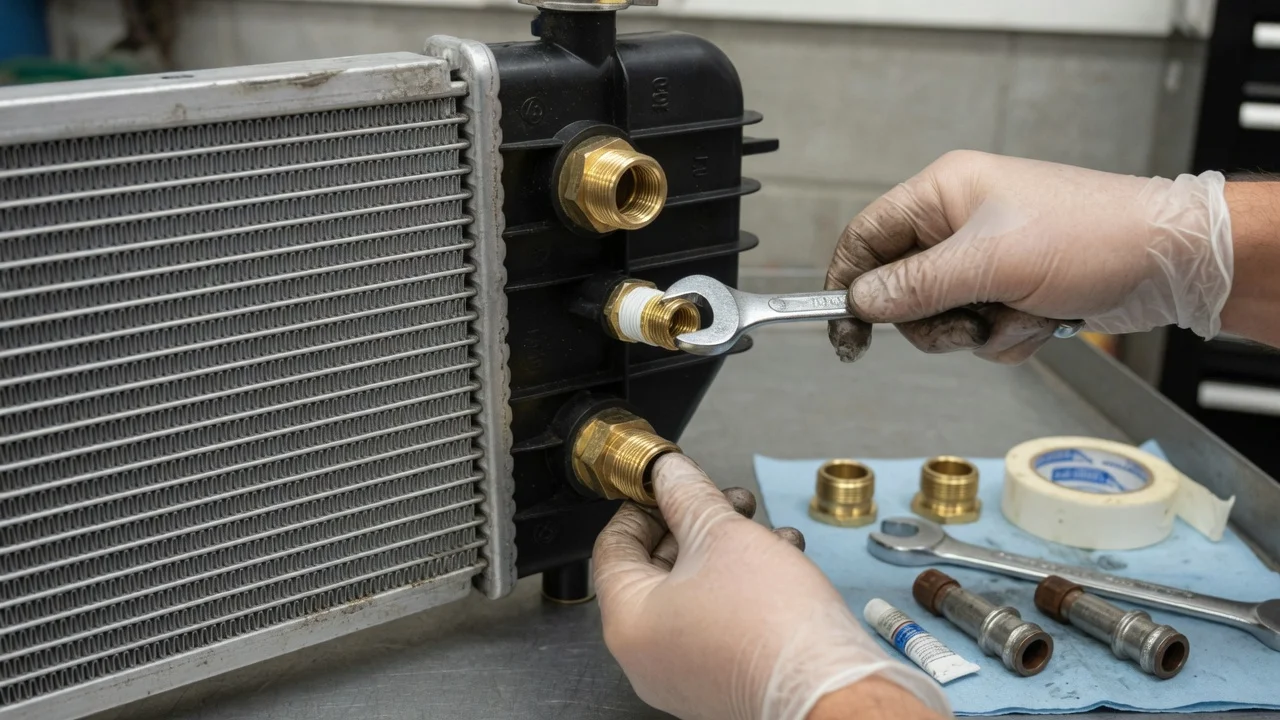
When an automatic transmission no longer sends fluid through the radiator, the open fittings on the tank need to be sealed. This comes up after a manual swap, an external cooler conversion, or installing a radiator with cooler ports you do not need. Done correctly, capping them is a simple job that never touches the engine's cooling circuit. Done carelessly, it can crack the tank or leave a path for coolant to leak out.
The Short Answer
Seal each port with a cap or plug that matches its exact thread type and size, after draining any leftover transmission fluid from the internal cooler. Most radiator cooler fittings are inverted flare, pipe thread, or a quick-connect adapter screwed into the tank. A matching cap threads onto or into the fitting the same way the original line did. Tighten it snugly while holding the radiator fitting with a second wrench, so the twisting force never reaches the tank or the joint where the fitting meets it. Do not use any of these as a permanent fix: a tapered rubber plug driven into the port, a crimped tube, or a port filled with epoxy.
One qualification matters more than the method. Plug only the ports on the radiator, never the lines coming from an automatic transmission that is still in service. Those lines must still loop through a working cooler. Blocking them can cut off fluid circulation through the transmission, which risks overheating and internal damage.
How the Radiator's Transmission Cooler Works
In most radiators, the transmission cooler is a small tube or plate assembly sitting inside one of the tanks, usually the outlet side. Transmission fluid flows through it while engine coolant surrounds it, so heat moves between the two fluids without them mixing. The two ports on the outside are the ends of that sealed passage. Because the cooler is a separate circuit, capping it does not change coolant flow through the core, how the thermostat regulates temperature, or the pressure the pressure cap maintains.
The weak point is the fitting itself. It is brazed, soldered, or crimped into the tank, and on radiators with plastic tanks it may be retained by the tank material. Excess torque or side load can crack the tank or loosen that joint, and coolant will then escape under pressure. A cooler that has corroded through internally lets coolant into the cooler passage. That is why plugging the ports must never be used to cover up an internal leak.
What Changes the Answer
The fitting type decides which part you need. Inverted flare fittings seal on the flared face, so the cap must match both the thread and the flare. Thread tape on a flare seat does nothing useful and can shed debris. Pipe thread fittings seal on the threads, so they take a plug with a small amount of suitable thread sealant. Quick-connect fittings are usually adapters screwed into the tank. You can often remove the adapter and install a correctly threaded plug, with a new sealing washer or O-ring if the design uses one, or fit a blanking cap made for that specific quick-connect.
The reason for the change also matters. After a manual swap the cooler has no job, and capping it is routine. With an external cooler conversion, first decide whether the radiator cooler should be bypassed at all. On many vehicles it also warms the fluid in cold weather and is designed to work in series with an auxiliary cooler. Deleting it can leave the fluid colder than intended in winter. Towing, heavy loads, and hot climates push the decision toward more cooling, so check the vehicle and transmission maker's guidance before removing the radiator cooler from the loop.
Finally, consider the radiator's condition. A new radiator with unused ports is the simple case. On a used radiator whose cooler was in service, drain and inspect it before capping. Coolant coming out of the cooler ports, or transmission fluid that looked milky or pink and foamy, points to a breached cooler. In that case the radiator should be replaced, not plugged.
What the Owner Can Do
Work with the engine off and fully cold. Capping the cooler ports does not require opening the cooling system. However, the fittings sit close to hoses and the tank, and a hot pressurized system can spray scalding coolant if something gives way. Never remove the pressure cap or loosen a coolant hose while the engine is hot.
Disconnect the old lines and catch the residual transmission fluid in a pan. To push out what remains, blow gently through one port with low-pressure compressed air, holding a container over the other. This leaves less fluid sealed inside to expand as the radiator heats. Identify the thread with a thread gauge, or bring the old line fitting to a parts counter to match it. Clean the threads, start the cap by hand to avoid cross-threading, then snug it with a flare-nut wrench while holding the radiator fitting with a backup wrench. After the first drive, and again once the engine has cooled, look for weeping at both the caps and the base of each fitting.
If the radiator was removed or coolant was lost during the job, refill with coolant that meets the vehicle's coolant specification at the correct coolant concentration. Coolant color alone does not show that two coolants are compatible. Bleed out air pockets using the procedure for your engine, then recheck the level cold after the next few drives. In a manual swap, either remove the old transmission lines or secure them so they cannot chafe, and cap their open ends so debris stays out if you might reuse them.
Limitations and Next Step
Fitting styles and thread sizes vary by manufacturer, and sometimes between radiators sold for the same vehicle, so no general guide can name the exact cap to buy. The radiator supplier's specifications, or the original line fitting, are the reliable reference. Proprietary quick-connect retainers and fittings molded into plastic tanks are the cases most likely to need a specific factory or supplier part rather than a generic plug.
Stop and get professional help in any of these cases: a fitting spins in the tank, the tank cracks or weeps, or coolant appears inside the cooler passage. The same applies if the vehicle still has an automatic transmission and you are unsure whether an external cooler alone is adequate for how you drive. A transmission shop can confirm correct cooler routing and flow, and a radiator or cooling-system shop can pressure-test the radiator after the ports are sealed.